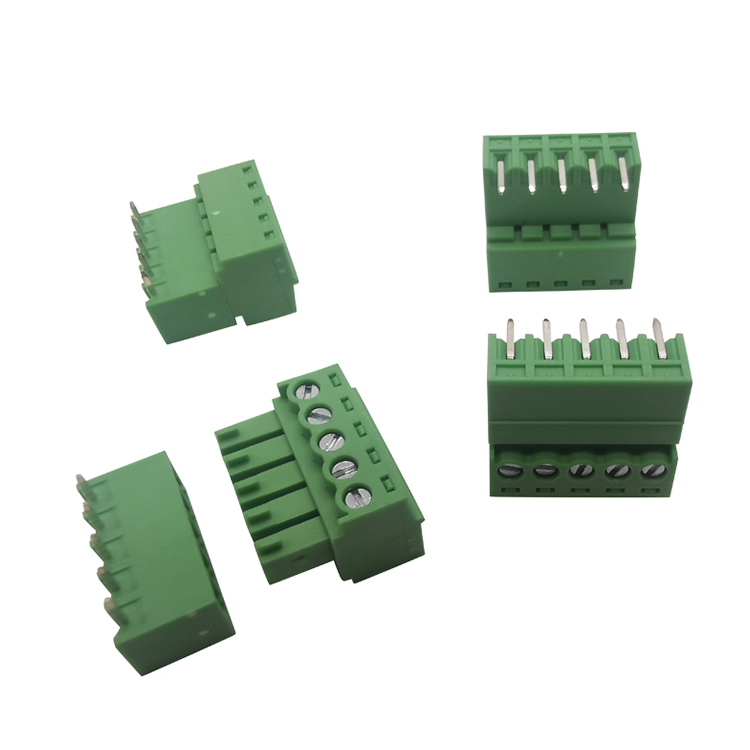
Comparing screw, spring, screwless, and pluggable PCB terminal blocks? This article breaks down cost, assembly speed, vibration resistance, and field serviceability to help you choose.
Walk through any industrial electronics production line, and you will see PCB terminal blocks on nearly half of all control boards and power modules.
Most design and procurement teams treat terminal blocks as simple commodity parts. They often pick the lowest-cost option and move on with the BOM. But this casual selection leads to real field issues.
The gap between screw, spring, screwless, and pluggable terminal blocks goes far beyond component cost. It impacts production efficiency, long-term equipment reliability, vibration tolerance, and years of on-site maintenance work.
This practical industrial comparison guide covers the four mainstream terminal block types. We use real manufacturing and field service perspectives to help you select the best option for your control cabinet and industrial equipment projects.
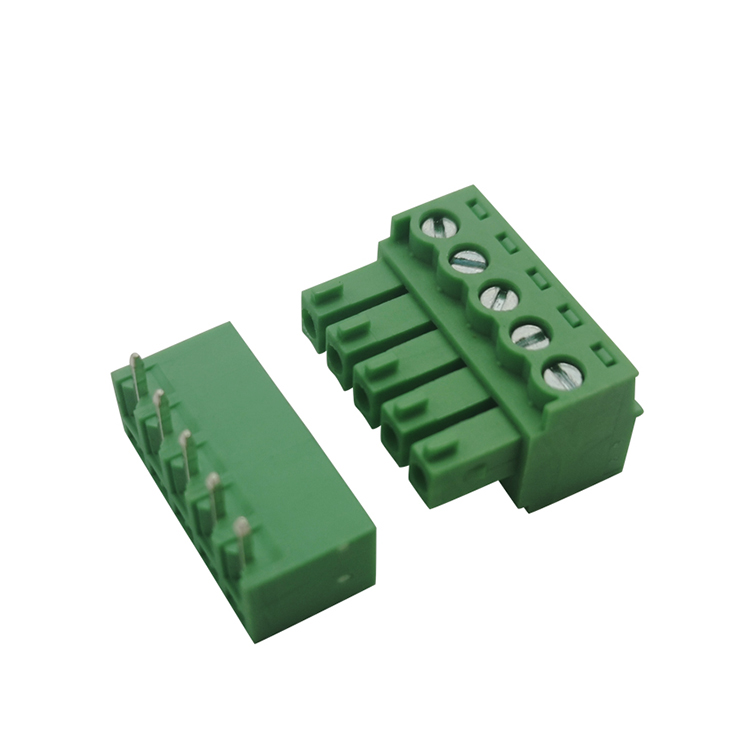
Overview of 4 Main PCB Terminal Block Types
Each terminal block design serves distinct production and field scenarios. Before detailed comparisons, we clarify the core working principles and industry search terms for each type.
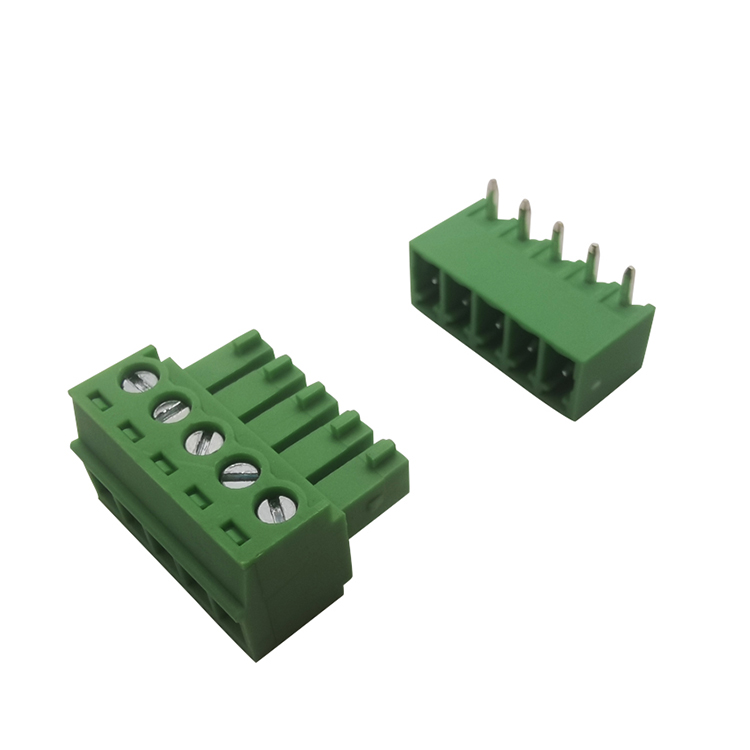
Screw Terminal Blocks
This is the most traditional and widely used design. A metal clamp plate is driven by screw torque to firmly fix stripped wires. It features mature technology and full-spec coverage. Common industry search terms include “PCB screw terminal block” and “screw terminal block connector”.
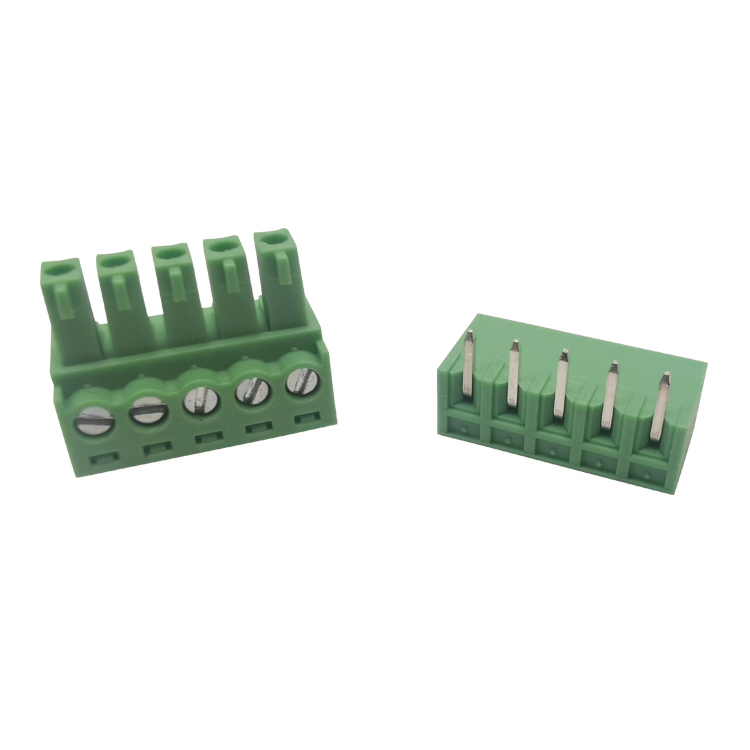
Spring Terminal Blocks
It replaces manual screw locking with a built-in spring cage. Wires are inserted against spring tension and fixed automatically. Most models require no tools, delivering fast and stable wiring.
Screwless Terminal Blocks
An upgraded iteration of spring-type structures, mostly operated by levers or push buttons. Open the lever, insert the wire, and close to lock. The keywords “screwless terminal block” and “screwless terminals” cover this full product series, ideal for high-efficiency wiring scenarios.
Pluggable Terminal Blocks
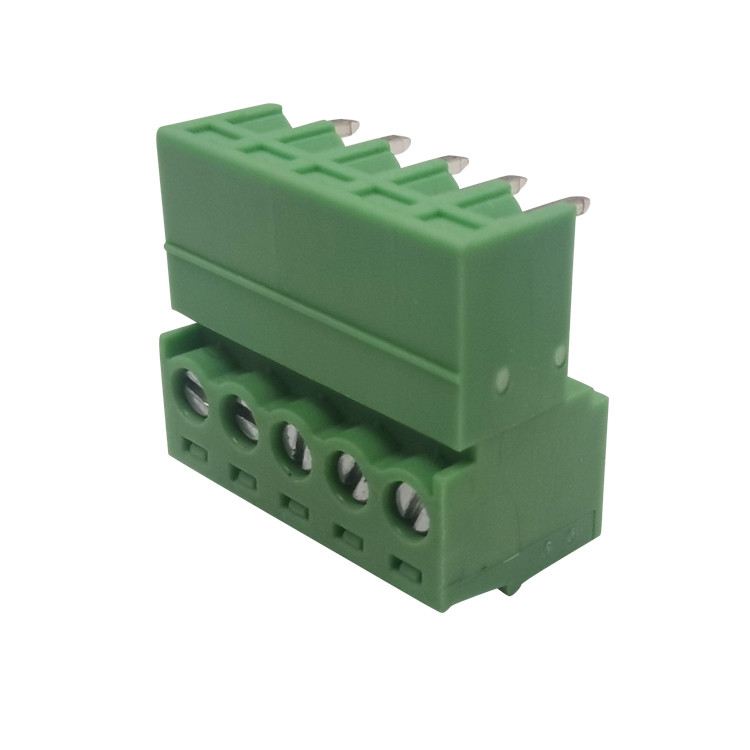
A two-piece separable structure, consisting of a PCB-soldered fixed header and a detachable wire plug. The entire wire harness can be plugged and unplugged as a whole without rewiring single cores. Popular search terms: “pluggable PCB terminal block” and “pluggable terminal block connector”.
Barrier Terminal Blocks
A specialized screw-type variant with independent plastic isolation barriers between adjacent poles. It provides sufficient creepage and clearance distance, tailored for high-voltage industrial power distribution scenarios. “Barrier screw terminal block” is a high-volume industrial search term.
Terminal Block Full-Dimension Comparison Table
For quick selection and BOM evaluation, we summarize core indicators including cost, assembly efficiency, vibration resistance, field maintainability, and wire compatibility of all mainstream models.
|
Terminal Block Type
|
Unit Cost Level
|
Assembly Speed
|
Vibration & Shock Resistance
|
Field Serviceability
|
Wire Gauge Tolerance
|
Best Industrial Application Scenarios
|
|---|---|---|---|---|---|---|
|
Screw Type
|
Lowest
|
Slowest (tool-dependent)
|
Average (prone to loose over time)
|
Poor (full wire re-termination required)
|
Wide (24–12 AWG, high tolerance)
|
High-volume low-cost equipment, static indoor control cabinets, cost-sensitive projects
|
|
Spring/Screwless Type
|
Medium (+20%~50% vs screw type)
|
Very fast (tool-free wiring)
|
Excellent (self-locking anti-vibration)
|
Medium (fast re-wiring, no integral disassembly)
|
Narrow (fixed diameter range only)
|
Mass production lines, motor equipment, vehicle-mounted/railway industrial devices
|
|
Pluggable Type
|
Highest (dual-part structure)
|
Fast wiring, slow initial assembly
|
Good (stable mating structure)
|
Excellent (one-click harness disassembly)
|
Depends on plug internal termination type
|
Field-maintained equipment, modular control boards, replaceable industrial modules
|
|
Barrier Screw Type
|
Medium-High
|
Slow manual assembly
|
Good (stable pressure-bearing structure)
|
Medium
|
Wide, suitable for high-current thick wires
|
High-voltage power distribution, motor control, new energy inverter equipment
|
Cost Analysis: Lowest Component Cost Does Not Equal Lowest Total Cost
- Screw terminal blocks have the lowest single-unit cost. The mature structure and standardized production process make them the most cost-competitive option for high-volume BOM matching.
- Spring and screwless terminal blocks cost 20% to 50% more per pole. The precision spring steel parts and customized plastic shells raise manufacturing costs.
- Pluggable terminal blocks are the most expensive. They adopt a dual-body structure of header and plug, with stricter mating tolerance requirements.
- From on-site engineering perspective, component unit cost is misleading. Screw blocks require manual screwdriver operation for each pole. For thousands of mass-produced boards, the accumulated labor costs far exceed the price difference of spring or screwless blocks. Choosing slightly more expensive tool-free models effectively reduces overall production costs.
Assembly Speed: Tool-Free Structures Dominate Mass Production
- Assembly efficiency is the biggest advantage of non-screw terminal blocks.
- For screw terminal blocks, every independent pole requires repeated operations: wire insertion, screwdriver tightening, and torque inspection. A 12-pin terminal block needs 12 independent tightening steps. This severely restricts beat speed on automated and manual assembly lines.
- Spring terminal blocks support direct wire insertion and automatic clamping. Lever-style screwless blocks only need simple opening, wire feeding, and closing actions. Each wiring operation takes less than one second.
- For high-volume industrial and commercial equipment, the labor savings brought by spring and screwless blocks completely offset the higher component cost. For small-batch customized cabinet equipment, the efficiency gap is negligible.
Vibration Resistance: The Most Underrated Reliability Indicator
- Vibration and shock resistance directly determine the long-term stable operation of industrial equipment, which is easily ignored in early design.
- Traditional screw connections suffer from micro-relaxation after long-term vibration. The clamping force slowly decays over thousands of operating hours, causing poor contact or open circuits. This fault is extremely common in motor drives, mobile mechanical equipment, and vehicle-mounted control cabinets.
- Spring and screwless terminal blocks feature passive self-tightening structures. Vibration will not loosen the connection; instead, it makes the wire fitting more compact. This is why they are standard for railway, automotive, and heavy industrial vibration scenarios.
- Screw blocks are only suitable for static indoor equipment with stable operating environments.
Field Serviceability: Pluggable Blocks Completely Optimize Maintenance
- On-site board replacement and fault maintenance are the core pain points of after-sales engineering.
- When screw or spring terminal block boards fail, technicians need to disassemble, mark, and sort each wire one by one. After replacing the new board, all wires must be re-terminated and calibrated. A 16-pin board replacement takes nearly 20 minutes, with high risk of wrong wiring and secondary faults.
- Pluggable terminal blocks change the maintenance logic. The overall wire harness plug is separated from the PCB header in one step. Replace the new board and re-plug the integral harness. The whole process takes only 2 minutes, with zero risk of wire sequence errors.
- The only tradeoff of pluggable structures is larger vertical board height. For control cabinets with limited internal space, the outline size must be verified in advance.
Wire Adaptability & High-Voltage Compliance Scenarios
- Screw terminal blocks have the strongest wire compatibility. The adjustable clamping structure adapts to 24 AWG to 12 AWG wires, fitting different wiring specifications in multi-region installation scenarios.
- Spring and screwless models have fixed wire diameter adaptation ranges. Ultra-thin wires cannot be clamped firmly, and ultra-thick wires cannot be inserted. Designers must strictly check the datasheet parameter range.
- For high-voltage scenarios above mains voltage, conventional small-pitch terminal blocks cannot meet IEC and UL creepage and clearance standards. Barrier terminal blocks solve this problem through isolated plastic barriers and 7.5mm/7.62mm large pitch design, which is the mainstream compliant choice for power distribution and new energy inverter equipment.
Mainstream Manufacturer Selection & Supply Reference
- Two brands dominate the global industrial terminal block market: Phoenix Contact and Degson.
- Phoenix Contact is a German high-end brand with comprehensive product lines and high global recognition, widely used in high-standard industrial projects in Europe and America.
- Degson provides full-spec, cost-effective terminal block products, with strong supply chain advantages in cost-sensitive global projects and Asian markets.
- Both brands cover screw, spring, screwless, pluggable, and barrier series. When customizing non-standard parts, prioritize models compatible with these two mainstream standards to ensure secondary supply availability and avoid supply chain risks.
Practical Engineering Selection Rules
There is no universal best terminal block. The optimal choice depends on your equipment’s operating environment, production mode, and after-sales maintenance mode.
•Cost-sensitive high-volume static equipment: Choose screw terminal blocks for maximum cost performance.
•Mass production or vibration-prone equipment: Choose spring or screwless terminal blocks to improve efficiency and long-term reliability.
•Field-maintained modular equipment: Choose pluggable terminal blocks to greatly reduce after-sales labor costs and wiring faults.
•High-voltage power distribution and industrial power equipment: Choose barrier screw terminal blocks to meet safety isolation standards.
FAQs: Common Terminal Block Selection Questions From Engineers
Below are five frequently asked questions about PCB terminal block types, focused on real industrial design, production, and field maintenance concerns.
1. Are spring terminal blocks more reliable than screw terminal blocks for industrial equipment?
Spring terminal blocks deliver better long-term reliability in dynamic industrial environments. Screw-type blocks can lose clamping force over time due to equipment vibration and thermal cycling, leading to intermittent connection faults. Spring and screwless blocks maintain consistent clamping pressure passively, making them more reliable for motors, moving machinery, and vehicle-mounted control systems. For static indoor cabinet applications, properly torqued screw blocks remain sufficiently reliable.
2. Is it worth upgrading to pluggable terminal blocks for standard control boards?
Pluggable terminal blocks are worthwhile if your equipment requires on-site servicing, repair, or board replacement. Although they cost more and require extra vertical PCB space, they cut field maintenance time from 20+ minutes to under 2 minutes per board. They also eliminate human error from manual wire re-termination. For fixed, non-serviceable OEM boards with no after-sales replacement needs, standard screw or spring blocks are the more cost-effective option.
3. What is the biggest risk of using mismatched wire gauge on spring terminal blocks?
Spring terminal blocks have a strict fixed wire diameter range. Using overly thin wires causes insufficient clamping force, resulting in loose contacts and signal dropout under minor vibration. Using overly thick wires cannot fully insert into the spring cage, leading to exposed copper and short-circuit hazards. Unlike screw terminal blocks with high wire tolerance, spring models offer almost no on-site adjustment margin — always match the wire gauge to the datasheet specs.
4. When should I choose barrier terminal blocks instead of regular screw blocks?
Choose barrier terminal blocks for mains-level and high-voltage power distribution, motor control, and inverter designs. The isolated plastic barriers between poles extend creepage and clearance distances, fully complying with IEC and UL industrial safety standards. Regular screw terminal blocks with small pitches cannot meet high-voltage insulation requirements and face safety risks during long-term operation.
5. Do tool-free screwless terminal blocks reduce production quality stability?
No, standardized screwless lever-type terminal blocks improve production consistency. Screw block quality relies heavily on worker operation — inconsistent torque leads to uneven clamping force. Screwless structures adopt mechanical fixed positioning, ensuring every wire obtains identical clamping tension. This reduces batch production defects and is ideal for high-volume automated assembly lines.