A Comprehensive Guide to RF-60TC: Is It the Superior High-Frequency PCB Substrate for Your Project?


In the rapidly advancing world of wireless technology, the demand for high-performance, reliable printed circuit boards (PCBs) is greater than ever. For engineers and designers working on cutting-edge RF and microwave systems, selecting the right substrate material is a critical decision that directly impacts product performance, efficiency, and longevity. Enter the RF-60TC High Frequency PCB, a premier PTFE-based, ceramic-reinforced composite material engineered to excel in the most demanding high-power applications. This blog delves into the superior properties, extensive manufacturing capabilities, and diverse applications of this exceptional material.


Unveiling the RF-60TC: A Material Engineered for Excellence


The Taconic RF-60TC is not just another PCB substrate; it represents a significant leap forward in material science. Crafted from a polytetrafluoroethylene (PTFE) base infused with ceramic and woven fiberglass, it is specifically formulated to address the unique challenges of high-frequency circuits. A key differentiator is its ability to maintain operational stability at elevated power levels while generating lower operating temperatures. This characteristic is paramount for enhancing power gains and boosting overall system efficiency, particularly in the increasingly prevalent miniaturized antenna systems operating within a controlled dielectric constant (Dk) of 6.15. These advantages are primarily derived from the material's superior dielectric heat dissipation properties and its exceptionally low signal loss, ensuring pristine performance.


A Deep Dive into the Defining Features of RF-60TC


The exceptionalism of the RF-60TC material is underscored by its robust set of technical attributes:


Features of RF-60TC


1) Superior Thermal Conductivity: A standout feature is its impressive thermal management capability. The substrate offers thermal conductivity values of 0.9 W/m·K for unclad laminates, which increases to 1.00 W/m·K for 0.5oz copper cladding and 1.05 W/m·K for 1oz cladding. This efficient heat dissipation reduces thermal stress on active components, thereby extending their operational lifespan and guaranteeing long-term reliability for your designs.


2) Stable Dielectric Constant: With a consistent dielectric constant (Dk) of 6.15±0.15 measured at 10 GHz, the RF-60TC provides exceptional electrical predictability. This stability is crucial for impedance control and is a fundamental enabler of device miniaturization, allowing designers to optimize board space without sacrificing electrical performance.


3) Minimal Dissipation Factor: The material exhibits an extremely low dissipation factor (Df) of just 0.002 at 10 GHz (as per IPC-650 2.5.5.5.1). This low loss tangent translates to highly efficient signal transmission, minimizing energy loss and preserving signal strength in sensitive RF applications.


4) Enhanced Dimensional Stability: The RF-60TC features a low coefficient of thermal expansion (CTE), with values of 9.9 ppm/°C in the X and Y axes and 40 ppm/°C in the Z-axis. This enhanced dimensional stability is vital for constructing complex, high-layer-count multilayer PCBs, as it ensures improved reliability of plated through holes (PTHs) across a wide temperature range.


5) Low Moisture Absorption: In harsh environmental conditions, moisture uptake can compromise a PCB's integrity. The RF-60TC boasts a remarkably low moisture absorption rate of 0.03% (IPC-650 2.6.2.1), ensuring consistent performance and unwavering environmental stability.


6) High Flammability Rating: Safety is never compromised. The material meets the stringent UL 94 V-0 flammability standard, confirming its self-extinguishing properties and high resistance to ignition.


Our Advanced PCB Manufacturing Capabilities with RF-60TC


Leveraging this advanced material requires a manufacturing partner with precise technical expertise. We offer comprehensive fabrication services tailored to fully exploit the potential of RF-60TC Taconic High Frequency PCB:


PCB Manufacturing Capabilities with RF-60TC


Layer Count Versatility: We expertly manufacture everything from simple Single and Double Layer boards to sophisticated Multilayer and Hybrid multilayer constructions, combining different materials for optimal performance.


Flexible Copper Weight: To meet specific current-carrying and conductivity needs, we provide standard options of 1oz (35 µm) and 2oz (70µm) copper cladding.


Precision Thickness Control: We offer a wide spectrum of substrate thicknesses, including 5mil (0.127mm), 10mil (0.254mm), 20mil (0.508mm), 25mil (0.635mm), 30mil (0.762mm), and 60mil (1.524mm), granting unparalleled design flexibility.


Large Format PCBs: Our production facilities can handle substantial board sizes, accommodating panels up to 400mm x 500mm.


Custom Solder Mask: Aesthetic and functional choices are available with solder mask colors including Green, Black, Blue, Yellow, Red, and others.


Diverse Surface Finishes: To ensure solderability, durability, and performance, we provide a full suite of surface finishes: Bare copper, HASL, ENIG, Immersion Silver, Immersion Tin, ENEPIG, OSP, and Pure Gold.


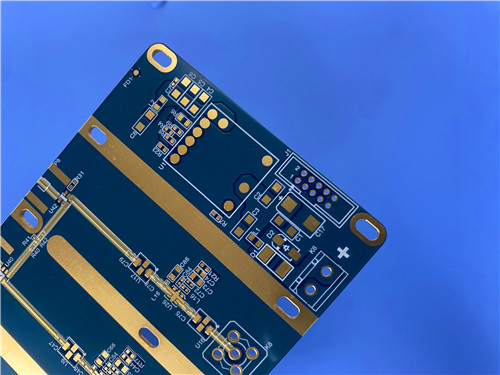
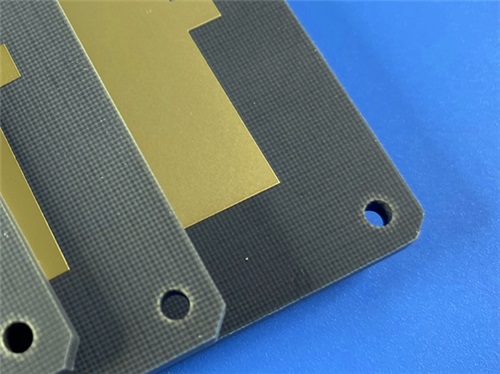
RF-60TC Taconic RF PCB  


Key Applications Driving Innovation


The unique property set of RF-60TC Taconic RF PCB makes them the substrate of choice for a broad spectrum of high-performance applications, including:


  • High-Power Amplifiers
  • Miniaturized Antennas for GPS, Patch, and RFID Reader Systems
  • Precision Filters, Couplers, and Power Dividers
  • Satellite Communication Technologies


Conclusion

The RF-60TC Taconic PCB material stands as a testament to innovation, offering an unparalleled combination of thermal management, electrical performance, and mechanical reliability. By choosing this advanced substrate and partnering with a capable manufacturer, you empower your designs to achieve new heights of efficiency and power in the competitive realm of RF and microwave electronics.


What Makes Rogers AD250C PCB the Ideal Choice for High-Frequency Antenna Applications?


In the rapidly evolving world of wireless communication, the demand for high-performance, reliable antenna systems continues to grow. Rogers Corporation’s AD250C antenna laminates stand out as a premier specialty material engineered to address the exacting requirements of modern RF and microwave antenna markets. These advanced laminates are constructed from PTFE-based substrates reinforced with woven glass, resulting in superior high-frequency performance, exceptional passive intermodulation (PIM) characteristics, and outstanding processability for printed circuit board fabrication.


One of the most significant advantages of Rogers AD250C material is its composition. The glass-reinforced polytetrafluoroethylene (PTFE) structure ensures a tightly controlled dielectric constant while delivering remarkably low signal loss. This makes it an excellent foundation for antenna systems where signal integrity is paramount. Furthermore, the material is available with either standard electrodeposited copper foil or reverse-treated ED copper, providing designers the flexibility to optimize circuit efficiency and minimize passive intermodulation, a critical factor in multi-frequency and high-power environments.


Key Features of AD250C Antenna Laminates:


Features of AD250C Antenna Laminates


Extremely low dissipation factor of 0.0013 at 10 GHz, ideal for base station and other high-frequency applications, ensuring minimal signal loss and enhanced efficiency.


Consistent dielectric constant (Dk) of 2.50 with a narrow tolerance of±0.04, allowing accurate impedance matching and reliable signal propagation.


Low-profile copper foil options significantly reduce conductor losses, contributing to improved overall antenna gain and performance.


Moisture absorption as low as 0.04% guarantees stable operation under varying environmental conditions, maintaining electrical properties and prolonging service life.


Exceptional copper peel strength reaching 14.8 lbs per inch ensures robust mechanical adhesion between copper layers and substrate, enhancing durability in demanding applications.


PCB Fabrication Capabilities with AD250C:


PCB Fabrication Capabilities with AD250C


Our manufacturing services fully support AD250C substrates with a comprehensive suite of PCB solutions. We provide single-layer, double-layer, and multi-layer board configurations, as well as hybrid builds combining different materials. Standard thickness offerings include 20 mil, 30 mil, and 60 mil, with flexibility to accommodate custom requirements. Finished copper weights of 1oz and 2oz are available for traces and pads, balancing current carrying capacity and fine-line patterning.


We can produce large-format PCBs up to 400mm x 500mm, facilitating both individual large antennas and multi-design panelization for cost-effective production. A variety of solder mask colors—including green, black, blue, red, and yellow—are offered for aesthetic and functional preferences. We also support multiple surface finishes such as immersion gold (ENIG), hot air solder leveling (HASL), immersion silver, immersion tin, OSP, ENEPIG, as well as bare copper or selective gold plating.


AD250C high frequency PCBs


Application Areas:

AD250C high frequency PCBs are widely used in critical communication infrastructure, including cellular base station antennas, automotive telematics and vehicle-to-everything (V2X) antenna systems, commercial satellite radio antennas, and other high-frequency wireless applications where low loss, high reliability, and consistent performance are essential.


Whether you are developing next-generation 5G infrastructure, advanced automotive radar, or satellite communication equipment, AD250C Rogers PCB provide the electrical and mechanical properties needed to achieve superior performance. Partner with us for your PCB manufacturing needs and leverage our expertise in high-frequency materials to bring your most challenging designs to life.

What Makes TMM13i High Frequency PCBs Ideal for Demanding RF and Microwave Applications?


In the world of high-frequency electronics, the choice of printed circuit board (PCB) material is critical to achieving optimal performance and reliability. Rogers Corporation’s TMM13i isotropic thermoset microwave material stands out as an exceptional choice for high-frequency applications. This ceramic thermoset polymer composite is specifically engineered to deliver high reliability in plated through-hole strip-line and micro-strip configurations. By combining the beneficial properties of both ceramic and PTFE substrates, Rogers TMM13i allows designers to leverage the processing ease of soft substrate materials without compromising on electrical or thermal performance.

TMM13i features


One of the key features of TMM13i laminate is their exceptionally low thermal coefficient of dielectric constant, rated at -70 ppm/°C. This ensures remarkable stability of the dielectric constant across a broad temperature spectrum, making it an excellent candidate for applications subject to significant temperature variations. Such thermal stability is essential in environments where performance consistency cannot be compromised.


Moreover, TMM13i PCB exhibits isotropic coefficients of thermal expansion (CTE)—19 ppm/°C in the X and Y axes, and 20 ppm/°C in the Z direction. These values are closely matched to those of copper, which significantly enhances the reliability of plated through holes and reduces etch shrinkage. This CTE matching minimizes the risk of delamination or cracking under thermal stress, thereby extending the lifecycle of the assembled PCB.


Another advantage of TMM13i substrate is its high dielectric constant of 12.85±0.35. This property allows for considerable miniaturization of circuit components, supporting the trend toward more compact and integrated electronic devices. In addition, the material’s low dissipation factor of 0.0019 at 10 GHz ensures minimal signal loss and improved energy efficiency, which is particularly valuable in high-speed digital and RF microwave circuits.


Our PCB Manufacturing Capabilities with TMM13i Material


PCB Manufacturing Capabilities with TMM13i Material


We take pride in offering advanced PCB fabrication services utilizing Rogers TMM13i high-frequency laminates. Our manufacturing facilities support a wide variety of PCB configurations—including single-layer, double-layer, multilayer, and hybrid boards—to meet diverse and customized project requirements.


We provide flexible copper weight options, including 1 oz (35 µm) and 2 oz (70 µm), to address specific conductivity and current-carrying needs. Our processes also support multiple dielectric thicknesses, from 15 mil (0.381 mm) up to 500 mil (12.7 mm), accommodating both standard and high-power designs.


For larger format designs, we can produce PCBs with dimensions up to 400 mm x 500 mm. Additionally, we offer a variety of solder mask colors—such as green, black, blue, yellow, and red—enabling alignment with your aesthetic branding or functional identification requirements.


To ensure superior performance and longevity, we provide a comprehensive selection of surface finishes: bare copper, HASL (Hot Air Solder Leveling), ENIG (Electroless Nickel Immersion Gold), OSP (Organic Solderability Preservative), immersion tin, immersion silver, ENEPIG (Electroless Nickel Electroless Palladium Immersion Gold), and pure gold.


TMM13i High Frequency PCBs


Applications of TMM13i High Frequency PCBs


TMM13i-based PCBs are ideally suited for a broad range of high-performance applications. These include chip testers, dielectric polarizers, lenses, filters, couplers, and various RF and microwave circuits. Their excellent electrical properties also make them a preferred material in satellite communication systems, where signal integrity and thermal stability are paramount.


Whether you are designing advanced aerospace systems, telecommunications infrastructure, or sophisticated test and measurement equipment,TMM13i High Frequency PCBs provide the reliability and performance needed to succeed in demanding environments.


Why is TLX-9 the Preferred High-Frequency Laminate for Demanding Aerospace and Telecom Systems?


In the rapidly advancing world of high-frequency electronics, the choice of printed circuit board (PCB) material is critical to the performance, reliability, and efficiency of the end product. Taconic’s TLX-9 high-frequency PCB material stands at the forefront of this innovation, offering an exceptional blend of electrical, mechanical, and thermal characteristics tailored for demanding applications. This article delves into the core attributes, capabilities, and uses of TLX-9, illustrating why it is a top-tier choice for engineers and designers in industries where precision and performance are non-negotiable.


An Introduction to TLX-9 High Frequency Material

TLX-9 is a premium-gradehigh-frequency laminate constructed from a polytetrafluoroethylene (PTFE) base reinforced with woven fiberglass. This sophisticated composite represents a significant achievement in copper-clad PTFE technology, merging outstanding high-frequency electrical properties with excellent mechanical durability. It is manufactured under strict controls to ensure consistent performance, making it ideal for applications where signal integrity and operational stability are paramount.


Moreover, Taconic TLX-9 complies with the UL 94 V-0 flammability standard, enhancing its suitability for safety-sensitive environments. The material is also compatible with standard PCB fabrication processes—including shearing, drilling, milling, and plating—enabling straightforward integration into existing production workflows without the need for specialized equipment or techniques.


Key Features and Technical Specifications

The superior performance of TLX-9 PCB stems from its carefully engineered properties:


TLX-9 PCB features


1) Dielectric Constant (Dk): At 10 GHz, the dielectric constant is 2.50, offering exceptional signal stability and reduced propagation delay, which is crucial for high-speed and high-frequency circuit operation.


2) Dissipation Factor (Df): With an ultra-low dissipation factor of 0.0019 at 10 GHz, TLX-9 minimizes signal loss, thereby enhancing the efficiency of power transmission and preserving signal clarity in RF and microwave applications.


3) Moisture Absorption: Boasting a moisture absorption rate of less than 0.02%, TLX-9 maintains consistent performance even under high-humidity conditions, ensuring long-term reliability and reducing the risk of degradation.


4) Dielectric Strength: The material offers a dielectric breakdown strength exceeding 60 kV, making it highly suitable for high-power and high-voltage applications such as radar systems and microwave amplifiers.


5) Resistivity: TLX-9 exhibits high volume and surface resistivity, both rated at 10⁷MΩ/cm and MΩrespectively, providing superior insulation resistance and minimizing current leakage.


6) Peel Strength: The laminate demonstrates strong bond integrity, with a peel strength of 12.0 lbs per linear inch for 1 oz copper, ensuring that copper layers remain securely attached throughout the assembly process and product lifecycle.


7) Thermal Expansion: The coefficient of thermal expansion (CTE) is tightly controlled, with X-Y CTE values of 9–12 ppm/°C and Z-axis CTE ranging from 130–145 ppm/°C. This dimensional stability across temperatures prevents deformation and supports the structural integrity of multilayer and high-density designs.


PCB Fabrication Capabilities with TLX-9


PCB Fabrication Capabilities with TLX-9


TLX-9 substrate supports a wide range of PCB configurations, including single-sided, double-sided, multilayer, and hybrid constructions. Available in thicknesses of 5, 10, 20, and 30 mils, it provides flexibility for various design requirements. The finished copper weight can be specified as 1 oz or 2 oz, supporting both fine-line tracing and higher current carrying capacity.


The maximum panel size available is 400 mm x 500 mm, accommodating both large-format boards and multi-design panelization. A variety of solder mask colors are offered, including green, black, blue, red, and yellow. Surface finish options include immersion gold (ENIG), hot air solder leveling (HASL), immersion silver, immersion tin, bare copper, OSP, electroplated gold, and ENEPIG, providing ample choices based on application needs and assembly conditions.


TLX-9 Taconic RF PCBs


Typical Applications

TLX-9 Taconic RF PCBs are widely used in advanced electronic systems where high reliability and signal fidelity are essential. Common applications include:


  • Low Noise Amplifiers (LNA)
  • Low Noise Block Converters (LNB)
  • Low Noise Converters (LNC)
  • Large-format antenna systems for Personal Communication Services (PCS) and Personal Communication Networks (PCN)
  • High Power Amplifiers


These applications benefit from the material’s stable electrical properties, low loss characteristics, and robust construction, making TLX-9 Taconic High Frequency PCB a preferred substrate in aerospace, military, telecommunications, and other high-performance sectors.


Conclusion

TLX-9 Taconic RF PCB Circuit Board combines cutting-edge material science with practical manufacturability, offering a reliable solution for the most challenging high-frequency designs. Its balanced performance across electrical, thermal, and mechanical domains ensures that it meets the rigorous demands of modern RF and microwave applications. Whether for consumer communication devices or mission-critical aerospace systems, TLX-9Taconic PCB Substrate delivers consistent quality and superior performance, establishing itself as a material of choice among engineers and designers worldwide.


Why Should You Choose DiClad 870 for Your High-Frequency and Low-Loss PCB Designs?


In the world of high-frequency electronics, the choice of printed circuit board material is critical to achieving optimal performance and reliability. Rogers DiClad 870 stands out as an exceptional high-frequency laminate, specifically engineered to meet the rigorous demands of advanced RF and microwave applications. This woven fiberglass-reinforced, PTFE-based composite delivers superior electrical properties, dimensional stability, and mechanical durability—making it an ideal substrate for high-speed digital and analog designs.
 

One of the key advantages of Rogers DiClad 870 is its unique construction. By utilizing a higher proportion of PTFE content and fewer plies of woven fiberglass, it achieves a lower dielectric constant and exceptionally low dissipation factor. What sets it apart from non-woven PTFE laminates is its enhanced dimensional stability, thanks to the strategic alignment of coated fiberglass plies in the same direction. This structural integrity ensures consistent performance even under varying operational conditions.


Key Features of DiClad 870 High Frequency Laminates


Features of DiClad 870


1) Stable Dielectric Constant: DiClad 870 maintains a consistent dielectric constant of 2.33 across a broad frequency spectrum—from 1 MHz all the way up to 10 GHz. This uniformity ensures reliable signal transmission with minimal phase distortion, making it suitable for high-speed and high-frequency designs.


2) Low Dissipation Factor: With an ultra-low dissipation factor of just 0.0013 at 10 GHz, these laminates significantly reduce signal loss, preserve energy efficiency, and enhance signal integrity—especially crucial in sensitive RF and microwave circuits.


3) Excellent Copper Adhesion: The laminate demonstrates outstanding copper peel strength, measuring 14 lbs/in when tested with 35μm foil per IPC TM-650 2.4.8. This strong bond between copper and substrate ensures long-term reliability and reduces the risk of delamination.


4) Minimal Moisture Absorption: DiClad 870’s moisture absorption rate is an impressively low 0.02%, allowing it to perform reliably in humid or challenging environments without compromising electrical properties.


5) High Flame Resistance: Complying with UL 94-V0 standards, this material offers excellent flammability resistance, contributing to safer end-products and compliance with international safety regulations.


PCB Manufacturing Capabilities with DiClad 870

We provide comprehensive manufacturing solutions for DiClad 870 PCBs, supporting a wide range of design requirements:


PCB Manufacturing Capabilities with DiClad 870


Layer Configurations: From single and double-sided boards to complex multi-layer and hybrid stack-ups, we accommodate diverse project needs with precision.


Dielectric Thickness Options: Choose from standard thicknesses including 31mil (0.787mm), 93mil (2.286mm), and 125mil (3.175mm) to meet specific impedance and mechanical requirements.


Copper Weights: Available in 1oz (35µm) and 2oz (70µm) options, providing flexibility in current carrying capacity and thermal management.


Panel Size: We support PCB dimensions up to 400mm x 500mm, ideal for both large single-board layouts and multi-design panelization.


Solder Mask Varieties: Customize the appearance of your boards with a selection of solder mask colors including Green, Black, Blue, Red, Yellow, and more.


Surface Finishes: Our offerings include Immersion Gold (ENIG), HASL, Immersion Silver, Immersion Tin, Bare Copper, OSP, ENEPIG, and Pure Gold, giving you the flexibility to choose based on solderability, durability, and application environment.


DiClad 870high frequency PCB


Typical Applications

DiClad 870 substrates are widely used in applications where consistent dielectric properties and low loss are essential. Common uses include:


  • RF components such as filters, couplers, and low-noise amplifiers
  • Power dividers and combiners in telecommunications infrastructure
  • Base station antennas and signal distribution networks
  • Radar feed networks, commercial phased array systems, and aerospace guidance systems
  • Digital radio antennas and other high-frequency communication devices


Whether you are designing for aerospace, defense, telecom, or high-performance computing, DiClad 870high frequency PCB offers a reliable foundation for building circuits that demand tight impedance control, minimal signal loss, and unwavering performance.


In today’s fast-paced world, keeping track of your health and staying connected is more important than ever. The ET458 Smartwatch offers a perfect blend of advanced technology, stylish design, and practical daily features. With its 1.56-inch AMOLED HD screen, every detail is crisp and colorful, making notifications, fitness data, and watch faces a joy to view.


The ET458 is more than just a smartwatch – it’s your personal health assistant. Featuring ECG detection, one-touch micro-physical examination, and continuous monitoring of heart rate, blood oxygen, and sleep patterns, it helps you understand your body like never before. Emotional fatigue detection allows you to stay aware of stress levels, giving you the tools to manage both physical and mental wellness.


For those with an active lifestyle, the ET458 supports multiple sports modes, while IP68 waterproofing and a long-lasting 380mAh battery ensure it keeps up with your adventures. Its ultra-bright flashlight with four modes – constant light, night running, warning, and SOS – adds an extra layer of safety and convenience.


The ET458 also excels in smart connectivity. With Bluetooth calling, NFC access control, and Alipay payment, you can handle daily tasks effortlessly from your wrist. Plus, the vast online watch face library allows you to personalize your watch to match your style.


Whether you’re focused on fitness, wellness, or staying connected on the go, the ET458 Smartwatch combines elegance, durability, and advanced health features. It’s not just a watch – it’s a comprehensive companion for modern life.

OEM ODM Smartwatch Manufacturing Services

          Anti-drone Equipment to deal with the threat of black flights to ensure low-altitude safety, the current "black flight" incidents are frequent, the hidden dangers can not be ignored. Inside and outside of airport clear zones, drone "black flights" are prone to cause a high incidence of accidents. Small drones, falling from a high altitude are also enough to injure people. In addition, the "black flight" of drones may also cause privacy leakage.


          The threat of "black-flying" drones to low-altitude safety at scenic spots is also obvious, as tourists using drones for filming may disturb wildlife and birds, as well as cause noise and accidents.


          The UAV defense system uses radar, spectrum detection, optoelectronic equipment and other means to work together, integrates and comprehensively handles multi-source detection and surveillance information, realizes early discovery, accurate identification and timely warning of suspicious small UAV targets, analyzes and judges the target threatening situation, and makes targeted jamming and interception decisions, and the interception UAV equipment mainly based on electronic jamming is able to provide continuous high-precision, high-data-rate Target guidance information, command defense and strike, so as to effectively safeguard the security of low-altitude areas.


          Detection systems: the "sensory core" for detecting and locating drones


          Detection systems are responsible for identifying and locating drones and are the first line of defense in the countermeasure process. Core components include:


          RF detectors: capture drone communication signals (e.g., 2.4GHz, 5.8GHz Wi-Fi, or proprietary protocols), identifying the model and location, with a detection range of 1-8 kilometers.


          Radar system: using millimeter-wave or microwave radar, detects UAV position, speed and trajectory, coverage range, suitable for low altitude or complex terrain.


          Optical/infrared sensors: capture UAV visual and thermal characteristics with 4K camera and infrared thermal imaging, suitable for night or foggy weather.


          Jamming system: the "suppression core" to suppress drone signals.


          The jamming system cuts off the communication and navigation functions of the drone by emitting electromagnetic signals. Suppresses 2.4GHz and 5.8GHz bands, and has a large coverage area.


          GPS jammer: targets the 1.5GHz GPS L1 band, emitting noise or pseudo-signals to disrupt positioning.


          Portable Jamming Gun: handheld device with directional antenna and laser sight, suitable for quick response.


          The jamming system utilizes software-defined radio (SDR) technology and supports band expansion. By virtue of its comprehensive and efficient nature, the drone detection and countermeasure system has demonstrated its value for a wide range of applications in multiple scenarios, covering stationary, vehicle-mounted and portable deployments.


          Airport security: protecting airspace


          An airport is protecting runway security by disposing of drones through Jammers and Netting Equipment. Portable jamming guns are used by security personnel for quick response.


          Critical facility protection: guarding sensitive areas


          Nuclear power plants, key sites, etc. are protected from drone reconnaissance or attacks. Fixed systems are equipped with jammers and lasers.


          Public Safety: Safeguarding Major Events


          Illegal drones can raise security or privacy concerns during sporting events, concerts or major conferences.


          Border management: responding to cross-border threats


          Border areas often face illegal drone surveillance. Vehicle-mounted systems are equipped with radar, jammers and interceptor drones to seize illicit cargo. The chain of command shares data over the network and coordinates multi-device countermeasures. The drone detection and countermeasure system realizes closed-loop defense capability from discovery to disposal through the collaborative work of the detection system, jamming system, command and control system, and auxiliary capture equipment, combining multi-source detection, signal jamming, physical disposal, and collaborative command mechanisms. Its successful application in airport security, key facility protection and border management fully demonstrates its efficiency and flexibility.

          Low-altitude economy under the Drone Countermeasure Technology to guard the security and order, in today's era, low-altitude economy is booming, drones with its unique advantages, in many areas to shine. Whether it's capturing magnificent scenery in aerial photography, realizing fast distribution in logistics transportation, helping precise operation in agriculture, guaranteeing regional safety in security work, or adding novelty experience in tourism industry, drones play an indispensable role. However, the widespread popularization of drones has also brought about a series of issues of concern, which, like the "haze" in the low-altitude field, pose a potential threat to people's lives and the security and stability of society.


          Privacy violations occur from time to time, some lawless elements use drones to spy on other people's privacy, so that people's private space is no longer peaceful; airspace safety is facing challenges, the disorderly flight of drones may interfere with the normal aviation order, bringing hidden dangers to the safety of civil aviation flights; illegal invasion incidents are also common, some drones are used for illegal purposes, attempting to break into the important areas, posing a threat to important facilities. It is the emergence of these problems that has given rise to drone countermeasure technology and driven its continuous evolution and development, becoming an important force in guarding low-altitude security.


          At present, drone countermeasure technology has built up a diversified, multi-level system covering a wide range of means, each with its own advantages, suitable for different application scenarios, and providing a comprehensive solution for dealing with the threats posed by drones.


          Jamming and Blocking type of technology is one of the most important means of countering drones. Suppressing the communication link between the drone and the remote control. When the drone loses its control link, it enters a preset safety mode, such as hovering, returning to flight, or forcing a landing, thus preventing it from continuing to carry out flight tasks that may pose a hazard. Protocol spoofing and hijacking are even more ingenious, where control of the drone is seized by forging control commands through the cracking of the drone's communication protocols. In this way, the drone will follow the counterparty's pre-determined instructions, such as returning to flight or landing, preventing it from continuing its illegal or dangerous mission.


          Deception and control technologies also play a key role in countering drones, as GPS deception technology induces drones to fly to preset safety zones or forced-landing points by transmitting false satellite positioning signals. The core of the technology lies in the temporal and spatial synchronization between the simulated and real signals, so that the drone can misjudge its own position, thus deviating from its original route and entering a safe and controllable area. Navigation spoofing further simulates false satellite navigation signals, inducing the drone to misjudge its position and deviate from its route, or triggering a return procedure to make it deviate from the target area, preventing the drone from intruding into a specific area. You can learn about the preparations for the construction of the anti-drone defense system in the factory area and do a good job of deploying anti-drone equipment.


          Physical interception-type technologies also show unique advantages in specific scenarios. The Net-capture Traversing Aircraft Device is a milder form of interception that allows for the capture of small drones by launching a capture net, and is particularly suitable for scenarios such as cities where collateral damage needs to be avoided. This approach allows drones to be safely captured without causing excessive damage, minimizing the harm they may cause.


          Strike-and-destroy type of technology occupies an important position in countering drones with its great power. Lasers emit high-energy laser beams that can quickly burn through the body of a drone, and are characterized by fast response speed and high precision, allowing for the rapid destruction of targets. However, it also has certain limitations and is greatly affected by weather, and its effectiveness is greatly reduced under adverse weather conditions such as fog and heavy rain.


          In addition to the main countermeasures technologies mentioned above, a number of other technologies are being developed and refined. The multi-technology fusion system combines various technologies, such as radar detection, radio frequency analysis and optoelectronic identification, to form an integrated countermeasure system. Through artificial intelligence, it analyzes drone trajectories and matches countermeasures, such as jamming, spoofing and lasers, which greatly improves countermeasure efficiency and success rates.


          In the wave of rapid development of low-altitude economy, drone countermeasure technology is like a solid line of defense, guarding our security and order. From jamming and blocking to deception and control, from physical interception to striking and destroying, and to other technological means such as multi-technology fusion, these countermeasure technologies have cooperated with each other to form an all-around, multi-layered defense system.


          As science and technology continue to advance, drone countermeasure technologies will also continue to develop and improve. We have reason to believe that under the guardianship of these advanced technologies, the low-altitude domain will become safer and more orderly, and drones will continue to play their positive role in our lives and social development under reasonable control, so that the prosperity and safety of the low-altitude economy can coexist harmoniously and we can work together to create a better future.

         In the rapid development of the logistics and warehousing industry, the inventory scale continues to expand, the traditional warehouse management model is facing many challenges. Shortage of personnel leads to low inventory efficiency, inventory update cycle is too long to meet the real-time management needs, the lack of high-frequency security and fire patrols also bring hidden dangers to the warehouse safety. In this context, indoor inspection drones came into being, becoming a key tool to crack the industry's pain points.


         The indoor inspection drone has reshaped the warehouse inventory process by virtue of the technology integration mode of "drone + AI + RFID". Take the TSU-2 indoor inspection drone as an example, equipped with a gimbaled camera and RFID reader, it can efficiently traverse all shelves in the warehouse and accurately read the RFID tag information of commodities through automatic planning of flight routes or manual pilotage. Compared with the traditional manual inventory, the indoor inspection drone efficiency is greatly improved, significantly shortening the inventory cycle. At the same time, the compact design of the hangar makes it flexible to deploy, without the need for secondary construction, and can quickly adapt to different warehouse layouts, easily traversing all corners of the warehouse, realizing the rapid collection of cargo information and real-time linkage, and injecting brand new vitality into warehouse management.


         The core competitiveness of the indoor inspection UAV stems from a number of key technology breakthroughs. Navigation technology allows the drone to obtain real-time environmental information through sensors in an indoor environment without satellite signals, complete autonomous positioning, trajectory estimation and environmental mapping, and accurately plan flight paths; hybrid identification technology uses a combination of flexible metal-resistant RFID tags and high-contrast dynamic two-dimensional barcode, prioritizing the reading of RFID tags with higher efficiency, and automatically switching to AI two-dimensional barcode identification in the event of identification failure. With the three-level error tolerance system of AI multi-model voting verification and real-time comparison of system data, the error rate is strictly controlled at a low level; autonomous flight technology realizes accurate hovering, rotating, and photo-taking of the drone indoors by converting the LIDAR position information into GPS format, which, combined with the automatic charging function, achieves the high-frequency unattended inspections. In addition, the application of infrared camera allows the drone to have fire warning capability, real-time monitoring of the warehouse temperature, and immediately triggering the alarm when abnormalities are detected, escorting the safety of warehousing.


         With the continuous maturity of technology, indoor inspection drones have been deeply integrated into the warehouse management platform, building a full-process intelligent management system. Warehouse management platform through the visualization of the Kanban board, real-time presentation of the use of the state of the warehouse, the operation of equipment, in and out of the warehouse statistics and other key data, managers can view inventory information at any time, based on the data to make scientific decisions. Driven by innovation, drones have become the new favorite of indoor inspection. The image, temperature, cargo information and other data collected by the drone during inspection will be uploaded to the cloud and synchronized to the management system in real time, forming a complete inventory database, supporting historical data query and analysis, and helping to optimize inventory layout and reduce inventory costs. At the same time, the platform also has an exception handling function, when the drone detects problems such as cargo displacement and equipment failure, it will quickly freeze the relevant cargo space, generate emergency task orders and push alert information to ensure timely resolution of the problem and safeguard the stability of warehouse operations.


         How to choose a quality indoor inspection drone manufacturer? When choosing an indoor inspection drone manufacturer, you need to comprehensively consider various factors. First, pay attention to technical strength, give priority to manufacturers with independent R&D capabilities and mature solutions in core technology areas such as SLAM navigation, RFID identification, AI algorithms, etc., and assess the stability and advancement of the technology by examining their technical patents and project cases. Secondly, pay attention to product performance and adaptability, understand the flight time, load capacity, recognition accuracy, environmental adaptability and other parameters of the drone, to ensure that the product can meet the scale, layout and special storage needs of their own warehouses, for example, whether it can fly stably in the narrow aisles, and whether it is equipped with additional functions such as temperature and humidity monitoring. Furthermore, examine the manufacturer's after-sales service system, perfect after-sales support including equipment installation and commissioning, operator training, regular maintenance and rapid response to failures, which directly affects the long-term stable operation of the equipment. Reference to the industry reputation and customer reviews, through the exchange of other enterprises using the manufacturer's products, select the manufacturer with a good reputation for the intelligent upgrading of warehouse management to provide a reliable guarantee.

          As drones are increasingly used in many fields, the airspace safety risks arising from their misuse are becoming more prominent. Such risks are particularly prominent in sensitive areas such as airports and large public event venues. Traditional signal jamming means are often limited in their effectiveness against drones with autonomous flight capabilities.


          In contrast, the physical interception program using multiple UAVs to perform collaboratively has become one of the current strategies for dealing with high-risk aerial targets because of its greater robustness and environmental adaptability. Nanjing Thousand Eyes Aviation's net-catching traverser realizes the full-process closed-loop of launching a catching net to capture, which provides new ideas and solutions for airspace safety and security.


          In the actual anti-nullification mission, the target is monitored by the detection equipment, and by estimating the position and speed of the target, the staff operates the net traversing machine, which can encircle the target with multiple net traversing machines in a circular symmetrical formation to ensure the observability requirement based on the directional measurements and a high catching coverage space. Based on the estimated target state, tracking stability is ensured and capture readiness is maintained. In a real-time capture mission, when the target enters the net capture range, and locks the target for net capture.


          The net traverser can also be used to capture criminal suspects, the advantage of non-contact capture, can protect the safety of law enforcement officers, but also can reduce the damage to the suspects. Of course, the net traversing machine can also be used in the zoo, if there are animals "escape", can also be used. What are the advantages of intelligent net trapping drone how to buy? Of course, these are to be used within the scope of local regulations, and the purchase of reliable manufacturers, from the load, flight stability, intelligent control and other aspects, as well as the manufacturer's establishment of time and so on to consider.


Warm tips: net catching traverser is expected to be used in the future in security and no-fly zone supervision, major events anti-drone protection, etc., to provide more reliable protection for airspace safety.