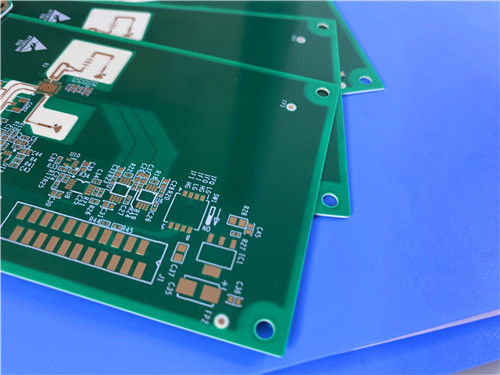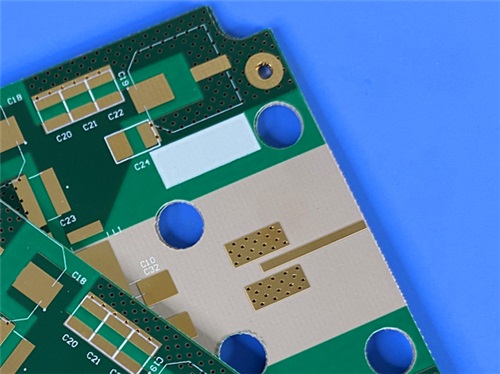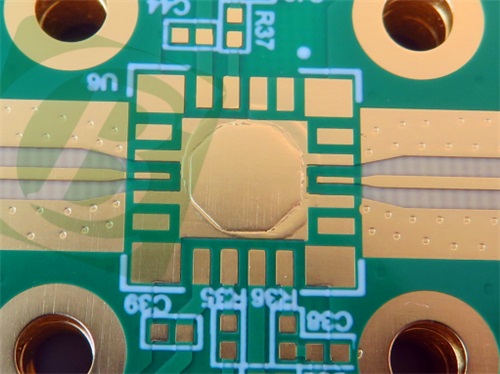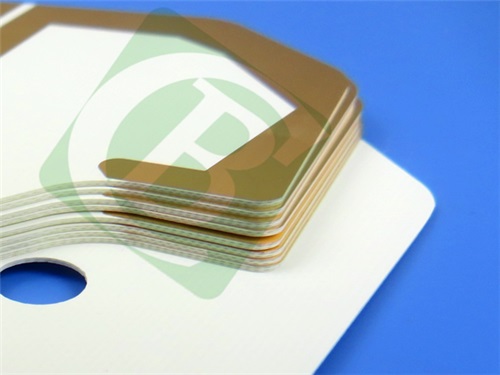
Why Should You Choose RO4835 Laminates for Your Next RF or Microwave PCB Project?


In the world of high-frequency printed circuit boards (PCBs), material selection plays a critical role in determining the overall performance, reliability, and longevity of the final product. Traditional thermoset laminate materials, such as FR-4, are prone to oxidation—especially under elevated temperatures. This oxidation can lead to undesirable increases in the dielectric constant (Dk) and dissipation factor (Df), ultimately compromising signal integrity and circuit performance.


Rogers Corporation’s RO4835 high-frequency laminate is specifically engineered to overcome these limitations. With superior resistance to oxidation and exceptional stability under thermal stress, Rogers RO4835 offers an ideal substrate solution for high-frequency and RF applications. What’s more, it delivers electrical and mechanical properties comparable to those of the widely used RO4350B laminates, but with enhanced cost-efficiency and compatibility with standard FR-4 manufacturing processes.


Key Features of RO4835 High Frequency Laminates

One of the standout attributes of Rogers 4835 PCB is its compliance with RoHS and UL 94 V-0 standards, making it both environmentally friendly and flame-retardant. This makes it suitable for use in demanding industries where safety and regulatory compliance are non-negotiable.


Key Features of RO4835 High Frequency Laminates


Another significant advantage is the availability of Rogers' proprietary LoPro™Reverse treated copper foil. This specialized foil treatment minimizes insertion loss, making RO4835 PCB an excellent choice for applications where signal integrity and low loss are paramount.


Electrical consistency is another area where RO4835 excels. It boasts a stable dielectric constant of 3.48 with very tight tolerances, ensuring predictable performance across various frequencies—a crucial factor in RF and microwave circuit design. Additionally, its dissipation factor is as low as 0.0037 at 10 GHz, meaning minimal signal loss even in high-frequency scenarios.


From a mechanical standpoint, RO4835 exhibits outstanding dimensional stability due to its low coefficient of thermal expansion (CTE). With CTE values of 10 ppm/°C in the X direction, 12 ppm/°C in the Y direction, and 31 ppm/°C in the Z direction, this material significantly reduces the risk of delamination or plated-through-hole failure under thermal cycling.


PCB Manufacturing Capabilities with RO4835

We support a wide range of PCB configurations using RO4835 substrates, including single-sided, double-sided, multi-layer, and hybrid constructions. This allows for design flexibility whether you are working on a simple RF switch or a complex phased-array radar system.


PCB Manufacturing Capabilities with RO4835


To accommodate diverse electrical requirements, we offer standard copper weights of 1oz (35µm) and 2oz (70µm). Dielectric thickness is also highly adaptable: for ED copper, thickness ranges from 6.6 mil (0.168 mm) to 60 mil (1.524 mm); for LoPro copper, it ranges from 4 mil (0.102 mm) to 60.7 mil (1.542 mm).


We can produce PCBs with maximum dimensions of 400mm x 500mm, suitable for both prototyping and volume production. A variety of solder mask colors—including green, black, blue, yellow, and red—are available to meet aesthetic or branding preferences.


Surface finish options are equally comprehensive, featuring bare copper, HASL (Hot Air Solder Leveling), immersion gold (ENIG), immersion silver, immersion tin, OSP (Organic Solderability Preservative), and pure gold plating. This ensures compatibility with virtually any assembly process and end-use environment.


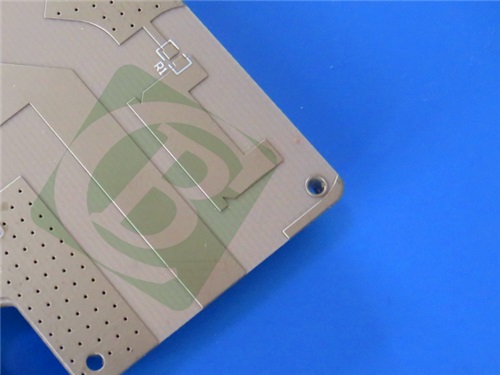
RO4835 high-frequency PCBs


Typical Applications

RO4835 high-frequency PCBs are ideally suited for a variety of advanced electronic applications, including:


  • Automotive radar and sensor systems
  • Point-to-point microwave communication links
  • High-power amplifiers
  • Phased-array radar systems
  • General RF components and subsystems


Whether you are developing cutting-edge automotive safety systems, communication infrastructure, or defense electronics, RO4835 provides a reliable, high-performance foundation for your most demanding circuits.


In today’s fast-paced world, a smartwatch is more than just a timepiece—it’s a personal assistant, fitness companion, and style statement all in one. The North Edge HT30 redefines what a smartwatch can be, combining cutting-edge technology with premium craftsmanship. The large HD round display delivers a stunning visual experience, making notifications, fitness data, and apps easy to read at a glance. Housed in a lightweight yet durable titanium alloy case, the HT30 offers both elegance and resilience, suitable for every lifestyle.


Performance is at the heart of the HT30. Equipped with a 600mAh battery and a precision motion algorithm, it ensures uninterrupted tracking of health and fitness activities. The watch supports over 100 professional sports modes and features a built-in health monitoring chip, allowing you to track heart rate, sleep, and other vital stats with ease.


For outdoor enthusiasts, the HT30 is a game-changer. With IP68 waterproofing, a compass, floodlight, SOS, and purple light identification lamp, you can explore confidently day or night, whether hiking, sailing, or swimming. Customization is another highlight, as users can choose from a variety of dial themes and strap colors, ensuring the watch matches personal style and occasions.


Whether you’re seeking adventure, fitness tracking, or simply a smart companion that keeps you connected, the North Edge HT30 delivers. With its powerful features and premium design, it’s more than a smartwatch—it’s a lifestyle upgrade.


In many communication systems, RF signals need to travel tens of kilometers. At lower frequencies coaxial cables are still usable, but once you move into the multi-GHz range, loss and interference quickly become unacceptable.


RFoF (Radio over Fiber) addresses this by directly modulating RF signals onto an optical carrier, sending them through fiber, and recovering them at the remote end. This combines the low loss and wide bandwidth of optical fiber with the simplicity of bypassing additional frequency conversions.

RFoF Technology

Frequency Range and Link Characteristics

A typical 6 GHz RFoF module covers 5 MHz – 6000 MHz. End-to-end link gain is about 22 dB, with flatness within ±2.5 dB across the full band. Over a narrower 36 MHz span, flatness can be as good as ±0.25 dB. This matters for multi-carrier or broadband signals, since flatter response reduces equalization overhead.


Dynamic Range and Noise

Two key metrics for any RFoF link are the noise figure (NF) and the spurious-free dynamic range (SFDR).

  • NF is around 16 dB, which allows weak signals to remain usable after transport.
  • SFDR is about 104 dB·Hz^(2/3), indicating how well the link can handle strong and weak signals together without distortion.

For example, in a 10 MHz bandwidth, this translates to an effective dynamic range on the order of 70–80 dB—sufficient for most fronthaul and satellite reception scenarios.

RFoF's Spurious-Free Dynamic Range (SFDR) Illustration

Environmental and Interface Considerations

These modules typically operate from –20 °C to +75 °C, with storage limits from –40 °C to +85 °C. Common interfaces include FC/APC optical connectors, with selectable wavelengths at 1310 nm or 1550 nm. Power is usually 5 V at ~150 mA, keeping power consumption low and integration straightforward.


Application Scenarios

  • 5G / LTE fronthaul: linking base stations and remote RF units with low latency and high bandwidth;
  • Satellite ground stations: carrying high-frequency signals from antenna sites to control rooms;
  • CATV / HFC networks: replacing coax over long spans to reduce attenuation;
  • Research facilities: radio telescopes and other low-noise signal transport needs.


Conclusion

RFoF is not a universal solution, but when frequencies extend into the GHz range and distances span kilometers, it offers clear advantages: wide bandwidth, low loss, and strong dynamic range. Understanding link budget and parameter trade-offs is key to building reliable systems.


Full specifications can be found in the technical datasheet.


LED digital tube, TFT lcd screen, and OLED screen are three types of screens widely used in electronic devices, with significant differences in composition, technical principles, and applications.

1、 LED digital tube

Composition: The LED digital tube is composed of multiple LED light-emitting diodes, each corresponding to a part of a number or symbol on the digital tube. They are encapsulated in a transparent plastic or glass casing to form a cohesive display unit.

Technical principle: The working principle of LED digital tube is based on the luminous characteristics of LED. When current passes through an LED, the LED emits light, and the color of the light depends on the material of the LED. In a digital display, numbers, letters, or symbols can be displayed by controlling the brightness of different LEDs.

Application: LED digital tubes are widely used in various occasions that require digital display, such as electronic clocks, counters, thermometers, etc., due to their simple structure, low price, and easy control.

Advantages: Energy saving and environmental protection: LED digital tubes have higher energy saving and environmental protection characteristics compared to traditional LCD displays. Due to its use of DC drive, it has lower power consumption and does not require the use of LCD screens, making it more energy-efficient. Lower cost: Compared to some high-end display technologies, LED digital tubes have a relatively lower price and are more suitable for use in some mid to low end application scenarios. Strong customizability: LED digital tubes can display different characters through different combinations of LEDs, thus having high customizability and allowing for different designs and production according to needs.

Disadvantages: Limited display effect: Compared with TFT and OLED screens, LED digital tubes have a simpler display effect and are usually used to display numbers, letters, and simple graphics. They are not suitable for displaying high-definition videos or complex images.

2、 TFT lcd screen (Thin Film Transistor)

Composition: TFT lcd screen is composed of multiple complex components, including liquid crystal layer, backlight module, thin film transistor, color filter, polarizer, etc. The liquid crystal layer is the core part of TFT screen, used to control the transmission and obstruction of light; The backlight module provides a light source; Thin film transistors act as switching elements to control the brightness of each pixel.

Technical principle: TFT screen belongs to a type of active matrix liquid crystal display. It controls the alignment direction of liquid crystal molecules through thin film transistors, thereby controlling the amount of light transmitted. When current passes through a thin film transistor, an electric field is generated to deflect liquid crystal molecules, thereby changing the transmittance of light and achieving image display.

Application: TFT screens are widely used in high-end electronic products such as smartphones, tablets, LCD TVs, etc. due to their advantages of high definition, high color reproduction, and low energy consumption.

Advantages: High Resolution: TFT screens typically have high resolution and can present clear images and text, making them suitable for tasks such as reading, watching high-definition videos, and graphic design. Fast response time: Due to the use of LCD technology, TFT screens have a fast response time, suitable for playing dynamic content and games, reducing motion blur and ghosting. Multifunctionality: TFT screens are widely used in various electronic devices, including smartphones, tablets, televisions, computer monitors, etc., to meet different user needs. Wide viewing angle: TFT screens typically have a good viewing angle and can maintain image quality even at oblique angles.

Disadvantages: High energy consumption: TFT screens typically require a backlight source to generate brightness, which may result in higher energy consumption, especially when displaying high brightness content. Black level limitation: Compared to OLED, TFT screens may have some limitations when displaying dark black, as LCD cannot completely turn off the light source.

3、 OLED screen (Organic Light Emitting Diode)

Composition: OLED screen is composed of organic light-emitting material layer, anode, cathode, and encapsulation layer. The organic light-emitting material layer is the core part of OLED screens, and when current passes through it, the organic material emits light.

Technical principle: The working principle of OLED screens is based on the electroluminescence phenomenon of organic materials. When current passes through the organic luminescent material layer, electrons and holes recombine in the luminescent layer to produce excitons, which release energy and emit light when they decay. Each pixel of an OLED screen can independently emit light and control brightness, thus having extremely high contrast and color saturation.

Application: OLED screens are widely used in fields such as smartphones, high-end TVs, wearable devices, etc. due to their advantages of self illumination, high contrast, wide viewing angle, and low power consumption. In addition, OLED screens can also achieve curved and flexible design, providing more possibilities for product design.

Advantages: Self luminous: OLED screens emit light at each pixel, making them thinner and lighter than LCDs, and do not require a backlight source, allowing for higher contrast and deeper black color. Low power consumption: OLED screens save structures such as backlight, LCD, and color filters, resulting in lower power consumption. Flexible display: OLED screens can achieve flexible display, providing more possibilities for future electronic device design. Vibrant colors: OLED screens have higher color saturation, resulting in more vivid image colors.

Disadvantages: High cost: The production process of OLED screens is complex, so the price is relatively high. Short lifespan: OLED organic materials have a limited lifespan, typically only a few thousand hours. Risk of burn-in: OLED screens may experience burn-in when displaying static images for a long time at low brightness. We are professional lcd display manufacturer, get more details from www.gvlcd.com quickly.


According to the latest report released by the globally renowned market research firm Omdia, the global shipment of LCD panels (9 inches and above) is expected to reach 875 million units by 2025, a year-on-year increase of 2.9%, and the market is showing a steady recovery trend. Among them, panel manufacturers in Chinese Mainland have performed particularly well. It is estimated that the shipment volume will increase by 4.8%, and continue to lead the global market.


According to the analysis of the report, this growth is mainly due to the strong cost control ability of manufacturers in Chinese Mainland, complete industrial chain support and flexible market strategy. Faced with market fluctuations, major manufacturers have adopted a strategy of "conservative expansion" and "on-demand production", effectively maintaining the supply and demand balance and price stability of the global LCD market, and avoiding vicious competition. In addition, the demand for segmented markets such as in car displays, high-end commercial displays, and smart home control screens has provided new impetus for the growth of the LCD industry.


As an important participant in the LCD industry, Golden Vision closely monitors global market trends and actively optimizes its production capacity layout and product structure. The company is committed to providing customers with high-performance and high reliability industrial and commercial grade LCD displays, and has won a good reputation in the global market with fast response and customized services.


The Marketing Director of Golden Vision stated, 'We agree with Omdia's assessment of market trends.'. The future competition will be a comprehensive competition of technology, quality, and supply chain stability. Golden Vision will continue to focus on technological innovation, deepen its layout in sub sectors such as industrial control and healthcare, and grow together with customers.


gvlcd


In the rapidly evolving world of display technology, two names stand out: TFT LCD and OLED. As a leading provider of innovative display solutions, Goldenvision is often asked: which display technology is superior? The answer isn't straightforward, as each has its own strengths and ideal use cases. In this article, we’ll break down the differences to help you make an informed decision.


What is TFT LCD?

TFT LCD (Thin-Film Transistor Liquid Crystal Display) is a variant of LCD that uses thin-film transistor technology to improve image quality. Each pixel is controlled by one to four transistors, allowing for sharper and more vibrant images compared to traditional LCDs.

Advantages of TFT LCD:

High Brightness: Ideal for outdoor use and well-lit environments.

Long Lifespan: Less susceptible to screen burn-in compared to OLED.

Cost-Effective: Generally more affordable for larger displays.

Wide Availability: Commonly used in smartphones, monitors, and televisions.


Key Comparisons

Feature

TFT LCD

OLED

Black Levels

Good

Excellent

Brightness

High

Moderate

Response Time

Slower

Faster

Lifespan

Longer

Shorter

Cost

Lower

Higher

Flexibility

Rigid

Flexible


What is OLED?

OLED (Organic Light-Emitting Diode) technology uses organic compounds that emit light when an electric current is applied. Unlike TFT LCDs, OLED displays do not require a backlight, allowing for deeper blacks and more vibrant colors.

Advantages of OLED:

Perfect Blacks: Individual pixels can turn off completely, resulting in infinite contrast ratios.

Faster Response Times: Better for fast-moving content like gaming and sports.

Flexibility: Can be used in curved or flexible displays.

Energy Efficiency: Consumes less power when displaying dark content.


Which One Should You Choose?

Choose TFT LCD If:

You need a display for bright environments.

You prioritize longevity and reduced risk of burn-in.

Budget constraints are a concern.


Choose OLED If:

You want superior image quality with deep blacks and vibrant colors.

You need a display for multimedia consumption or gaming.

Flexibility and sleek design are important.


Conclusion

Both TFT LCD and OLED have their unique advantages. At Goldenvision, we offer a range of display solutions tailored to your needs. Whether you value the reliability and brightness of TFT LCD or the stunning visuals of OLED, we have the perfect display for you.

Contact us today to learn more about our products and find the ideal display technology for your application!

Look around you. Whether you're reading this on your smartphone, glancing at your laptop monitor, or checking the time on your smartwatch, there's a very high chance you're looking at a TFT LCD display. This technology is the workhorse behind the visual interface of countless modern devices. But what exactly is a TFT LCD, and how does it create the bright, colorful images we see every day? Let's dive in and demystify this engineering marvel.


tft lcd display


What is a TFT LCD?


First, let's break down the acronym:


LCD (Liquid Crystal Display): An LCD is a flat-panel display that uses the light-modulating properties of liquid crystals. These crystals don't produce their own light; instead, they rely on a backlight and act like tiny shutters to either block or allow light to pass through.


TFT (Thin-Film Transistor): This is the active matrix technology that drives the LCD. A TFT is a special type of transistor made from a thin film of semiconductor material deposited on a glass panel. For every single pixel on the screen, there are one or more of these tiny transistors.


So, a TFT LCD is essentially an active matrix LCD where each pixel is controlled by one to four transistors. This setup allows for faster response times, sharper images, higher contrast, and better color reproduction compared to older, passive matrix LCDs. It's the "smart" and precise way to control an LCD.


How Does a TFT LCD Work?


The magic of a TFT LCD lies in its layered structure and precise control of light. Here’s a step-by-step breakdown:


1. The Backlight:

The process starts with a bright white LED backlight at the rear of the display assembly. This light source is always on, providing the illumination for the entire screen.


2. The Polarizers:

The light first passes through a polarizing filter. This filter only allows light waves vibrating in a specific direction to pass through, creating polarized light.


3. The Liquid Crystal Layer:

This polarized light then reaches the layer of liquid crystals. Each pixel is made up of three sub-pixels—red, green, and blue (RGB)—each with its own transistor. By applying a precise electrical voltage via the TFT, the twist of the liquid crystals changes. This twisting action either twists the polarized light to allow it through or untwists to block it, acting like a microscopic shutter for each sub-pixel.


4. The Color Filter:

After passing through the liquid crystal layer, the light hits a color filter. This filter has individual red, green, and blue segments for each sub-pixel. The amount of light that passed through each sub-pixel now shines through its corresponding color filter, creating the exact shade of red, green, or blue needed.


5. The Second Polarizer:

Finally, the light passes through a second polarizing filter. This filter is oriented at a 90-degree angle to the first one. Its job is to analyze the light that has been altered by the liquid crystals. The combination of these two filters and the liquid crystals' twisting action ultimately determines whether light is allowed to pass through for that pixel or not.


Your brain blends the intense of these millions of tiny red, green, and blue sub-pixels together to perceive a single, full-color pixel. Millions of these pixels working together form the complete image on your screen.


Key Advantages of TFT LCDs


High Contrast & Image Quality: Offers sharp and vibrant images.


Cost-Effective: Mature manufacturing processes make them relatively inexpensive to produce.


Long Lifespan: LEDs have a very long operational life.


Reliability: Solid-state technology with no moving parts.


Conclusion


TFT LCD technology is a masterpiece of engineering that combines the precise control of thin-film transistors with the unique light-modulating properties of liquid crystals. From your phone to your TV and the dashboard in your car, this reliable, efficient, and cost-effective technology continues to be a dominant force in bringing digital information to life right before our eyes. Gvlcd is a professional TFT LCD display manufacturer,get more details from us quickly!

An LCD display, which stands for Liquid Crystal Display, is a type of flat-panel display technology that uses the light-modulating properties of liquid crystals to display images.


Here's a breakdown of how it generally works and its key characteristics:


How it works:


Liquid Crystals: Unlike traditional solids or liquids, liquid crystals have unique properties. Their molecules can be aligned or rotated when an electric current is applied.


Backlight: LCDs don't emit light directly. Instead, they rely on a backlight (usually LED-based in modern displays) that shines light through the display.


Polarizers: Before the light from the backlight reaches the liquid crystal layer, it passes through a polarizing filter that aligns the light waves in a specific direction.


Electrodes: A grid of electrodes surrounds the liquid crystal layer. When an electric voltage is applied to these electrodes, it causes the liquid crystal molecules to twist or untwist.


Light Modulation: As the liquid crystals change their orientation, they either allow or block the polarized light from passing through.


Color Filters (for color displays): For color LCDs, the light then passes through tiny colored filters (red, green, and blue) for each pixel. By varying the amount of light that passes through each sub-pixel, a full spectrum of colors can be created.


Image Formation: The combination of many such pixels, each controlled independently, forms the complete image on the screen.


Key Characteristics and Advantages:


Thin and Lightweight: LCDs are significantly thinner and lighter than older display technologies like Cathode Ray Tube (CRT) monitors.


Low Power Consumption: They consume less power, making them ideal for portable devices and energy-efficient electronics.


Versatility: LCDs are used in a wide range of devices, from small digital watches and calculators to large televisions, computer monitors, and smartphones.


Sharp Image Quality: They can produce sharp and clear images, especially high-resolution models.


Flat Panel: Their flat design makes them suitable for modern, sleek device aesthetics.


In essence, an LCD display manipulates light rather than emitting it directly, using the unique properties of liquid crystals to control the passage of light and create images.

It's a common misconception that "LCD" and "LED" are completely separate and competing display technologies. In reality, almost all modern "LED" displays for TVs, monitors, and smartphones are actually a type of LCD display that uses LED backlighting.


Here's the crucial clarification:


LCD (Liquid Crystal Display): This refers to the core technology that uses liquid crystals to control the passage of light for each pixel. Liquid crystals don't emit their own light, so they need a light source behind them.


LED (Light Emitting Diode): This refers to the type of light source used for the backlight.


The "LCD vs. LED" distinction you often hear is typically comparing:


Older LCDs with CCFL (Cold Cathode Fluorescent Lamp) backlights: These were the original LCD displays, using fluorescent tubes for illumination.


Modern LCDs with LED backlights (often just called "LED TVs" or "LED monitors"): These replaced CCFLs with more efficient and controllable LED arrays.


So, when someone asks "Why is LCD better than LED?", they might be thinking of:


Cost: Traditional CCFL-backlit LCDs were generally cheaper to produce than early LED-backlit LCDs. While the price gap has significantly narrowed, and often LED-backlit LCDs are now the standard and very affordable, for certain specialized, very large-scale displays, there might still be cost differences.


Specific Niche Applications: In some very specific industrial or niche applications, an older CCFL-backlit LCD might still be used if extreme uniformity across the entire panel at a very low cost is paramount, and the other benefits of LED backlighting aren't as critical. However, this is becoming increasingly rare.


Misunderstanding of Terminology: The most common reason is simply a misunderstanding that "LED" is a completely different display technology, when it's actually an improvement in the backlight of an LCD.


Why LED Backlighting is generally "better" for LCDs (and why the market shifted):


When comparing modern LED-backlit LCDs to older CCFL-backlit LCDs, the LED versions offer significant advantages:


Energy Efficiency: LEDs consume less power, leading to lower energy bills and a more environmentally friendly product.


Thinner Design: LEDs are smaller and more versatile, allowing for much thinner display panels.


Improved Picture Quality (especially with local dimming):


Higher Contrast: With LED backlighting, especially Full-Array Local Dimming (FALD), specific zones of LEDs can be dimmed or brightened independently. This allows for much deeper blacks and brighter whites in different areas of the screen simultaneously, greatly improving contrast compared to CCFLs which illuminate the entire screen uniformly.


Better Brightness: LEDs can achieve higher peak brightness levels, which is crucial for HDR (High Dynamic Range) content and viewing in bright environments.


Better Color: LED backlighting can enable a wider and more accurate color gamut.


Longer Lifespan: LEDs generally have a longer operational lifespan than CCFLs.


No Mercury: CCFLs contain mercury, which is a hazardous material. LEDs are mercury-free.


The "True" LED Display (Direct View LED / MicroLED):


It's important to note there's another, more advanced display technology called Direct View LED (dvLED) or MicroLED. In these displays, the LEDs themselves are the pixels, emitting their own light directly, similar to OLED. These displays are typically used for very large video walls, stadium screens, or very high-end, large-format consumer displays. They offer incredible brightness, contrast, and seamless modularity, but are currently much more expensive than OLED or LCD.


In summary: When people talk about "LED" displays in the consumer market (TVs, monitors), they are almost always referring to LCD displays with LED backlighting. This technology is generally superior to older CCFL-backlit LCDs in most aspects. There are very few scenarios where a traditional CCFL-backlit LCD would be considered "better" than an LED-backlit LCD in today's market.

What Makes Rogers RO4730G3 PCB a Superior High-Frequency Circuit Board Material?


In the realm of high-frequency electronics, the choice of printed circuit board (PCB) material is paramount to the performance, reliability, and cost-effectiveness of the final product. For engineers and designers seeking a robust solution for demanding RF applications, Rogers RO4730G3 antenna-grade laminates present a compelling alternative to traditional PTFE-based materials. This article delves into the key attributes, capabilities, and applications of RO4730G3 high-frequency PCBs, illustrating why they are an optimal choice for next-generation designs.


Introduction: A High-Performance, Cost-Effective Alternative

Rogers RO4730G3 antenna-grade laminates are engineered to deliver exceptional mechanical and electrical properties essential for superior antenna performance, while simultaneously offering a reliable and lower-cost substitute to conventional polytetrafluoroethylene (PTFE) laminates. The advanced resin system formulated for RO4730G3 dielectric materials ensures optimal functionality in high-frequency circuits, making it an ideal selection for a wide array of wireless applications.


A significant advantage of RO4730G3 laminates is their full compatibility with standard FR-4 manufacturing processes and high-temperature, lead-free solder assembly. Unlike traditional PTFE-based materials, which often necessitate special treatments and handling procedures for plated through-hole (PTH) preparation, RO4730G3 streamlines the production process. This compatibility reduces manufacturing complexity and associated costs, enabling designers to achieve an optimal balance between performance objectives and budget constraints without compromising on quality.


Outstanding Material Properties for Enhanced Signal Integrity


RO4730G3 Features


The performance of high-frequency PCBs is critically dependent on stable and precise electrical properties. RO4730G3 substrates excel in this regard with a dielectric constant (Dk) of 3.0, maintained within an exceptionally tight tolerance of±0.05. This uniformity guarantees consistent signal integrity and predictable impedance control across the entire board, which is vital for minimizing signal reflection and loss in sophisticated RF designs.


Furthermore, RO4730G3 high frequency PCB exhibits an impressively low dissipation factor (Df) of 0.0028. This property translates to minimal signal attenuation and highly efficient energy transmission, ensuring that high-frequency signals pass through the circuit with reduced loss, which is crucial for maintaining the strength and clarity of signals in communication systems.


Thermal management is another area where RO4730G3 demonstrates superior performance. The material features a remarkably low Z-axis coefficient of thermal expansion (CTE) of 35.2 ppm/°C. This low CTE significantly diminishes the risks of via cracking and layer delamination, especially during thermal cycling, thereby enhancing the long-term durability and reliability of the assembly under strenuous operating conditions.


Complementing its thermal stability, RO4730G3 also offers a low temperature coefficient of dielectric constant (TCDk) of 34 ppm/°C. This ensures that the electrical properties of the material remain stable across a wide temperature range, providing consistent performance even as environmental conditions fluctuate.


Finally, the laminate boasts an exceptionally high glass transition temperature (Tg) exceeding 280°C. This high Tg allows the material to withstand the elevated temperatures encountered during both assembly processes and operational life, further bolstering the mechanical and electrical reliability of the end product.


Comprehensive PCB Capabilities with RO4730G3


PCB Capabilities with RO4730G3


We provide fullycustomized RO4730G3 PCBs tailored to meet the specific requirements of your project. Our manufacturing services support a broad spectrum of configurations, including single-layer, double-layer, multi-layer, and hybrid stack-ups. You can select from standard copper weights such as 1oz (35µm) and 2oz (70µm), and choose from a range of laminate thickness options, including LoPro Copper (5.7mil to 60.7mil) and ED Copper (20mil to 60mil), offering unparalleled flexibility for diverse design applications.


Our production facilities can accommodate PCBs with maximum dimensions of 400mm x 500mm. To suit your aesthetic and functional preferences, we offer solder mask in various colors, including green, black, blue, yellow, and red. Additionally, a wide selection of surface finishes is available, such as bare copper, HASL (Hot Air Solder Leveling), ENIG (Electroless Nickel Immersion Gold), immersion tin, immersion silver, ENEPIG (Electroless Nickel Electroless Palladium Immersion Gold), pure gold, and OSP (Organic Solderability Preservative).


RO4730G3 PCBs


Primary Applications

The combination of stable electrical properties, thermal resilience, and cost-effectiveness makes Rogers RO4730G3 PCB particularly well-suited for radio frequency applications. Its most common application is in Cellular Base Station Antennas, where consistent high-performance signal transmission and durability are critical. However, its benefits also extend to other wireless infrastructure components, automotive radar systems, and various aerospace and defense communication modules.


By choosing Rogers RO4730G3 for your PCB needs, you are opting for a material that delivers outstanding high-frequency performance, manufacturing convenience, and long-term reliability, all at a competitive price point.