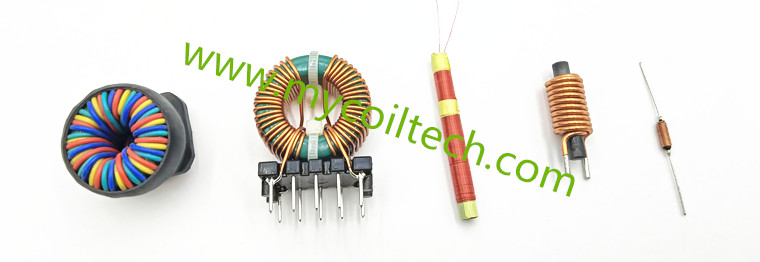
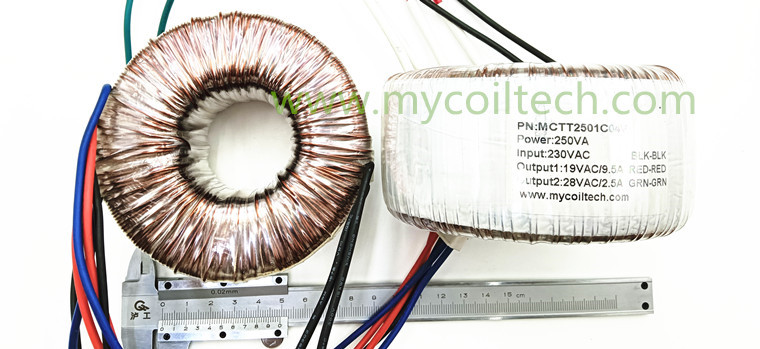
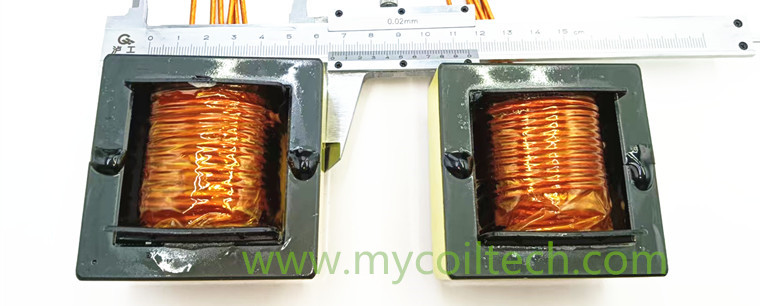
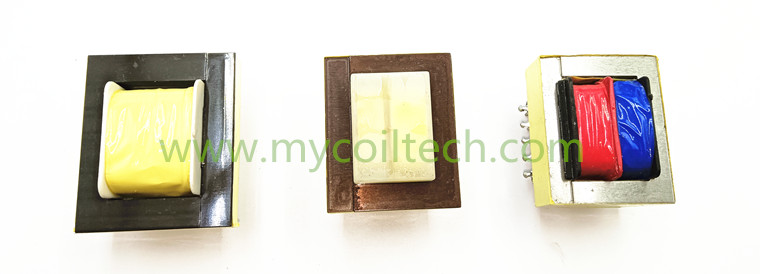
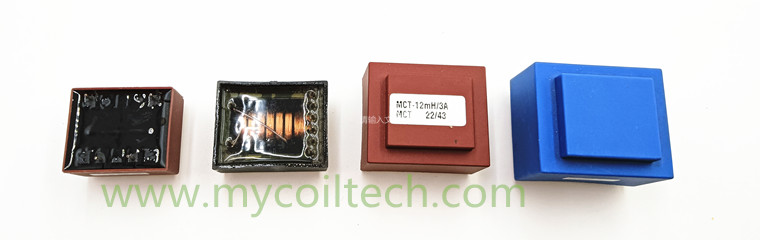
In the design of transformers, inductors and other electromagnetic components, there is a seemingly tiny but far-reaching detail - the “magnetic core air gap”. This small gap (usually in millimeters or even micrometers) reserved at the junction of various cores such as EE electronic transformer cores, EI transformer cores, and GU pot-type transformer cores, though simple, is like an "invisible engineer" that silently determines the efficiency, stability and service life of the equipment. Today, we will uncover the mystery of magnetic core air gaps and see how they become the "finishing touch" to improve the performance of electromagnetic components such as EFD transformer cores and EF transformer cores.
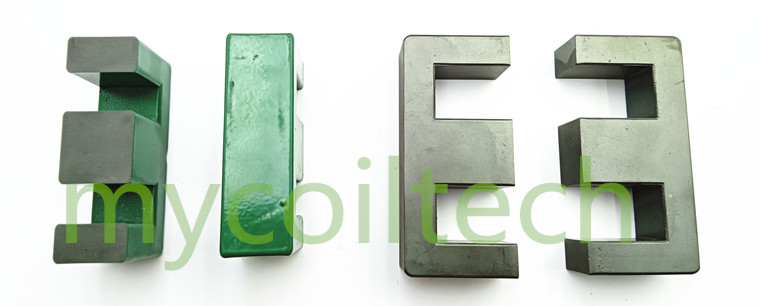
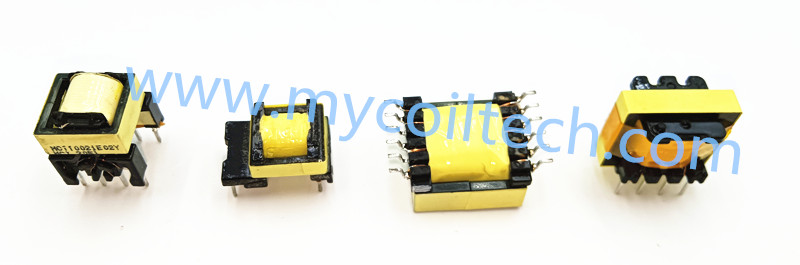
EE series drive transformer


1. Say Goodbye to "Magnetic Saturation" and "Relax" the Magnetic Core

The magnetic core is the "energy warehouse" of electromagnetic components, responsible for storing and transmitting magnetic field energy. However, any magnetic core material has its "bearing limit" - when the current through the coil is too large, the magnetic field strength exceeds the saturation point of the material, and magnetic saturation will occur. Once saturated, the magnetic permeability of the core will drop sharply, which not only causes a sharp drop in energy transmission efficiency, but also leads to severe heating of the coil and even damage to the equipment.

The core function of opening an air gap in the magnetic core is to reduce the effective permeability of the core, thereby increasing its saturation flux density. Both EE transformer cores, which are widely used in the power supply field, and EI transformer cores, which are common in traditional transformers, can benefit from opening air gaps. To put it metaphorically, it's like adding a "pressure relief valve" to the "energy warehouse": the GU series pot-type transformer cores that were originally easy to be "filled" can accommodate more magnetic field energy due to the existence of air gaps, and are not easy to saturate even under high current conditions. This is a "lifesaver" for EFD transformer cores and EF transformer cores commonly used in high-frequency transformers that need to carry large currents - it can keep the equipment stable during full-load operation and avoid efficiency collapse caused by saturation.
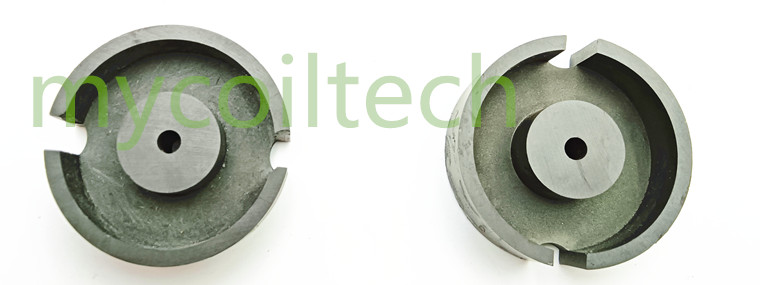
pot electronic transformer frame


2. Stabilize the Inductance Value and Make the Circuit "More Obedient"

In inductor design, the stability of inductance directly affects the circuit performance. Without an air gap, the permeability of EE transformer cores, EI transformer cores, etc. will fluctuate greatly with changes in current, resulting in fluctuating inductance values, and the circuit will be like a "runaway wild horse" that is difficult to control.

After opening an air gap, an air gap is introduced into the magnetic circuit of the core (the permeability of air is much lower than that of the core material), so that the permeability of the entire magnetic circuit is mainly determined by the length of the air gap, not by the core material itself. This means that even if the current changes, the inductance values of GU pot-type transformer cores and EFD transformer cores can remain stable. For scenarios that require precise control of energy transmission - such as switching power supply filter inductors using EF transformer cores and new energy vehicle charging pile inductors using EE transformer cores - this stability is crucial. It can keep the circuit "obedient" at all times, reduce ripple interference, improve the purity of the output voltage, and ultimately improve the reliability of the entire equipment.


3. Optimize Heat Dissipation and Extend Equipment "Service Life"

Under high-frequency working conditions, heat dissipation of electromagnetic components is a major problem. Eddy current losses when the core is saturated and copper losses of the coil will be converted into heat, which will accelerate the aging of components if not dissipated in time.

After opening an air gap in the magnetic core, due to the avoidance of magnetic saturation, eddy current losses will be significantly reduced, and the magnetic field distribution at the air gap is more uniform, reducing the risk of local overheating. EI transformer cores can effectively reduce the temperature rise of traditional power frequency transformers through reasonable air gap opening; GU pot-type transformer cores, with their closed structure and optimized air gap design, have greatly improved heat dissipation efficiency. In addition, the segmented air gap design adopted by  PQ high-frequency transformer cores and ETD series transformer cores can also reduce magnetic leakage at the core joints, reducing electromagnetic interference and additional losses of surrounding components. For long-term operation of industrial equipment, automotive electronics and other "long-life demand" scenarios, this means that the temperature rise of components is lower, the aging speed is slower, and the overall service life of the equipment is naturally longer.
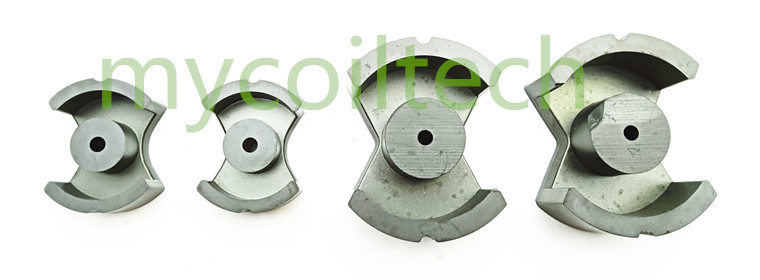
PQ series power switch transformer

4. Adapt to High-Frequency Scenarios and Let Energy "Run Fast"

In high-frequency circuits (such as 5G base station power supplies, fast chargers), the magnetic core needs to respond quickly to current changes to achieve efficient energy conversion. EE transformer cores and EFD transformer cores without air gaps, due to their high permeability, are prone to hysteresis losses at high frequencies, slowing down energy transmission.

After opening an air gap, the high-frequency characteristics of the magnetic core are optimized: hysteresis losses are reduced, and energy conversion speed is accelerated. It's like installing "high-speed gears" for the magnetic core, allowing the EI series transformer cores to adapt to rapid energy conversion after high-frequency transformation, and enabling the GU pot-type transformer cores to operate efficiently in a closed environment. For example, the high-frequency transformers using EF transformer cores in our common mobile phone fast chargers can fully charge the phone in just half an hour through precisely designed core air gaps - ensuring high-power output while avoiding overheating problems.
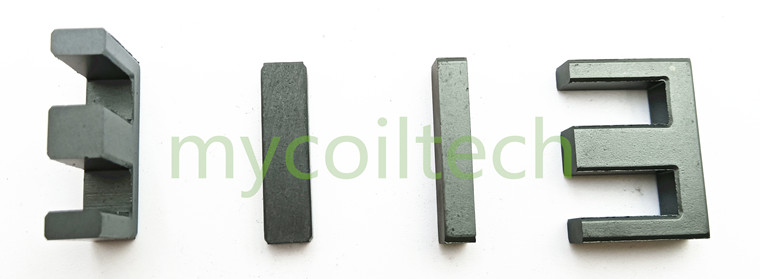
EI series household appliance switch transformer


Choose the Right Air Gap Design to Make Your Products "Stand Out"

Of course, opening an air gap in the magnetic core is not "the larger the better": if the air gap is too small, it cannot play the role of anti-saturation; if the air gap is too large, it will lead to increased magnetic leakage and increased losses. Whether it is EE transformer cores, EI transformer cores, GU pot-type transformer cores, EFD transformer cores, or EF transformer cores, a truly excellent design is to accurately calculate the air gap length and distribution (such as single-segment air gaps, multi-segment air gaps) according to the equipment's power, frequency, current and other parameters to achieve a "perfect balance between performance and loss".

Whether it is EFD transformer cores used in consumer electronics fast charging power supplies, EE transformer cores in industrial automation servo drives, or EF transformer cores used in new energy inverters, magnetic core air gaps are the "invisible weapon" to improve product competitiveness. It seems small, but it directly determines whether the equipment can be "stable as a mountain" under complex working conditions and stand out among similar products with "high efficiency and long service life".

If you are worried about the stability, efficiency or service life of your products, you might as well check whether the EI transformer cores, GU pot-type transformer cores you use have "opened the right air gaps" - sometimes, a small design optimization can make your equipment performance achieve a "qualitative leap".

Our mycoiltech company has been deeply engaged in the electronic components industry for many years, with its own factory and professional engineering team, and is well versed in the design and manufacturing essence of various magnetic cores and related components. We can provide customers with customized electronic components supporting services, whether it is EE, EI, GU pot-type, EFD, EF and other series of transformer cores, or transformer bobbins, clips, bases, as well as inductors, high-current transformers, etc., can be accurately customized according to your specific needs. By choosing us, you will not only get high-quality products that meet strict standards, but also full-process high-quality services from design consultation to after-sales support, making your products more advantageous in the competition.


Contact us today to explore bulk orders or request technical specifications.

Email: sales008@mycoiltech.com

WeChat ID: 

Electronic component factory


How Rogers RT/duroid 6010.2LM Achieves Ultra-Low Loss and Stable 10.2 Dk for Compact X-Band PCBs


Introduction

In the rapidly advancing world of high-frequency electronics, achieving optimal performance demands specialized materials engineered for precision and reliability. Rogers Corporation's RT/duroid 6010.2LM laminates stand at the forefront of this technology, offering an exceptional ceramic-Polytetrafluoroethylene (PTFE) composite solution. Specifically formulated for circuits operating at microwave frequencies where stringent electrical characteristics are non-negotiable, this laminate leverages its high dielectric constant (Dk) to enable significant circuit miniaturization. By facilitating more compact and highly efficient designs, the 6010.2LM empowers engineers to push the boundaries of size and performance. Its exceptionally low loss properties make it the substrate of choice for critical applications operating within the X-band spectrum and lower frequency ranges, where signal integrity is paramount.


Advanced Features

The Rogers 6010.2LM laminate distinguishes itself through a suite of meticulously controlled properties designed to deliver consistent, high-performance results:


2.1 Exceptional Dielectric Constant (Dk) Control:

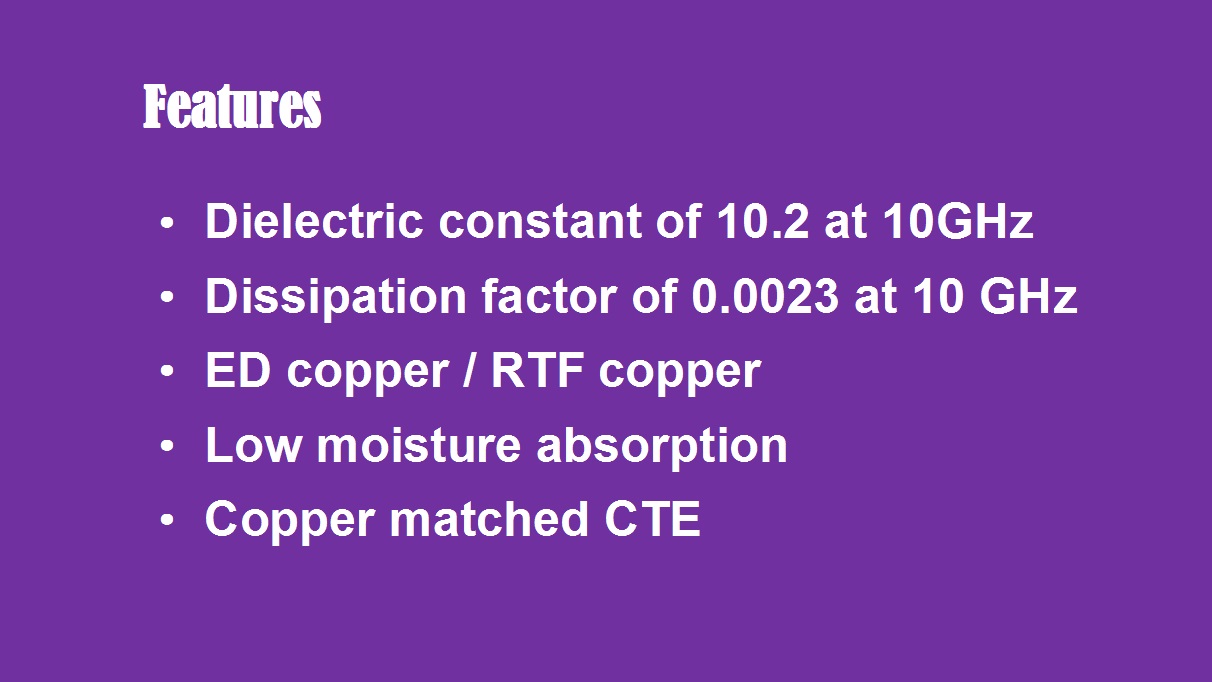
Boasting a high Dk value of 10.2 coupled with an impressively tight tolerance of±0.25, the 6010.2LM provides unparalleled stability in electrical performance. This precise Dk control is fundamental for predictable impedance management and resonant frequency accuracy, ensuring consistent, repeatable circuit behavior essential for high-yield manufacturing and reliable end-use operation.


2.2 Ultra-Low Dissipation Factor (Df):

Signal loss is a critical enemy in high-frequency applications. The 6010.2LM substrate combats this effectively with an exceptionally low dissipation factor of just 0.0023 measured at 10 GHz. This ultra-low loss characteristic minimizes signal attenuation and distortion over distance and through components, facilitating highly reliable and efficient signal transmission crucial for sensitive communication and radar systems.


2.3 Flexible Copper Foil Options:

Recognizing the diverse needs of PCB fabrication and performance optimization, the Rogers 6010.2LM PCB offers a choice between Electro-Deposited (ED) copper and Reverse-Treated Foil (RTF) copper. This critical flexibility allows designers and manufacturers to tailor their selection based on specific requirements, whether prioritizing ultra-low insertion loss for signal integrity, minimizing Passive Intermodulation (PIM) for sensitive receivers, or optimizing surface roughness for bonding and etching processes.


2.4 Minimal Moisture Absorption:

Environmental resilience is key for long-term reliability. The 6010.2LM laminate exhibits very low moisture absorption characteristics. This inherent resistance to humidity helps preserve its stable electrical properties (like Dk and Df) over time and under varying environmental conditions, reducing performance drift and enhancing the operational lifespan of the PCB.


2.5 Optimized Coefficient of Thermal Expansion (CTE): 

Thermal management is critical, especially in complex multi-layer structures. The CTE values for the RT/duroid 6010.2LM are carefully engineered at 24 ppm/°C in the X and Y axes, and 47 ppm/°C in the Z-axis. This specific CTE profile is crucial for enhancing the long-term reliability of plated through-holes (PTHs) in multi-layer boards. It helps minimize stress during thermal cycling, ensuring robust and secure electrical connections between layers, thereby contributing significantly to the overall structural and functional integrity of the assembly.


6010.2LM PCB Features


Demonstrated PCB Manufacturing Capabilities with 6010.2LM

Leveraging the advanced properties of Rogers RT/duroid 6010.2LM requires a manufacturing partner with proven expertise and versatile capabilities. We possess the specialized processes and stringent quality controls necessary to fully harness the potential of this demanding material:


3.1 Complex Configurations:

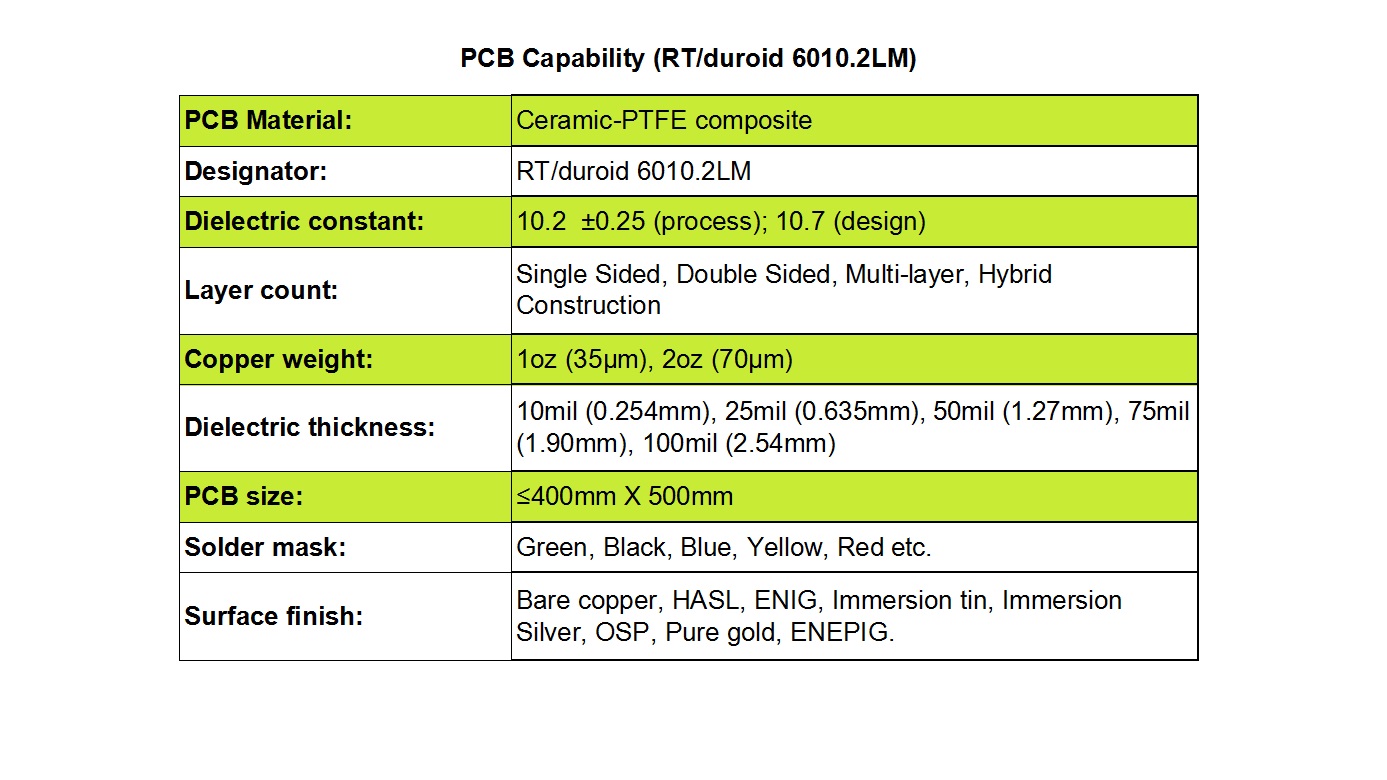
We expertly manufacture a wide array of board structures to meet diverse design challenges, including Single Sided, Double Sided, sophisticated Multi-layer builds, and Hybrid constructions combining 6010.2LM with other compatible materials (like FR-4 or other RF laminates) to optimize cost and performance.


3.2 Material Thickness & Copper Weight Flexibility:

We offer standard dielectric thicknesses of 10mil (0.254mm), 25mil (0.635mm), 50mil (1.27mm), 75mil (1.90mm), and 100mil (2.54mm). Copper weights of 1oz (35µm) and 2oz (70µm) are standard, with other weights potentially available upon request, providing design flexibility for current carrying capacity and impedance control.


3.3 Generous Panel Sizing & Solder Mask Options:

Our manufacturing process accommodates panel sizes up to 400mm x 500mm, optimizing material utilization for larger boards or efficient panelization. Aesthetic and functional requirements are met with a range of solder mask colors, including Green, Black, Blue, Yellow, Red, and more.


3.4 Comprehensive Surface Finishes:

To ensure optimal solderability, wire bondability, shelf life, and electrical performance, we provide a full spectrum of surface finish options. Choose from Bare Copper, HASL (Lead-Free), ENIG (Electroless Nickel Immersion Gold), Immersion Tin, Immersion Silver, OSP (Organic Solderability Preservative), Pure Gold (Hard/Soft), ENEPIG (Electroless Nickel Electroless Palladium Immersion Gold), and others based on your specific application needs.


3.5 High-Frequency Expertise:

Our processes are specifically refined for handling low-Df, tight-tolerance RF PCB materials like 6010.2LM, focusing on precise etching, lamination control, and meticulous drilling to maintain impedance accuracy and signal integrity.


6010.2LM PCB capability


Critical Applications Enabled by RT/duroid 6010.2LM PCBs

The unique combination of high Dk, ultra-low loss, and excellent stability makes RT/duroid 6010.2LM PCBs indispensable in a variety of demanding high-frequency applications where performance, reliability, and size are critical factors:


Patch Antennas & Phased Arrays: Enables compact, efficient radiating elements with precise beam patterns, ideal for communication links and radar systems.


Satellite Communications (Satcom) Systems: Provides the stable, low-loss platform needed for uplink/downlink transceivers and onboard processing in harsh space environments.


High-Power Amplifiers (HPAs): Supports efficient power transfer and thermal management in amplifiers for radar and communication transmitters.


Avionics & Radar Systems: Critical for aircraft collision avoidance systems (ACAS/TCAS), ground radar warning systems, altimeters, and weather radar, where reliability and signal clarity are paramount for safety and mission success.


Military & Defense Electronics: Used in radar systems (ground-based, naval, airborne), secure communications, electronic warfare (EW), and guidance systems requiring robust performance.


Telecommunications Infrastructure: Found in high-frequency base station components, point-to-point microwave backhaul links, and emerging 5G/6G infrastructure where low loss and size efficiency are crucial.


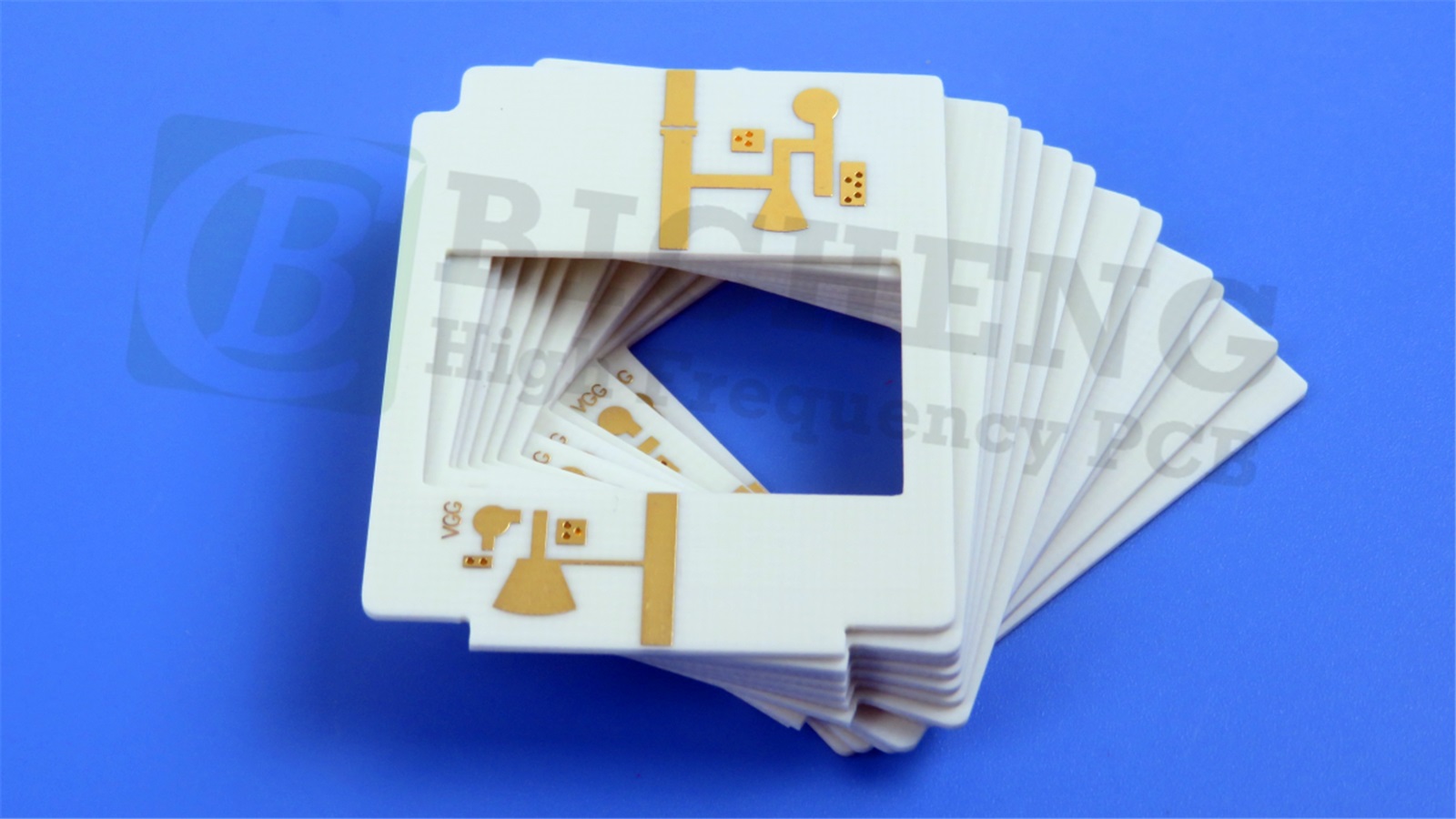
Rogers 6010.2LM PCB


How Rogers RT/duroid 6010.2LM Achieves Ultra-Low Loss and Stable 10.2 Dk for Compact X-Band PCBs


1. Material Composition: Engineered Ceramic-PTFE Composite

The foundation of RT/duroid 6010.2LM’s performance lies in its proprietary ceramic-PTFE (polytetrafluoroethylene) composite. This hybrid structure synergizes:


Ceramic fillers (e.g., alumina): Provide high dielectric constant (Dk=10.2) through dense polarizable molecules.


PTFE matrix: Delivers ultra-low loss by minimizing dipole relaxation losses at microwave frequencies.

The homogeneous dispersion of ceramics in PTFE suppresses energy dissipation mechanisms, achieving a dissipation factor of 0.0023 at 10 GHz–critical for X-band (8–12 GHz) efficiency.


2. Precision Dk Stability: Tolerance Control (±0.25)

Stability is ensured through:


  • Controlled filler distribution: Uniform ceramic particle size eliminates localized Dk variations.
  • Cross-linked PTFE: Enhances molecular rigidity, reducing thermal drift.


Moisture resistance: <0.1% water absorption prevents Dk fluctuations in humid environments.

This allows impedance tolerances≤1%–vital for phased-array antennas and filters where phase consistency impacts beamforming.


3. Loss Mitigation Mechanisms

Ultra-low signal attenuation results from:


  • Minimal conductor roughness: RTF copper options reduce skin effect losses at X-band frequencies.
  • PTFE’s non-polar nature: Lacks ionic impurities that cause dielectric relaxation.
  • Low hysteresis: Ceramic-PTFE bonds dissipate minimal heat under RF cycling.


This preserves signal integrity in high-power amplifiers and radar systems.


4. Miniaturization Advantages

The high Dk (10.2 vs. FR-4’s ~4.5) enables wavelength reduction by >50% via: 


  • Shorter trace lengths: Resonant structures (e.g., patch antennas) shrink proportionally to 1/√Dk.
  • Reduced layer counts: High Dk allows multi-layer consolidation without crosstalk.


Example: A 10 GHz microstrip antenna on 6010.2LM occupies ~60% less area than on low-Dk substrates.


5. X-Band Optimization

Performance at X-band leverages:


  • Flat dispersion curve: Dk varies <2% from 5–15 GHz, avoiding phase distortion.
  • CTE matching: In-plane CTE (24 ppm/°C) aligns with copper, preventing delamination during thermal cycling in avionics.
  • Z-axis stability: 47 ppm/°C CTE ensures plated through-hole reliability in multi-layer boards.


Conclusion

RT/duroid 6010.2LM high frequency PCB achieves its benchmark performance through material physics innovation: Ceramic fillers enable high Dk/size reduction, while PTFE delivers loss control. Tight process tolerances (±0.25 Dk), moisture resistance, and CTE engineering then translate these properties into reliable X-band operation. For designers, this means compact, high-Q circuits with uncompromised signal fidelity in radar, satcom, and 5G infrastructure.


Rogers RT/duroid 6010.2LM high-frequency laminates represent a superior material solution for engineers pushing the limits of microwave circuit design. Its tightly controlled dielectric properties, ultra-low loss, environmental stability, and thermal reliability make it ideal for the most demanding applications in aerospace, defense, telecommunications, and advanced sensing. As your specialized PCB manufacturing partner, we combine deep expertise in processing this advanced material with comprehensive capabilities–from complex multilayer and hybrid constructions to diverse finishing options–to deliver high-performance PCBs tailored to your exact specifications. Partner with us to leverage the full potential of RT/duroid 6010.2LM and achieve unparalleled success in your next high-frequency project.


Rogers TC350 PCB: High-Performance RF & Microwave Solution for Enhanced Thermal Management


Introduction

In the rapidly evolving world of high-frequency electronics, thermal management and signal integrity are critical for optimal performance.Rogers TC350 laminates are advanced PTFE-based composite substrates engineered with highly thermally conductive ceramic fillers and woven glass reinforcement, delivering exceptional thermal conductivity to improve heat dissipation. This unique composition minimizes dielectric and insertion losses, leading to higher gain and efficiency in amplifiers, antennas, and other RF/microwave applications.


One of the standout advantages of Rogers TC350 PCB is its ability to handle higher power levels while reducing hotspots, significantly enhancing device reliability. In designs where thermal management is limited, TC350 substrates improve heat transfer, lowering junction temperatures and extending the operational lifespan of active components. Additionally, its lower operating temperatures and compatible thermal expansion properties with semiconductor chips ensure stronger component attachment, reducing common failure modes such as solder fatigue and joint cracking.


Key Features and Benefits of Rogers TC350 PCB


1. Stable Dielectric Constant (Dk) for Precise Impedance Control

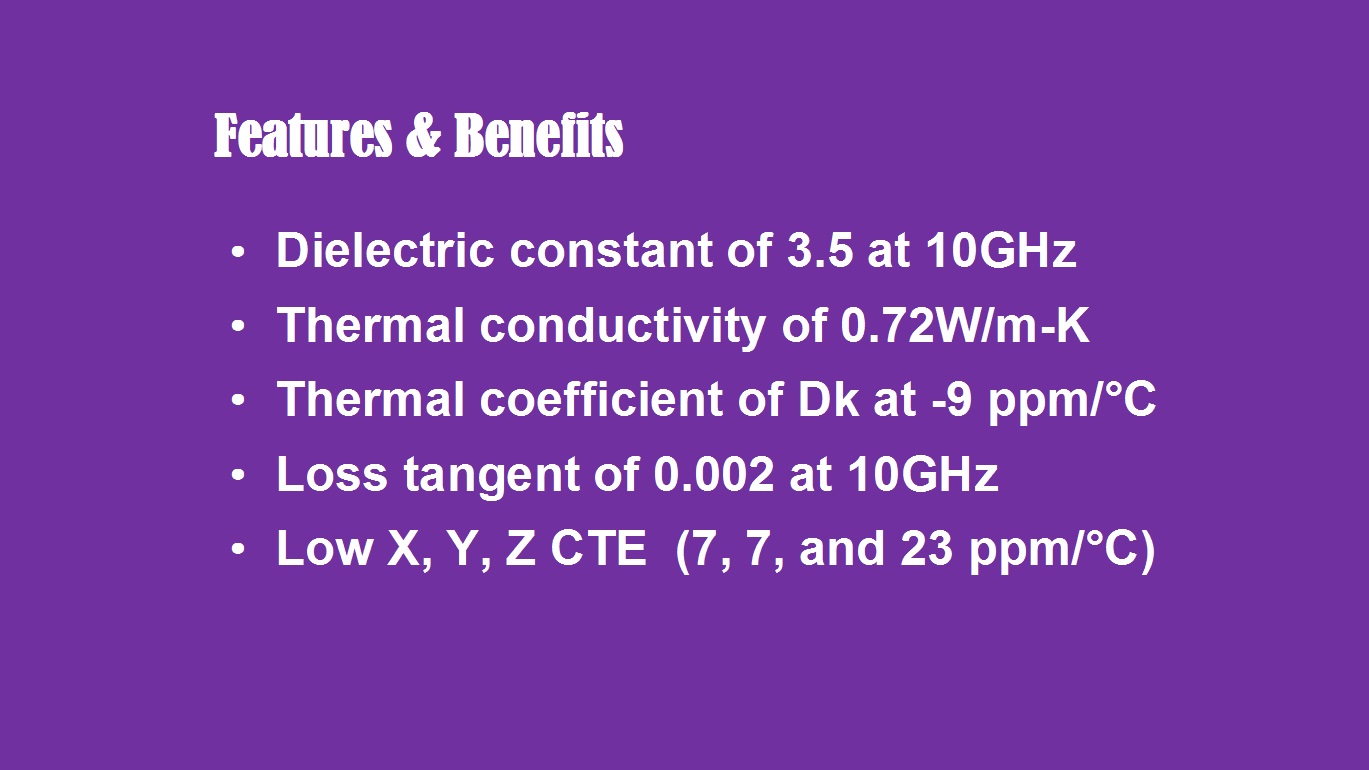
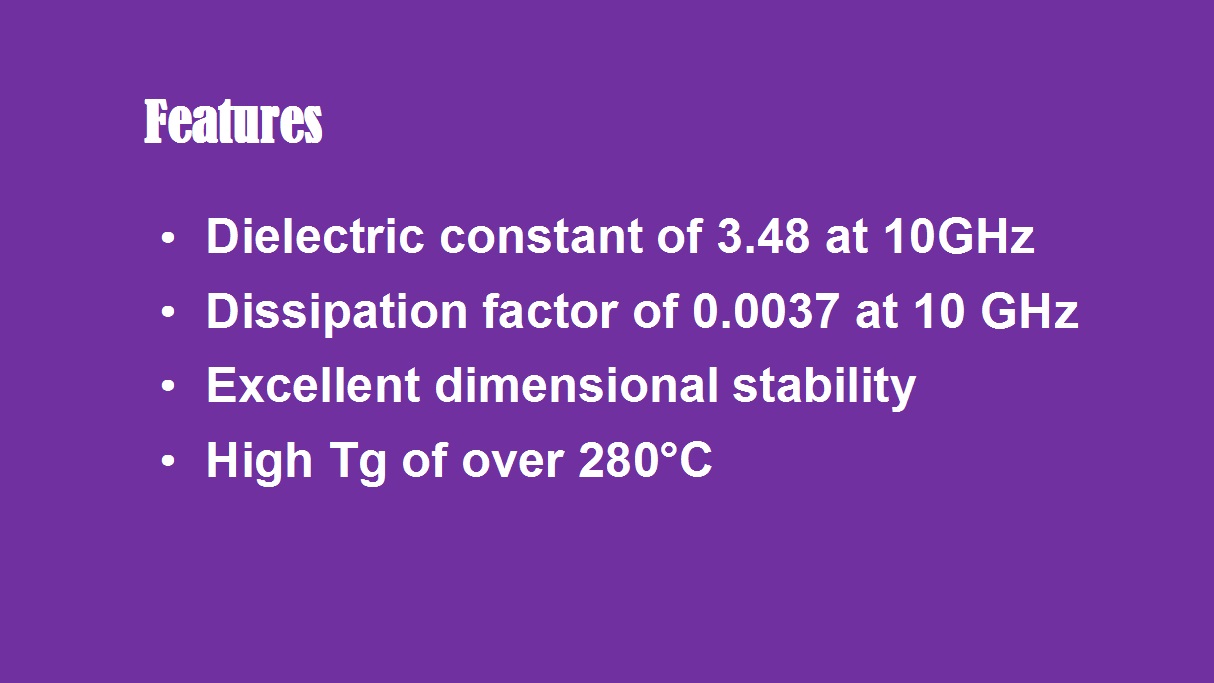
Rogers TC350 laminates feature a dielectric constant (Dk) of 3.5, ensuring consistent signal integrity and precise impedance control in high-frequency circuits. This stability is crucial for applications requiring low signal distortion, such as 5G infrastructure, radar systems, and satellite communications.


2. Superior Thermal Conductivity for Efficient Heat Dissipation

With an outstanding thermal conductivity of 0.72 W/m-K, TC350 PCBs effectively dissipate heat through the laminate, preventing thermal buildup that can degrade performance. This property is particularly beneficial in high-power RF amplifiers and base station antennas, where excessive heat can lead to premature failure.


3. Low Thermal Coefficient of Dk for Temperature Stability

The thermal coefficient of Dk for TC350 is an impressively low -9 ppm/°C (within the range of -40°C to 140°C), meaning that the material’s dielectric properties remain stable even under extreme temperature fluctuations. This ensures reliable signal transmission in harsh environments, such as aerospace and automotive radar systems.


4. Ultra-Low Loss Tangent for Minimal Signal Loss

At 10 GHz, Rogers TC350 exhibits an exceptionally low loss tangent of 0.002, which translates to minimal signal attenuation. This characteristic allows for better bandwidth utilization, making it ideal for high-frequency amplifiers, filters, and antenna systems that demand high efficiency and low noise.


5. Excellent Dimensional Stability with Low CTE

The coefficients of thermal expansion (CTE) for TC350 are well-controlled across all axes:


  • X & Y-axis: 7 ppm/°C
  • Z-axis: 23 ppm/°C


This low CTE ensures reliable plated through-hole (PTH) connections and superior dimensional stability, preventing warping or delamination during thermal cycling. As a result, this custom TC350 PCBs maintain long-term reliability in demanding applications.


TC350 Features


PCB Manufacturing Capabilities for Rogers TC350

As a reliable PCB supplier, we offer advanced fabrication services tailored to Rogers TC350 laminates, ensuring high-quality, high-performance boards for your RF and microwave applications.


1. Board Configurations

Single-sided, double-sided, and multi-layer PCBs

Hybrid constructions (combining Rogers TC350 with other high-frequency materials like RO4003C or FR4)


2. Copper Weight Options

1 oz (35 µm)–Standard thickness for signal integrity

2 oz (70 µm)–Enhanced current-carrying capacity for power applications


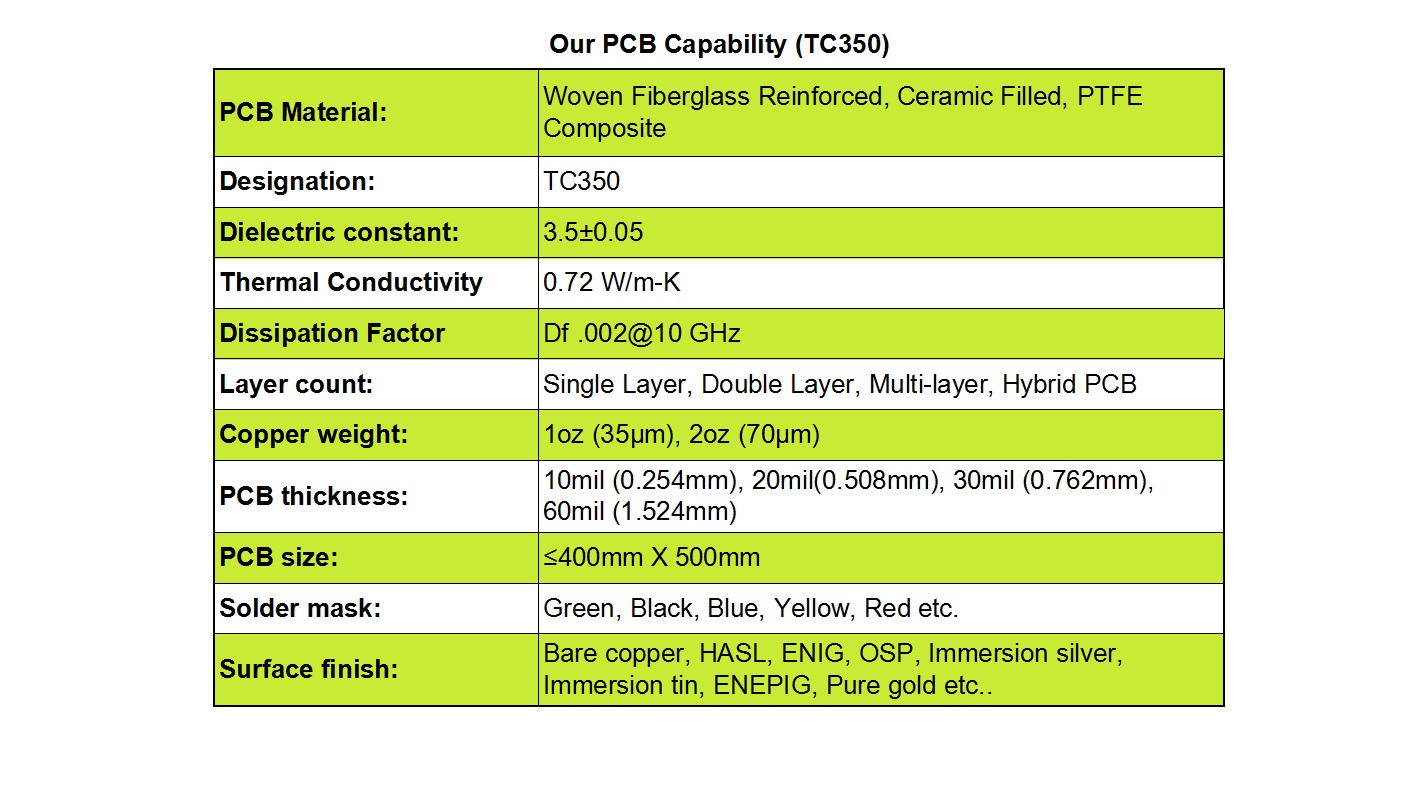
3. PCB Thickness & Size

Available thicknesses: 10 mil, 20 mil, 25 mil, 60 mil, 125 mil

Maximum PCB size: 400 mm×500 mm


4. Solder Mask & Surface Finishes

Solder mask colors: Green, black, blue, yellow, red

Surface finishes: Bare copper, HASL, ENIG, OSP, immersion silver, immersion tin, ENEPIG, pure gold


TC350 PCB Capability


Applications of Rogers TC350 PCB

Due to its exceptional thermal and electrical properties, Rogers TC350 is widely used in high-frequency and high-power applications, including:


  • Power amplifiers (for 5G, radar, and satellite communications)
  • RF filters & couplers
  • Tower-mounted amplifiers (TMA) & boosters (TMB)
  • Microwave combiners & power dividers
  • Military & aerospace electronics
  • Automotive radar & ADAS systems


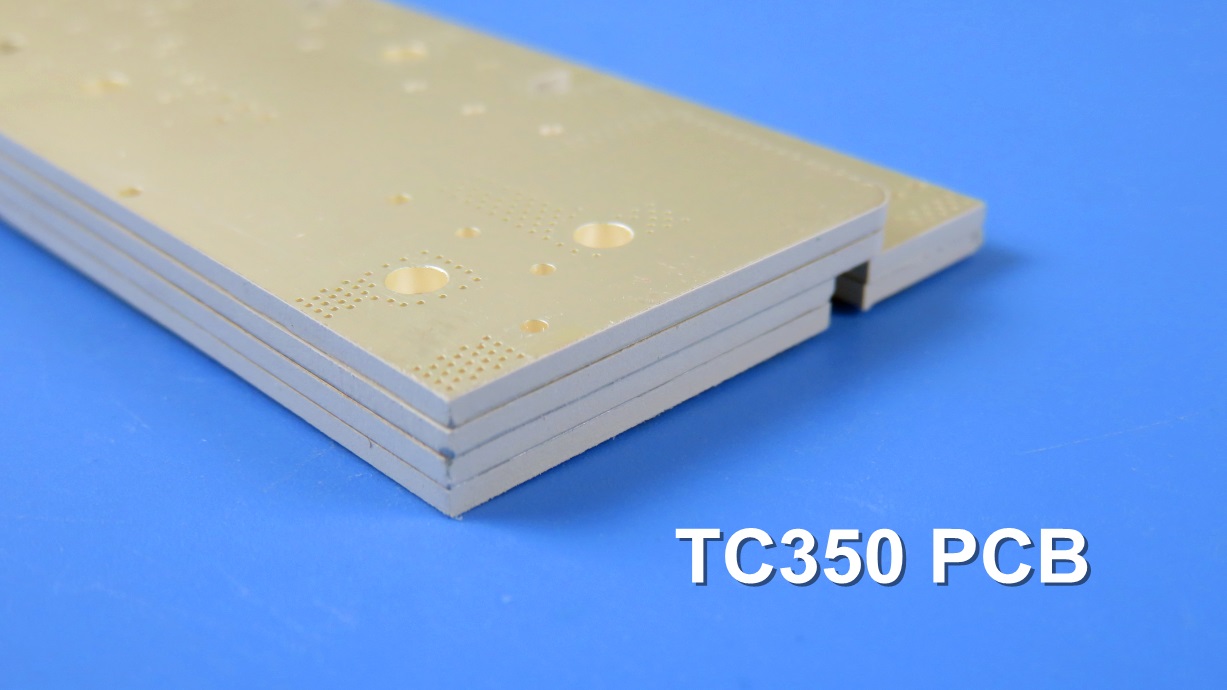
 Rogers TC350 boards


Conclusion

TC350 high frequency PCB is a high-performance solution for demanding RF and microwave applications, offering superior thermal management, stable electrical properties, and excellent reliability. Whether you need high-power amplifiers, low-loss filters, or high-efficiency antennas, TC350 laminates provide the thermal and electrical stability required for optimal performance.


As an experienced PCB supplier, we specialize in producing high-quality Rogers TC350 boards tailored to your specifications. Contact us today to discuss your project requirements and leverage the benefits of this advanced material for your next high-frequency design!


Why Choose RO4350B Over PTFE for Cost-Effective High-Frequency PCBs?


Introduction to RO4350B High Frequency PCB

In the realm of high-frequency printed circuit boards (PCBs),Rogers RO4350B stands out as a high-performance material engineered for demanding RF and microwave applications. This advanced laminate combines a proprietary blend of woven glass-reinforced hydrocarbon/ceramic materials, delivering electrical performance on par with PTFE/woven glass while maintaining the manufacturability benefits of traditional epoxy/glass laminates.


RO4350B laminates provide exceptional control over dielectric constant (Dk) while ensuring minimal signal loss. Unlike PTFE-based materials, which often require specialized handling and through-hole treatments, Rogers 4350B can be processed using standard FR-4 fabrication techniques, significantly reducing production costs and lead times. Additionally, these materials meet the stringent UL 94 V-0 flammability rating, making them ideal for high-power RF designs and active electronic devices where reliability is critical.


Key Features of RO4350B High Frequency PCB


1. Low Dielectric Constant for Enhanced Signal Integrity

RO4350B laminates exhibit a stable dielectric constant (Dk) of 3.50 at 10 GHz, ensuring consistent signal propagation in high-frequency circuits. A low Dk is essential for minimizing signal delay and distortion, making RO4350B an excellent choice for high-speed digital and RF applications.


2. Ultra-Low Dissipation Factor for Minimal Signal Loss

With a dissipation factor (Df) of just 0.0017 at 10 GHz, RO4350B PCB ssignificantly reduce signal attenuation, preserving signal integrity even in high-frequency environments. This low-loss characteristic is crucial for applications such as 5G communications, radar systems, and satellite technology.


3. Excellent Thermal and Dimensional Stability

RO4350B offers outstanding dimensional stability, with a Z-axis coefficient of thermal expansion (CTE) of 24 ppm/°C, closely matching that of copper. This alignment prevents delamination and ensures reliable performance under thermal stress. Additionally, the material boasts a glass transition temperature (Tg) exceeding 280°C (536°F), enabling it to withstand high-temperature assembly processes such as lead-free soldering without warping or degradation.


4. Superior Mechanical and Environmental Resistance

Engineered for durability, RO4350B substrate PCBs resist moisture absorption and environmental factors that could compromise performance. Their robust construction ensures long-term reliability in harsh operating conditions, making them suitable for aerospace, defense, and automotive applications.


RO4350B Features 


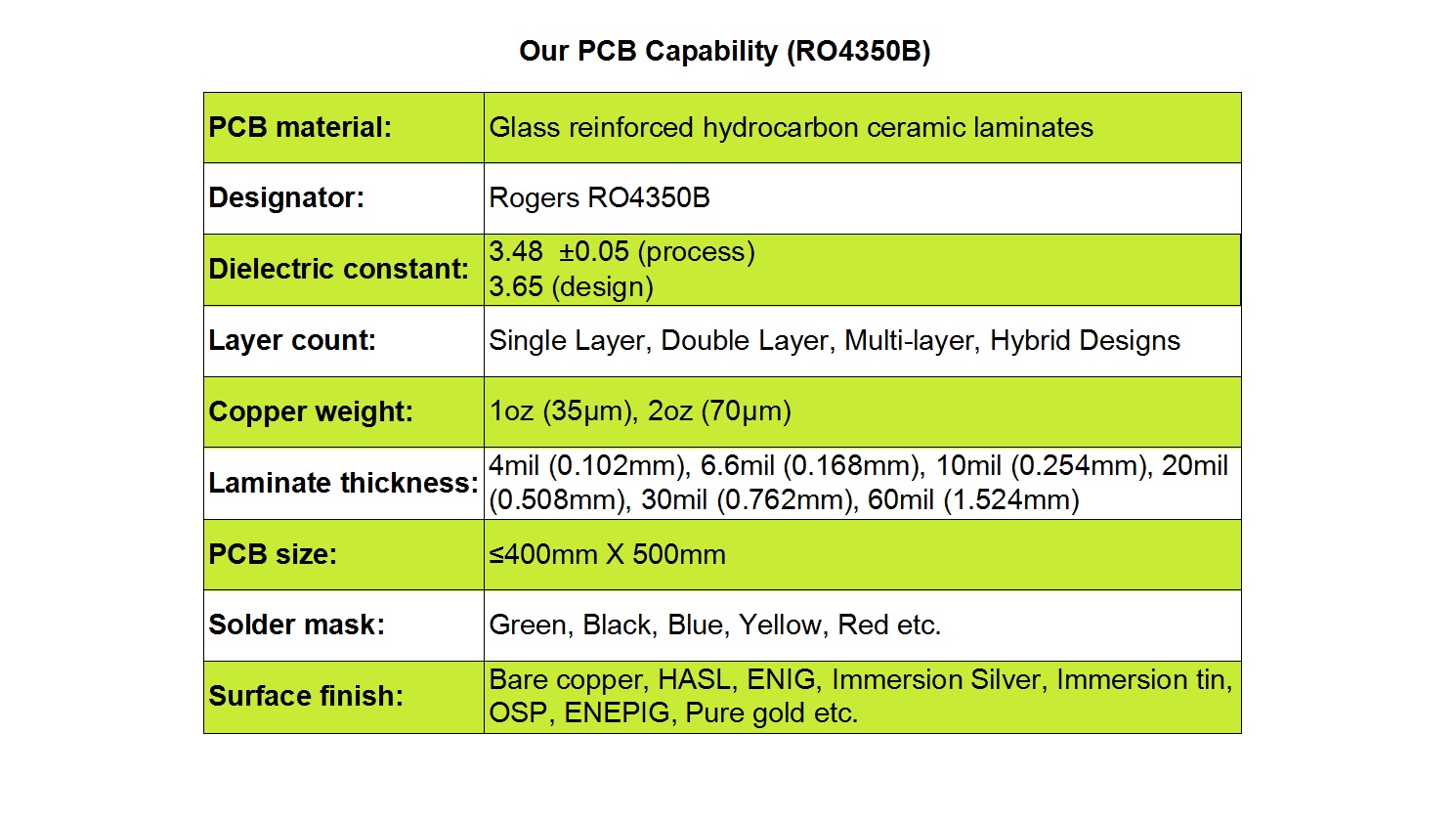
PCB Manufacturing Capabilities for RO4350B

We provide a comprehensive range of fabrication options to meet diverse design requirements:


1. Board Configurations

Single-sided, double-sided, and multi-layer PCBs

Hybrid constructions combining RO4350B with other high-frequency or standard materials


2. Available Thickness Options

Standard thicknesses: 10 mil, 20 mil, 30 mil, 60 mil

Custom thicknesses: 4 mil, 6.6 mil, 13.3 mil, 16.6 mil, and others upon request


3. Copper Weight and Board Size

Finished copper options: 1oz or 2oz

Maximum PCB dimensions: 400mm x 500mm


4. Solder Mask and Surface Finishes

Solder mask colors: Green, black, red, yellow, and more

Surface finishes: Bare copper, HASL, immersion gold (ENIG), immersion silver, immersion tin, OSP, ENEPIG, and pure gold plating


RO4350B pcb capability 


Applications of RO4350B High Frequency PCBs

RO4350B high frequency PCBs are widely used in industries where high-frequency performance and reliability are non-negotiable. Some key applications include:


5G and mmWave Communication Systems–Ensures low signal loss in high-frequency transmission lines and antennas.


Aerospace and Defense Electronics–Provides stable performance in radar systems, avionics, and satellite communications.


Automotive Radar and ADAS (Advanced Driver Assistance Systems)–Supports high-frequency signal processing for collision avoidance and autonomous driving.


Medical RF Devices–Used in high-precision diagnostic and therapeutic equipment.


High-Power RF Amplifiers and Base Station Antennas–Delivers efficient power handling with minimal insertion loss.


RO4350B high frequency PCBs


Why Choose Us for Your RO4350B PCB Needs?

As a trusted PCB supplier, we combine advanced fabrication techniques, stringent quality control, and deep expertise in high-frequency materials to deliver Rogers RO4350B PCBs that meet the highest industry standards. Whether you require prototypes or high-volume production, we provide competitive pricing, fast turnaround times, and exceptional technical support to ensure your project’s success.


Contact us today to discuss your RO4350B PCB requirements and discover how we can help optimize your high-frequency designs for superior performance and reliability!


WAIN “High-Voltage Connector Series for Special Vehicles” is a high-performance, compact alloy-shell interconnect solution designed for construction machinery, commercial vehicles, and other special-purpose vehicles.

This solution features a unique design and advanced manufacturing process, delivering electrical ratings of up to 1500V DC and 500A Max. It is equipped with IP67/IP69K level protection and 360° electromagnetic shielding for optimal durability and reliability.

Additionally, it offers multiple keying options, both angled and straight cable outlet configurations, and supports up to three contact positions, accommodating cable sizes ranging from 2.5mm² to 120mm².

This connector series is widely used in the power distribution systems of various vehicles, including automobiles, trucks, buses, agricultural vehicles, construction vehicles, and off-road vehicles, as well as in the power supply applications of agricultural, construction, and off-road machinery. 


In the new energy sector, WAIN primarily provides essential services to electric vehicle manufacturers and supports traditional construction machinery companies transitioning toward new energy solutions. WAIN has successfully developed a comprehensive range of products compliant with GB/T 20234.1 and IEC 62196.2 standards, including GB/T AC/DC charging sockets, GB/T AC charging guns, and Type 2 charging guns and sockets. Particularly notable is the PCBA quick-change terminal version of the GB/T DC charging socket, which significantly enhances efficiency and reduces costs in wiring harness applications and maintenance.

In addition to supporting mass production for customers in the construction machinery and electric vehicle sectors, WAIN proactively aligns with industry trends in electric vehicle technology, especially battery-swapping solutions. The company continuously develops innovative products tailored to customer needs, providing diverse options to enhance battery-swapping systems.

When you work with a fountain project which more than 100sets DMX light or more quantity, How do you set address to these light quickly?

I believe this is big project to everyone to set address of every lamp by one to one. Now RISE Optoelectronics Co., Ltd introduce one simpler and quicker solution to you.


Today, we will introduce our DMX/RDM lamps and our controllers in details.

Model No.

LED

Watt

Color

Function

Material

88132

70pcs Led

75W

RGBWA

RDM/DMX

316L SS


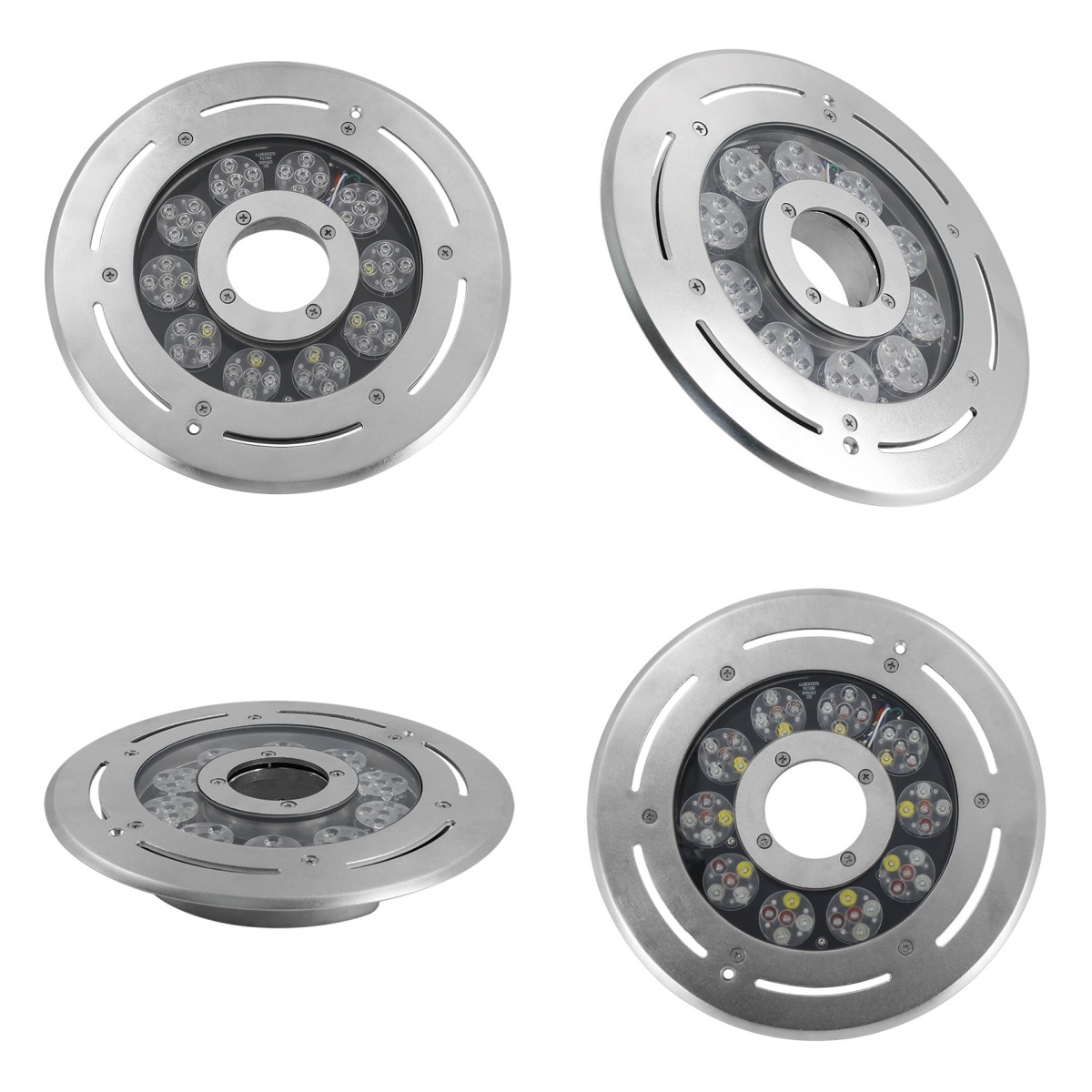
DMX Led Underwater Light


The full name of RDM is Remote Device Management, It is an extension of the DMX512 protocol, which enables two-way communication between the console and the lamps.

Through the RDM protocol, the console can remotely control and manage the lamps, such as changing the DMX address of the lamps, editing the built-in program, monitoring the status of the lamps, etc.

The introduction of the RDM protocol has greatly improved the efficiency and convenience of lighting control, especially in large-scale lighting projects.

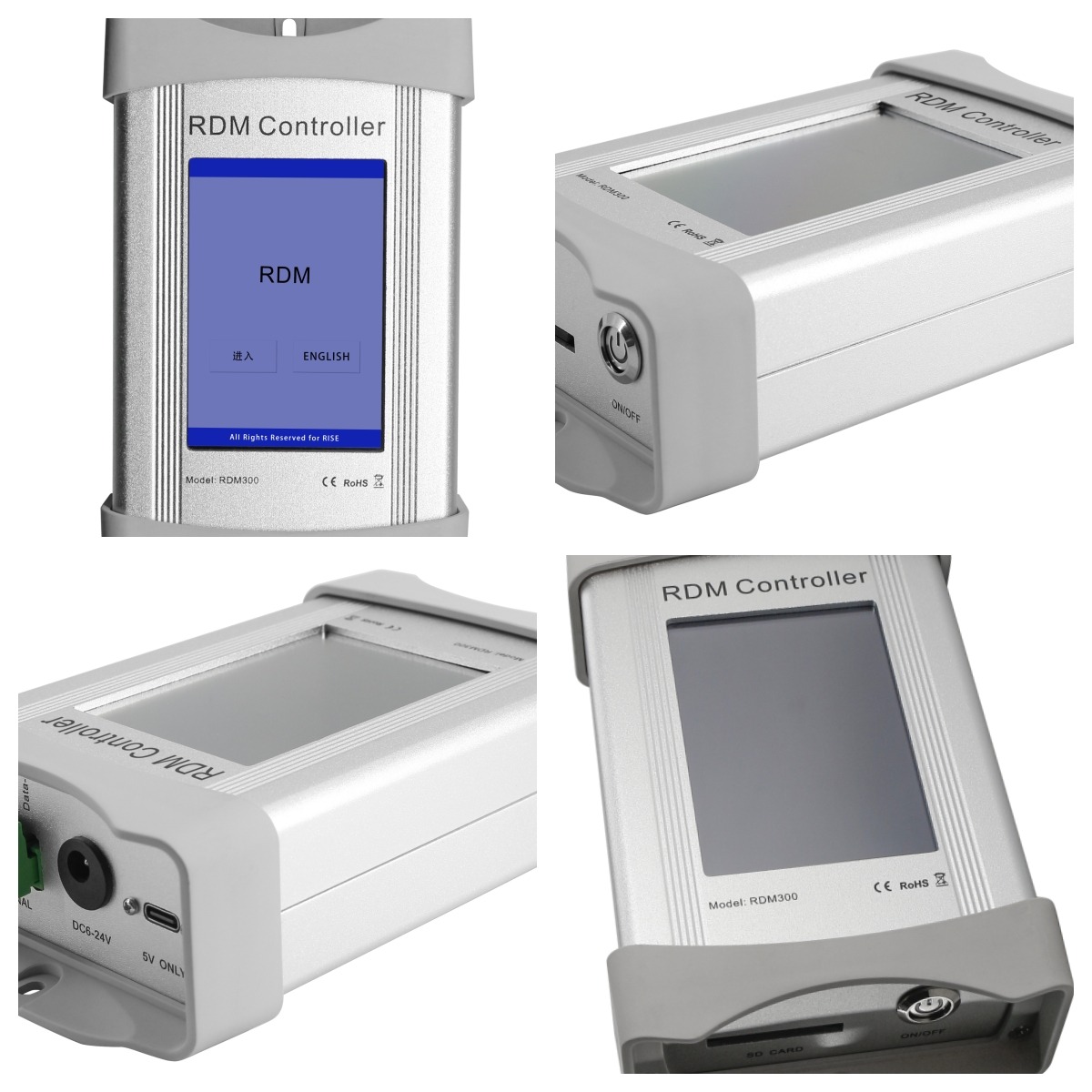
Currently, our products have implemented and used designs from RDM 3 channels to 8 channels.At the same time, we are also developing an RDM/DMX controller that is easy to carry and use.

This RDM/DMX controller can work with DMX512 or RDM function lamps, it has 35kinds of color changing modes on SD card.

Because RDM is a two-way communication, we can directly set the address code online through the controller, and debug and control the color of the lamp.


About DMX512/RDM lamps and controller system, If you are interested, please contact us for discussion and communication. It is very easy to operate for them.

In an era of accelerating iterations in electronic devices, the stability and adaptability of core components directly determine the performance ceiling of equipment. With over 10 years of technical accumulation in the electronics industry, our company not only delivers stable product quality but also boasts strong customization capabilities. Recently, the successful mass production of the custom ETD39 high-frequency transformer bobbin with 8+8 pins for a client has further demonstrated our prowess in customized solutions. By choosing us, you will gain reliable products, high-quality services, and full-chain supporting support, ensuring that core components never become a bottleneck for your equipment development.

I. Mass Production of ETD39: Speaking Through Reliable Quality

More than 10 years of deepening the electronic industry, our company understands the critical importance of "stability" for core components. From raw material selection to production process refinement, we have established a stringent quality control system. The mass production of the ETD34 high-frequency transformer bobbin stands as a testament to the effectiveness of this system.

From mold development to trial production, this bobbin underwent rigorous performance testing by professional engineers, including stability tests under high and low temperatures, insulation performance verification under long-term loads, and adaptability debugging with various types of high-frequency transformers. Every piece of data underscores our commitment to "reliable quality." The launch of mass production means you can obtain standardized, highly stable core components in bulk, eliminating concerns about quality fluctuations during small-batch trials—this is the confidence derived from over 10 years of technical accumulation.

II. ETD39 Solution: Solving Pain Points with Phenolic Materials and Problem-Solving Expertise

Equipment requirements vary widely, and standardized products may not always offer a perfect fit. Our customization service is designed to break through the "general-purpose component adaptation bottleneck," with the custom ETD39 transformer bobbin serving as a prime example.

To address the space constraints and performance requirements of the client’s specialized equipment, we selected high-performance phenolic material—a material with excellent heat resistance, aging resistance, and insulation properties, making it ideal for precision equipment. During development, our team tackled multiple challenges such as "structural compactness vs. heat dissipation efficiency" and "material strength vs. machining precision." Through numerous mold optimizations and process adjustments, the product ultimately passed extreme tests including vibration and impact, achieving the goal of "reliability and stability."

Multi-layer air coil inductor

Our products are suitable for manufacturing, military industry, aerospace, and household appliances, such as communication equipment, servo motors, and switching power supply transformers. Whether you need transformers with special dimensions, materials, or performance, our customization service can respond precisely, ensuring seamless integration between core components and equipment.

III. From Core Components to Peripheral Accessories: One-Stop Equipment Needs Fulfillment

Choosing our company means gaining not just a single product, but full-chain support covering "core components + peripherals." Our main business includes core equipment such as high-frequency transformers, flyback transformers, and potted transformers, as well as supporting accessories like high-frequency transformer clips, bases, and housings, along with key components such as ferrite cores, powder cores, high-power inductors, energy storage inductors , current transformers, and high current transformers.

Switching Mode Power Supply Transformer

The advantages of this full-industry-chain layout are clear: when purchasing the ETD39 high-frequency transformer bobbin, you can simultaneously procure matching clips and housings, reducing communication costs with multiple suppliers. When customizing the ETD39 bobbin, we can coordinate parameter optimization of cores, inductors, and other accessories to ensure optimal system performance. From parameter matching advice in the early design stage to supply chain guarantees during mass production, high-quality service runs through every step, saving you time and effort.

IV. Choose Us: Let Core Components Become a "Plus" for Your Equipment

Competition in electronic equipment ultimately hinges on attention to detail. With years of technical accumulation, our company has developed an unwavering focus on "reliability"—from standardized quality control in ETD39 coil former mass production to material and process breakthroughs in ETD39 customization, every step is designed to safeguard stable equipment operation.

If you are troubled by quality fluctuations in core components, our products and services offer a stable "plug-and-play" experience. If you are hindered by technical barriers in customization, our engineering team will collaborate with you to overcome challenges. If you need a one-stop accessory solution, our comprehensive product range can improve procurement efficiency by over 50%. Additionally, we provide various finished transformers, filters, high frequency inductors , and high-current transformers.


Our company firmly believes that excellent core components should not only meet performance requirements but also serve as a "booster" for your equipment upgrades. We look forward to partnering with you to ensure every piece of equipment is equipped with time-tested core momentum.

Contact us today to explore bulk orders or request technical specifications.

Email: sales008@mycoiltech.com

Encapsulated transformer


Electricity is the "lifeblood" of modern society. From the lighting of household lamps to the roar of factory machines, from the stability of urban power grids to the efficiency of industrial systems, the safety and smoothness of every power scenario rely on accurate control of circuit operation status. However, the invisibility of electric current, the high risk of voltage, and the huge differences in current values make troubleshooting and prevention of circuit faults an extremely challenging task. In this context, key power components centered on precision technology have become "invisible guardians" of power safety—and our company has always provided solid support for the safe and efficient operation of power systems with its professional product matrix.


Core Demands of Power Safety: Accurate Measurement and Reliable Protection

Hidden dangers of circuit faults often lie in subtle changes in current. Whether it is local abnormalities caused by line aging or current fluctuations due to the start-up of high-power equipment, failure to monitor and intervene in a timely manner will at best affect production and daily life, and at worst endanger lives and property. Just as medical diagnosis requires accurate stethoscopes, "health monitoring" of circuits also depends on professional tools: on the one hand, current values in different scenarios vary greatly, ranging from a few amperes to tens of thousands of amperes, requiring equipment to have the ability to "standardize" complex currents; on the other hand, the danger of high-voltage lines determines the need for electrical isolation to ensure the safe operation of measurement and protection equipment; more importantly, in the event of a fault, a fast-response protection mechanism is required to cut off the dangerous circuit in time and minimize losses.

High Precision Current Transformer

In this process, current transformers play an irreplaceable role. As the "sensory nerves" of power systems, they must not only convert the high current of the primary system into low current bearable by secondary equipment in proportion (China stipulates that the secondary rated current is 5A or 1A) to realize safe measurement, but also cooperate with relay protection devices to transmit signals and trigger protection mechanisms when faults such as short circuits and overloads occur. For precision scenarios, higher accuracy is required for current measurement—the accurate conversion from ampere level to milliampere level is the core prerequisite for ensuring metering (billing) and equipment operation monitoring.


Responding to Diverse Needs of Power Systems with a Full Range of Product Portfolio

Facing the multiple requirements of power systems for accuracy, reliability, and compatibility, our company have deepened its presence in the field of high-frequency electronics and precision manufacturing, providing one-stop solutions with a full range of product portfolio, so that every power scenario can obtain suitable professional support.

As the core of the "sensory endings" of power systems, our company's precision current transformers undertake the dual mission of accurate measurement and reliable protection. Relying on cutting-edge manufacturing processes, our precision current transformers can not only achieve stable conversion from high current to standard low current, but also meet the accurate capture of subtle currents (mA level). Whether it is cooperating with metering equipment to achieve fair billing, assisting monitoring devices to grasp equipment operation status, or linking with relay protection systems to achieve rapid fault response, they can build a solid line of defense for power safety with excellent performance.

In the link of power energy conversion and transmission, high-frequency electronic transformers are the key to improving efficiency. Our company's high-frequency electronic transformers, featuring high efficiency and low loss, adapt to energy conversion needs of different power scenarios. While reducing equipment volume, they ensure the stability of power transmission, providing core power support for new energy, industrial control and other fields. As the "stabilizers" of circuits, high-frequency inductors suppress current fluctuations, filter noise, ensure the continuous and stable operation of circuits under complex working conditions, and work in synergy with high-frequency electronic transformers to improve the overall reliability of the system.

Customized Flyback Transformer

In addition, our company are well aware of the integrity and compatibility of power systems. The electronic transformer accessories we provide, from connectors to protective components, are manufactured to strict standards to ensure perfect adaptation to main equipment such as high-frequency electronic transformers and precision current transformers, avoiding the impact of accessory defects on system performance, and truly achieving full-chain quality control "from core to details".


Upholding Professional Original Aspiration, Jointly Building a Safe Future for Power

Power safety is no small matter, and the performance of every component is related to the overall safety of the system. Our company have always taken "precision, reliability, and innovation" as the core, integrating the efficiency of high-frequency electronic transformers, the stability of power inductors, the accuracy of precision current transformers, and the adaptability of transformer accessories into every manufacturing detail. We believe that only by responding to the essential needs of power systems with professional technology can we truly safeguard the safe transmission of every kilowatt-hour of electricity, making life more secure and industry more efficient.

Common mode choke design

Looking ahead, our company will continue to deepen its roots in the power electronics field, drive product upgrading through technological innovation, and let precision technology serve as a solid backbone for power safety, working with industry partners to build a more reliable and intelligent power ecosystem. We look forward to engaging in in-depth exchanges with industry peers, jointly contributing to the development of the power electronics sector. To better support diverse needs, we offer both bulk orders and customized services, backed by a high-quality service network to ensure seamless cooperation. You can reach us via WeChat ID:MCT008Alex , email: sales008@mycoiltech.com, or our company website:www.mycoiltech.com—let’s join hands to forge a more robust future for power electronics.


When it comes to transformers, what comes to mind? Is it the gray iron box humming in the corner of the community, or the small and delicate coil components in electronic devices? In fact, transformers have long penetrated every aspect of our lives and industrial production.From household electricity to intelligent manufacturing, they are indispensable for their "silent dedication".  And different types of transformers, with their unique performances, shine in different scenarios.


Toroidal Transformers: Synonymous with Efficiency and Stability

Provide insulated transformers

The first time you see a toroidal transformer, it's easy to be attracted by its simple shape - a closed toroidal iron core with coils evenly wound around it.There are no redundant structures, but it contains strong performance. This structure gives it excellent magnetic circuit closure, low magnetic leakage, and high efficiency. In fields such as audio equipment and medical devices that have high requirements for power supply stability, toroidal transformers are almost the "standard configuration". It can effectively reduce electromagnetic interference, making the equipment run more stably and the sound quality purer. This is why many high-end audio enthusiasts favor it.


High-Frequency Electronic Transformers: Leaders in Miniaturization and High Speed

Electronic transformer bobbin accessories

With the development of electronic devices towards miniaturization and lightweight, high-frequency electronic transformers have emerged as the times require. Its operating frequency is much higher than that of traditional transformers, which gives it a huge advantage in volume and weight.  In devices such as mobile phone chargers, laptop power adapters, and new energy vehicle charging piles, high-frequency electronic transformers play a key role. It can quickly realize voltage conversion, improve energy utilization efficiency, and enable these portable devices to exert powerful functions in limited space.  Nowadays, with the development of 5G communication, the Internet of Things and other technologies, the demand for high-frequency electronic transformers is still growing, and their performance is also continuously upgrading.


Low-Frequency Transformers: The "Steady Pillars" in the Industrial Field

 low-frequency transformers factory

Different from high-frequency electronic transformers, low-frequency transformers are more like the "steady pillars" in the industrial field.  It operates at a low frequency, has a relatively solid structure, and can run stably in environments with large currents and high voltages.  In scenarios such as power transmission, machine tools, and large industrial machinery, low-frequency transformers are responsible for converting high-voltage electricity into low-voltage electricity suitable for equipment use, or performing voltage isolation to ensure the safety of equipment and personnel.  Its reliability is an important guarantee for the continuous and stable operation of industrial production.  Although it seems "low-key", it is indispensable.


Encapsulated transformer: "Tough Warriors" in Harsh Environments

Electronic transformer encapsulated case

In some special environments, such as humid, dusty, vibrating or corrosive gas environments, ordinary transformers are prone to failure. Encapsulated transformer are like "tough warriors" born to deal with these harsh environments.  It completely wraps the coil and iron core with special potting materials (such as epoxy resin) to form a sealed whole. This enables it to have excellent waterproof, moisture-proof, dust-proof, shock-proof and anti-corrosion properties, playing an important role in fields such as outdoor lighting, automotive electronics, and industrial control.        Even in harsh environments, it can maintain a stable working state.


Professional Customization to Help Your Project Lead the Industry

After learning about so many types of transformers, are you looking for the most suitable one for your project?  Our company specializes in the production of transformers, inductors, current transformers and other products, and has a team of experienced engineers.  Whether it is standard models or special requirements, we can provide professional customization services.  You only need to send specific requirements and drawings, and we can respond quickly to create suitable samples for you, making your project more advantageous in the power conversion and transmission links, and helping your project move to the forefront of the industry.

If you have any needs, please feel free to contact us, and let's inject strong "electric power" into your project together.

Email: sales008@mycoiltech.com

WeChat ID: