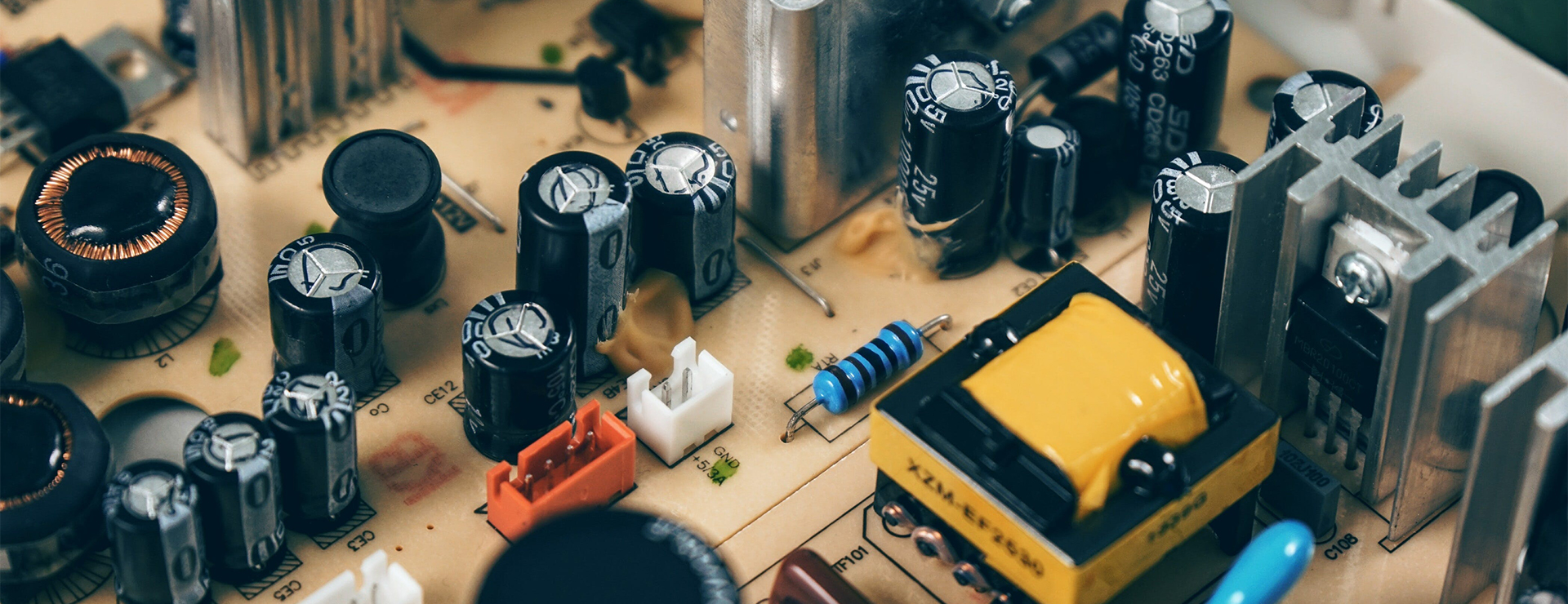
Why Choose RO4360G2 Laminates for Your Next High-Frequency PCB Project?


In the rapidly evolving world of high-frequency electronics, selecting the right printed circuit board (PCB) material is crucial to achieving optimal performance, reliability, and cost-efficiency. Rogers RO4360G2 laminates stand out as a premier choice for high-frequency applications, offering an exceptional combination of electrical properties, thermal management, and manufacturability. These glass-reinforced, hydrocarbon ceramic-filled thermoset materials are engineered to deliver superior performance while simplifying the fabrication process.


A groundbreaking feature of Rogers 4360G2 laminates is that they represent the first high dielectric constant (Dk) thermoset materials that can be processed similarly to conventional FR-4. This compatibility significantly eases the transition for designers and manufacturers looking to leverage high-Dk PCB materials without investing in new processing techniques or equipment. Furthermore, these laminates support lead-free assembly processes and provide enhanced rigidity. This improved stiffness is particularly beneficial in multi-layer board constructions, where it contributes to better dimensional stability and easier handling, ultimately reducing both material and fabrication costs.


Another notable advantage is the compatibility of RO4360G2 with other materials in the RO4000® series. It can be seamlessly integrated with RO4400™series prepregs and lower-Dk RO4000® laminates in multi-layer designs. This interoperability offers designers greater flexibility, enabling the creation of sophisticated, high-performance hybrid PCB structures tailored to specific application requirements.


Key Features of RO4360G2 High Frequency Laminates


Key Features of RO4360G2


The RO4360G2 substrate boasts a high dielectric constant (Dk) of 6.15, with a design Dk of 6.4. This high Dk allows designers to reduce the physical dimensions of circuits, which is particularly advantageous in applications where minimizing size and controlling costs are critical.


With an exceptionally low dissipation factor of 0.0038 at 10 GHz, these laminates ensure minimal signal loss and outstanding signal integrity, making them ideal for high-speed and high-frequency applications.


Thermal management is another area where RO4360G2 excels. It offers a high thermal conductivity of 0.75 W/(m·K), which facilitates efficient heat dissipation away from critical components, thereby enhancing the overall reliability and longevity of the circuit.


The RO4360G2 material also exhibits a low Z-axis coefficient of thermal expansion (CTE) of 28 ppm/°C. This property ensures dimensional stability under thermal stress and significantly improves the reliability of plated through-hole (PTH) interconnections.


Finally, the RO4360G2 PCB features a high glass transition temperature (Tg) exceeding 280°C as measured by TMA (Thermomechanical Analysis). This high Tg enhances the material’s durability and performance stability even in the most demanding operating environments.


PCB Manufacturing Capabilities with RO4360G2


PCB Manufacturing Capabilities with RO4360G2


Our state-of-the-art manufacturing facilities are fully equipped to produce a wide variety of PCBs using RO4360G2 laminates. We specialize in manufacturing double-layer, multi-layer, and hybrid PCBs, enabling us to meet diverse design complexities and performance requirements.


We offer flexible copper weight options, including 1oz (35µm) and 2oz (70µm), allowing you to optimize current carrying capacity and signal performance based on your specific design needs.


A comprehensive range of standard thicknesses is available, such as 8mil (0.203mm), 12mil (0.305mm), 16mil (0.406mm), 20mil (0.508mm), 24mil (0.610mm), 32mil (0.813mm), and 60mil (1.524mm), providing the flexibility to meet various mechanical and electrical constraints.


Our production capabilities support PCB sizes up to 400mm x 500mm, accommodating both compact and larger form factor designs.


To suit both functional and aesthetic preferences, we provide a wide selection of solder mask colors, including green, black, blue, yellow, red, and others.


We also offer an extensive array of surface finishes, including Bare Copper, HASL (Hot Air Solder Leveling), ENIG (Electroless Nickel Immersion Gold), OSP (Organic Solderability Preservative), Immersion Tin, Immersion Silver, and Pure Gold, ensuring the optimal finish for your application’s performance and reliability needs.


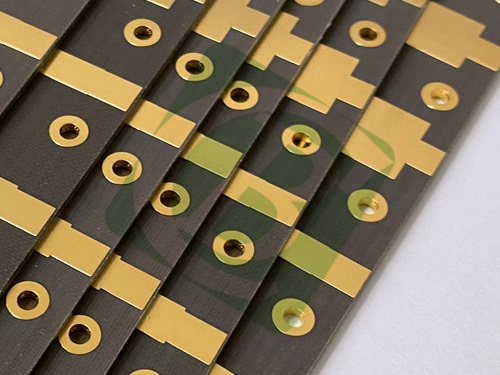
RO4360G2 high-frequency PCBs


Typical Applications

RO4360G2 high-frequency PCBs are widely used in demanding RF and wireless communication applications. Common uses include base station power amplifiers and small cell transceivers, where their excellent electrical properties and thermal performance are essential for ensuring signal clarity, power efficiency, and long-term reliability in critical infrastructure.


Why Choose Rogers RO3210 PCB for High-Frequency and Thermally Demanding Applications?


In the world of high-frequency PCB design, selecting the right substrate material is crucial for achieving optimal electrical performance, thermal management, and mechanical reliability. Rogers Corporation’s RO3210 high-frequency circuit materials stand out as an exceptional choice for demanding applications ranging from automotive radar to satellite communications. As an integral member of the renowned RO3000 series, Rogers RO3210 combines ceramic-filled construction with woven fiberglass reinforcement, delivering superior high-frequency characteristics and enhanced mechanical stability at a highly competitive cost.


Superior Electrical and Thermal Properties

One of the most significant advantages of Rogers 3210 is its stable and relatively high dielectric constant (Dk) of 10.2, maintained within a tight tolerance of±0.5. This consistency allows RF designers to develop more compact circuit layouts, supporting the ongoing trend toward miniaturization in electronic devices without compromising electrical integrity. Moreover, its low dissipation factor of 0.0027 at 10 GHz ensures minimal signal loss and reduced distortion, which is essential for maintaining signal quality in high-speed and high-frequency applications.


RO3210 PCB bebefits


Thermal management is another critical area where RO3210 excels. With a thermal conductivity of 0.81 W/m/K, this material effectively dissipates heat, reducing the risk of overheating in power-intensive applications. Its low coefficient of thermal expansion (CTE) across the X, Y, and Z axes further enhances reliability by minimizing dimensional changes under thermal stress, thereby supporting solder joint integrity and long-term operational stability.


RO3210 features


Enhanced Mechanical Stability and Manufacturing Precision

RO3210 is engineered for exceptional dimensional stability, which significantly improves manufacturing yield and product consistency. This stability is particularly beneficial in multi-layer and hybrid PCB constructions, where alignment accuracy is paramount. The material’s smooth surface finish allows for finer and more precise etching of conductor traces, enabling the production of intricate circuit patterns with high accuracy. This capability is indispensable for advanced designs such as microstrip patch antennas and high-density interconnect (HDI) boards.


Additionally, RO3210 laminates are compatible with epoxy-based multi-layer hybrid designs, providing designers with greater flexibility in creating complex, high-performance systems that integrate both RF and digital sections. This versatility makes it an ideal substrate for sophisticated applications that demand a blend of high frequency operation and robust mechanical properties.


Customized PCB Capabilities with RO3210 Material


Customized PCB Capabilities with RO3210 Material


Our manufacturing services fully leverage the benefits ofRogers RO3210 to produce high-frequency PCBs tailored to your specific requirements. We support a broad spectrum of design complexities—from simple single-layer boards to advanced multi-layer and hybrid assemblies. With two standard copper weight options—1 oz (35 µm) and 2 oz (70 µm)—we help you balance current carrying capacity and signal loss based on your application needs.


We also offer two standard thicknesses: 25 mils (0.635 mm) and 50 mils (1.27 mm), providing further flexibility in impedance control and mechanical design. Our production facilities can accommodate boards up to 400 mm×500 mm in size, making us well-equipped for both compact modules and larger form-factor designs.


To enhance assembly compatibility and end-use performance, we provide a wide selection of solder mask colors (including green, black, blue, yellow, and red) and a comprehensive range of surface finishes such as HASL, immersion silver, immersion gold, ENEPIG, OSP, and bare copper.


Rogers RO3210 PCBs


Key Application Areas

Rogers RO3210 PCBs are widely employed in industries where high frequency, thermal stability, and signal integrity are non-negotiable. Common applications include:


  • Automotive radar and collision avoidance systems
  • GPS antennas and telematics modules
  • Wireless infrastructure including 5G base stations
  • Microstrip and patch antennas for communication systems
  • Direct broadcast satellite (DBS) receivers


Other RF and microwave circuits requiring stable performance under varying operating conditions


Partner with a Specialist

If you are looking for a reliable PCB supplier with expertise in high-frequency materials like Rogers RO3210, we invite you to collaborate with us. We provide end-to-end support—from material selection and design advice to manufacturing and testing—ensuring that your boards meet the highest standards of performance and reliability.


Contact us today to discuss your project requirements and discover how RO3210 can enhance your next high-frequency PCB design.


Why Choose TLX-8 for Your Next High-Frequency PCB Design? Key Features and Benefits Explained.


In the rapidly advancing world of electronics, the demand for high-frequency printed circuit boards (PCBs) that deliver consistent performance under challenging conditions is higher than ever. For engineers and designers working on cutting-edge RF and microwave applications, selecting the right substrate material is paramount to the success and reliability of the entire system. Enter the Taconic TLX-8 PCB—a superior PTFE-based microwave substrate engineered to excel where ordinary materials fall short.


Introduction to TLX-8: Engineered for Excellence

Taconic TLX-8 is a high-performance polytetrafluoroethylene (PTFE) composite material, uniquely reinforced with a high-volume fiberglass weave. This strategic reinforcement provides exceptional mechanical durability, making TLX-8 an outstanding choice for low-layer-count microwave circuit designs. Its robust construction ensures unwavering reliability across a vast spectrum of radio frequency (RF) applications, particularly those operating in demanding physical and environmental conditions.


The structural integrity offered by its fiberglass reinforcement is critical for applications where failure is not an option. TLX-8 Taconic RF PCB Circuit Board is designed to perform reliably in the most challenging scenarios, including:


Resisting mechanical creep and deformation in PCBs that are bolted to housings and subjected to extreme vibration, such as during space launch vehicles.


Enduring sustained exposure to elevated temperatures commonly found within automotive engine control modules or aerospace systems.


Demonstrating exceptional resistance to radiation, a necessity for electronics deployed in space missions.


Withstanding corrosive and unpredictable conditions at sea for naval and warship antenna systems.


Maintaining stable electrical performance across a wide operational temperature range for avionics, including altimeter substrates during flight.


Properties and Features

The TLX-8 Taconic PCB Laminates is defined by a suite of electrical and physical properties that make it a industry standout.


TLX-8 PCB Features


1)Stable Dielectric Constant:

TLX-8 boasts a low and exceptionally stable dielectric constant (Dk) of 2.55±0.04, measured at 1 MHz. This consistency is vital for maintaining signal integrity and impedance control in precise microwave designs, ensuring predictable performance across the board.


2)Minimal Signal Loss:

With an ultra-low dissipation factor (Df) of just 0.0018 at 10 GHz, TLX-8 ensures minimal energy loss as signals travel across the circuit. This translates to higher efficiency, better signal quality, and reduced heat generation in high-frequency transmission applications.


3)Superior Outgassing and Moisture Management:

TLX-8 excels in high-vacuum and space environments due to its excellent outgassing properties. It records a remarkably low Total Mass Loss (TML) of 0.03% and a Collected Volatile Condensable Materials (CVCM) value of 0.00%. Coupled with a low Water Vapor Regain (WVR) of 0.01% and a moisture absorption rate of only 0.02%, TLX-8 effectively manages humidity, preventing performance degradation in environments with fluctuating moisture levels.


4)Enhanced Safety Standards:

The material carries a UL 94 V-0 flammability rating, signifying its compliance with stringent safety standards. This makes it a safe and reliable choice for a wide array of commercial, aerospace, and defense applications.


PCB Manufacturing Capabilities with TLX-8

Our manufacturing expertise allows us to fully leverage the superior properties of TLX-8 Taconic RF PCB, offering a wide range of fabrication options to meet diverse and complex design requirements.


PCB Manufacturing Capabilities with TLX-8


1)Layer Construction & Copper Weights: 

We provide precision fabrication for both single-sided and double-sided PCBs, with standard copper weights ranging from 1oz (35µm) to 2oz (70µm).


2)Board Thickness:

To accommodate various design needs, we offer multiple thickness options including 5mil (0.127mm), 10mil (0.254mm), 20mil (0.508mm), 30mil (0.762mm), 60mil (1.524mm), and 110mil (2.79mm).


3)Panel Size:

Our production capabilities can accommodate PCB sizes up to 400mm x 500mm, providing ample space for larger or multi-unit designs.


4)Aesthetic Customization:

We offer a selection of solder mask colors—including green, black, blue, yellow, and red—enabling both functional performance and brand-specific aesthetics.


5)Surface Finish Options:

To suit any application need, we provide a comprehensive range of surface finishes: Bare Copper, HASL (Hot Air Solder Leveling), ENIG (Electroless Nickel Immersion Gold), Immersion Silver, Immersion Tin, ENEPIG (Electroless Nickel Electroless Palladium Immersion Gold), OSP (Organic Solderability Preservative), and Pure Gold.


TLX-8 Taconic PCB


Diverse Applications for TLX-8 PCBs

Thanks to its reliable electrical properties and robust physical characteristics, the TLX-8 Taconic PCB is the material of choice for critical applications in several high-tech industries. It is ideally suited for:


  • Radar Systems and satellite communication equipment.
  • Mobile and Cellular Communication infrastructure.
  • High-Precision Microwave Test and measurement equipment.
  • Microwave Transmission devices and point-to-point radios.
  • Sensitive RF Components such as amplifiers, antennas, and filters.


In conclusion, the TLX-8 High Frequency PCB represents a perfect synergy of mechanical robustness and electrical excellence. Whether your project is destined for Earth's most remote locations or the vastness of space, TLX-8 provides the proven performance and reliability needed.


Why Should You Choose RO3006 Material for Your Advanced Microwave Circuit Designs?


In the rapidly evolving field of high-frequency electronics, the demand for reliable and high-performance printed circuit boards (PCBs) is greater than ever. RO3006 circuit materials stand out as an exceptional solution tailored for commercial microwave and radio frequency (RF) applications. Engineered from ceramic-reinforced polytetrafluoroethylene (PTFE) composites, these substrates deliver a unique combination of electrical excellence, mechanical reliability, and cost-effectiveness. A key advantage of Rogers RO3006 lies in its stable dielectric constant across an extensive temperature spectrum. This property effectively resolves the issue of abrupt Dk variations commonly found in conventional PTFE glass materials around ambient temperature, ensuring consistent performance in real-world operating conditions.


Key Characteristics of RO3006 High-Frequency PCBs


Key Characteristics of RO3006 High-Frequency PCBs


RO3006 laminates boast a dielectric constant (Dk) of 6.15 with a tight tolerance of±0.15, which allows for accurate impedance matching and ensures consistent signal integrity throughout the transmission line. This level of control is crucial for high-speed digital and high-frequency analog circuits.


Furthermore, the RO3006 material exhibits an ultra-low dissipation factor of just 0.0020 at 10 GHz, meaning minimal signal attenuation and enhanced efficiency for power-sensitive applications. This low loss characteristic makesRogers3006 an ideal candidate for designs operating in the GHz range, where preserving signal strength is paramount.


Another standout feature is its dimensional stability driven by a low coefficient of thermal expansion (CTE). The CTE values for the X, Y, and Z axes are 17 ppm/°C, 17 ppm/°C, and 24 ppm/°C, respectively. This closely matched CTE across planes significantly reduces the risk of deformation or delamination under thermal stress and helps maintain phase stability in critical applications like phased-array antennas and automotive radar systems.


Additionally, RO3006 is part of the broader RO3000® Series, which ensures uniform mechanical and processing characteristics. This compatibility simplifies integration into complex multi-layer stack-ups and hybrid assemblies, providing designers and manufacturers with greater flexibility without compromising reliability or manufacturability.


Advanced PCB Manufacturing Capabilities for RO3006

We support a comprehensive range of PCB structures, including single-sided, double-sided, multi-layer, and hybrid construction—enabling optimized performance for both standalone RF modules and mixed-signal systems.


PCB Manufacturing Capabilities for RO3006


To suit various current-carrying requirements and high-frequency effects, we provide copper weights of 1oz (35µm) and 2oz (70µm). Laminate thickness is available from 5mil (0.127mm) up to 60mil (1.524mm), supporting a wide array of design constraints from thin, flexible configurations to robust, thick-board applications.


Our maximum panel size of 400mm x 500mm allows for larger layouts or efficient panelization for cost-effective production. We also offer a selection of solder mask colors—green, black, blue, yellow, red, and others—so you can align aesthetics with functional branding or identification requirements.


For surface finish, customers can choose from immersion gold (ENIG), HASL, immersion silver, immersion tin, ENEPIG, bare copper, OSP, pure thick gold, and other treatments. Each option is tailored to specific needs such as solderability, shelf life, compatibility with gold wire bonding, or high-frequency performance.


RO3006 high frequency PCBs


Typical Applications of RO3006 HF PCBs

RO3006 high frequency PCBs are widely used across industries where signal integrity and thermal resilience are critical. Common use cases include:


  • Automotive radar systems (e.g., adaptive cruise control, collision avoidance)
  • Global Positioning Satellite (GPS) and other satellite communication antennas
  • Cellular telecommunications infrastructure such as power amplifiers and base station antennas
  • Patch antennas and RF transceivers for wireless communication
  • Direct broadcast satellite (DBS) receivers and other high-frequency consumer electronics


By leveraging the superior material properties of RO3006 and our advanced manufacturing expertise, your high-frequency PCB projects can achieve new levels of performance, integration, and reliability.


Why is RF-35TC the Ideal High Frequency PCB Material for Demanding RF and Antenna Applications?


In the rapidly advancing field of high-frequency electronics, the choice of printed circuit board (PCB) material is critical to the performance, reliability, and efficiency of the final product. For engineers and designers working on cutting-edge RF applications,Taconic RF-35TC high-frequency PCB materialstands out as an exceptional solution. This blog explores the unique properties, advantages, and capabilities ofRF-35TC PCBs, illustrating why they are an optimal choice for high-power and thermally demanding applications.


Introduction to RF-35TC High Frequency Material

Taconic RF-35TC is a high-performance laminate engineered for superior radio frequency applications. It is constructed on a PTFE (polytetrafluoroethylene) base, reinforced with ceramic-filled fiberglass, which together deliver an outstanding combination of a low dissipation factor and high thermal conductivity. This innovative composition allows efficient heat dissipation away from both transmission lines and surface-mounted components, such as capacitors and ICs, significantly reducing the risk of thermal-related failures.


Unlike competing materials based on synthetic rubber or hydrocarbon resins, RF-35TC is highly resistant to oxidation and yellowing over time. Moreover, it maintains stable electrical characteristics without exhibiting upward drift in dielectric constant (Dk) and dissipation factor (Df), ensuring long-term operational consistency and reliability.


RF-35TC Features


Key Benefits of RF-35TC PCBs

RF-35TC Taconic RF PCB Circuit Board offers a host of significant benefits that make it a preferred material for high-frequency designs:


1.Exceptional Signal Integrity:

With a "Best in Class" loss tangent of just 0.002 at 10 GHz, RF-35TC ensures minimal signal attenuation, making it ideal for high-speed and high-frequency circuits where signal integrity is paramount.


2.Superior Thermal Management:

The material boasts a true thermal conductivity of 0.6W/m/K (unclad), enabling effective heat diffusion from active components. This capability is crucial for maintaining performance and extending the lifespan of high-power RF systems.


3.Stable Dielectric Constant:

RF-35TC demonstrates remarkable stability in dielectric constant across a broad temperature range. This consistency guarantees reliable electrical performance under varying environmental conditions, reducing design uncertainties.


4.Enhanced Antenna Performance:

By integrating RF-35TC into antenna designs, engineers can achieve higher gains and improved radiation efficiency. This leads to better signal propagation and reception, which is essential for communication systems, satellite links, and radar applications.


5.Robust Mechanical Reliability:

The laminate offers excellent adhesion to Very Low Profile (VLP) copper foil, promoting strong bonding between the substrate and copper layers. This enhances the durability and mechanical robustness of the PCB, even in demanding operating conditions.


 PCB Capabilities with RF-35TC


PCB Capabilities with RF-35TC

We provide extensive manufacturing capabilities to accommodate diverse design requirements using RF-35TC high-frequency materials:


1.Layer Configurations:

Our services include single-layer, double-layer, multi-layer, and hybrid board constructions, supporting both simple and complex RF circuit architectures.


2.Thickness Variety:

We offer a wide selection of substrate thicknesses, including standard options such as 5 mil, 10 mil, 20 mil, 30 mil, and 60 mil, to meet specific impedance and mechanical needs.


3.Copper Weight:

Finished copper weights are available in 1 oz or 2 oz, providing flexibility in current carrying capacity and thermal performance.


4.Board Dimensions:

Our manufacturing process supports PCBs up to 400mm x 500mm, facilitating both large single-board layouts and multi-circuit panel designs.


5.Solder Mask Options:

A variety of solder mask colors are available in-house, including green, black, blue, yellow, and more, allowing for customization and branding.


6.Surface Finishes:

We offer a comprehensive range of pad plating and surface finish options, such as bare copper, HASL, immersion gold (ENIG), immersion silver, immersion tin, ENEPIG, pure gold, and OSP (Organic Solderability Preservative), to suit different assembly and environmental requirements.


RF-35TC Taconic High Frequency PCB 


Typical Applications

RF-35TC Taconic High Frequency PCB are ideally suited for a variety of high-frequency applications where thermal management and signal integrity are critical. Common uses include:


  • RF filters and couplers
  • High-power amplifiers
  • Antenna systems
  • Satellite communication equipment
  • Aerospace and defense electronics
  • Automotive radar and sensors


Whether you are developing next-generation communication infrastructure, aerospace technology, or advanced automotive systems, RF-35TC provides the electrical and thermal characteristics necessary for superior performance and reliability.


Conclusion

Taconic RF-35TC high-frequency PCBs represent a top-tier solution for designers seeking a balance of low loss, exceptional thermal management, and stable electrical properties. With extensive manufacturing capabilities and a proven track record in demanding applications, RF-35TC is an enabling technology for innovative RF and microwave products.


For more information on how our RF-35TC Taconic RF PCB solutions can support your projects, contact our technical team today.

When it comes to outdoor adventures, a reliable watch is more than just an accessory—it’s your partner on every trail, every workout, and every challenge. The new Mars 5 multi-mode sport watch combines style and performance in ways that truly set it apart.


At first glance, the Mars 5 impresses with its sleek design and interchangeable straps available in three fashionable colors. But beneath its stylish appearance lies a powerful tool built for explorers. With 24/7 heart rate and SpO₂ monitoring, you get continuous insights into your health, while the 3D pedometer and sleep tracking ensure no detail of your daily activity is missed.


One of the standout features is its ability to store 14 days of exercise data. Whether you’re climbing mountains or training in the city, your performance history stays right on your wrist. The synchronization with the companion app makes it easy to review data, analyze progress, and share results instantly.


For night runners or campers, the luminous display and strong backlight provide visibility even in the darkest conditions. Add in 5ATM water resistance, and you’ve got a watch ready for rain, rivers, and sweat-filled workouts.


The Mars 5 is more than just a smartwatch—it’s a lifestyle upgrade. If you’re searching for a device that combines durability, intelligence, and style, the Mars 5 should be your next wrist companion.

Multi-sport mode smart health watch


In the world of precision manufacturing, there's a seemingly inconspicuous yet crucial component that converts rotational motion into precise linear motion. It carries tremendous force yet strives for micron-level accuracy. It's the ball screw, the indispensable "heart of precision transmission" in modern high-end equipment.


I. What is a ball screw? The core principle revealed

Simply put, a ball screw can be thought of as a "super screw with countless steel balls embedded in its threads." It consists of three main parts:


The screw: A long shaft with a precision helical raceway.


The nut: A component that mates with the screw and also contains matching helical raceways.


The balls: Precision steel balls that circulate between the raceways of the screw and nut.


The core operating principle is to replace sliding friction with rolling friction. When either the screw or the nut rotates, the balls circulate within the raceways, driving the other component for precise, smooth linear motion. This circulation system significantly reduces frictional resistance and significantly improves efficiency.


II. Why is it so indispensable? Unparalleled Performance Advantages


High Precision: Eliminating backlash (lost motion) and preloading capabilities enable precise positioning at the micron or even nanometer level, the cornerstone of CNC machine tool machining of complex parts.


High Efficiency: Transmission efficiency can reach over 90%. This translates to lower drive torque, greater energy efficiency, and reduced heat generation.


Long Life: Rolling friction causes far less wear than sliding friction, resulting in an extremely long lifespan and high reliability with proper use and maintenance.


High Rigidity: Preloading eliminates internal clearance, allowing the ball to withstand significant axial loads without deformation, ensuring transmission rigidity and stability.


Smooth Movement: The extremely low coefficient of friction results in low starting torque, smooth operation, and zero slip, making it ideal for high-speed reciprocating motion.


III. Applications: From "Industrial Mother Machines" to "The Stars and Oceans"


Ball screws are used in nearly all high-end manufacturing and precision equipment fields:


CNC machine tools: This is their most classic application. The motion of the turret, spindle, and worktable directly determines the machining accuracy and speed of machine tools.


Industrial Robots: The robot's joints and arm extension and retraction require precise, high-rigidity linear motion, and ball screws are the core actuators.


Semiconductor Equipment: Photolithography machines, wafer inspection equipment, and die bonders require extremely smooth and precise motion; even the slightest vibration can be fatal.


Medical Equipment: The scanning platforms of medical CT and MRI machines, as well as the robotic arms of surgical robots, all require quiet, precise, and reliable linear drives.


Automotive Manufacturing: Electric power steering systems, brake actuators, and assembly robots on automated production lines.


Aerospace: Aircraft control surfaces, landing gear retraction and extension, and satellite antenna deployment mechanisms require components to remain reliable in extreme environments.


IV. Manufacturing Difficulty: The Ultimate Art of Precision


Material Selection: High-quality alloy steels, such as chromium-molybdenum steel, are typically used, offering high strength, high wear resistance, and excellent heat treatment properties.


Precision Grinding: Ultra-high-precision CNC grinding machines guarantee the shape, lead accuracy, and surface roughness of the screw raceway, ensuring this precision.


Heat Treatment: Through processes such as carburizing, quenching, and tempering, the surface achieves an extremely high hardness (HRC58 and above) for wear resistance, while the core maintains toughness for impact resistance.


Nut Machining: The design and machining of the internal deflector are crucial, determining the smoothness of ball circulation and noise levels.


Inspection and Matching: Ultimately, equipment such as a coordinate measuring machine and laser interferometer is required for 100% inspection of lead error, stroke accuracy, and other parameters, as well as precise ball matching to achieve optimal preload.


Conclusion

The ball screw, a precision component hidden within the equipment, is the backbone of modern industry. If you are interested in ball screws, please contact us for further information and discussion.

I. Introduction

In modern machining, lathes are fundamental and critical processing equipment. Their precision and efficiency directly impact product quality and production profitability. With the continuous advancement of industrial technology, traditional sliding screws are no longer able to meet the demands of high-precision, high-efficiency machining. As an advanced transmission element, ball screws, due to their superior performance, have been widely used in lathes, significantly improving their overall performance.


II. Basic Structure and Working Principle of Ball Screws

A ball screw consists of a screw shaft, nut, balls, a circulation system, and a sealing device. Its operating principle is to convert rotational motion into linear motion through the rolling motion of the balls between the screw shaft and nut. Compared to traditional sliding screws, ball screws use rolling friction instead of sliding friction, a fundamental change that results in significant performance improvements.


III. Specific Applications of Ball Screws in Lathes

Feed Systems: Modern CNC lathes commonly use ball screws as the core transmission component of the feed system to control the precise movement of the tool. X- and Z-axis movement is typically achieved by servo motors driving ball screws.

Spindle Stock Positioning: In high-precision lathes, ball screws are often used for axial positioning of the spindle stock to ensure accurate spindle position.

Tailstock Movement: Some advanced lathe designs use ball screws to control tailstock movement, improving adjustment accuracy and ease of operation.

Automatic Tool Changer: In the automatic tool changing system of a turning center, ball screws are responsible for precise toolholder position control.


IV. Technical Advantages of Ball Screws in Lathe Applications

High Transmission Efficiency: The transmission efficiency of ball screws can reach over 90%, far exceeding the 20-40% of sliding screws, significantly reducing energy loss.

Excellent Positioning Accuracy: Through precision manufacturing and preload adjustment, ball screws achieve micron-level repeatability, meeting high-precision machining requirements.

Long Service Life: Due to their rolling friction principle, wear is minimal, with a service life of up to 5-10 times that of sliding screws. Excellent High-Speed Performance: Suitable for high-speed feed motion. Modern high-speed lathes can achieve rapid traverse speeds of 30-60 m/min.


High Axial Rigidity: Preloading can improve axial rigidity, reducing deformation and vibration during machining.


V. Considerations for Ball Screw Applications in Lathes


Protective Measures: Dust protection and sealing must be ensured to prevent chips and coolant from entering the ball screw circulation system.


Lubrication Management: Although friction is low, regular lubrication is still required, generally using lithium-based grease or circulating oil.


Installation Precision: During installation, ensure parallelism between the screw and the guide rail to avoid additional bending moments that may affect service life.


Anti-Reverse Measures: Vertical installation requires a brake to prevent reverse rotation.


Thermal Deformation Control: Heat generated during high-speed operation may affect accuracy, so thermal compensation measures should be considered.


VI. Future Development Trends in Ball Screw Technology


Higher Precision Levels: Research and development of nanometer-level precision ball screws is ongoing.


Intelligent Functions: Integrated sensors enable condition monitoring and predictive maintenance. New Material Applications: Exploring new materials such as ceramic balls and composite nuts.

High-Speed Development: DN values (screw diameter x rotational speed) continue to increase, meeting the demand for higher machining efficiency.

Environmentally Friendly Design: Development of lubrication-free or self-lubricating technologies reduces environmental pollution.


VII. Conclusion

The application of ball screws in lathes has become an important support for modern high-precision and high-efficiency processing. Shuntai ball screws can be customized in different models. Welcome to consult us. We are online 24 hours a day to answer your questions.

The role of the ball screw is to achieve "precise, efficient, and fast electronically controlled linear motion," serving as a critical bridge between electrical signals and physical action. Its role is specifically reflected in the following aspects:

1. Core Role: Enabling Electronic Control and Replacing Traditional Systems

The core characteristics of new energy vehicles are electronic control and intelligence, requiring electrical signals to control all physical movements. The ball screw serves as a perfect replacement for traditional hydraulic and pneumatic systems, becoming an ideal electronically controlled actuator.

Traditional vehicles use hydraulic and vacuum assist systems.

New energy vehicles use a combination of motors and ball screws, directly generating precise linear force and motion through electrical energy.


2. Three Key Roles

[Intelligent Safety Actuator] - Primarily in electronic braking and steer-by-wire systems

Function: Instantly converts electrical signals from the brake pedal or autonomous driving computer into tangible braking or steering force.

Value: Response speeds far exceed those of hydraulic systems (in the millisecond range), providing the fast and precise execution necessary for advanced automated driving systems (ADAS), directly impacting driving safety.


[Energy Regeneration Amplifier] - Primarily used in electronically controlled braking systems

Function: Enables extremely precise control of brake pad clamping force, achieving seamless and perfect coordination between friction braking and electric motor-generated regenerative braking.

Value: Maximizes braking energy recovery, converting it into electricity and charging it back into the battery, directly increasing the vehicle's range. This is difficult to achieve with ordinary hydraulic braking systems.


[Ride Comfort Regulator] - Primarily used in active suspension systems

Function: Based on road conditions and driving mode, the motor-driven ball screw quickly and precisely adjusts shock absorber damping or air suspension height.

Value: Enhances vehicle comfort, stability, and handling, achieving a "magic carpet"-like ride, while also lowering the vehicle at high speeds to save energy.


Conclusion:

In new energy vehicles, the ball screw is far more than a simple mechanical component; it is a key enabling technology. By providing efficient and precise linear motion, it helps new energy vehicles achieve smarter driving, longer battery life, more comfortable experience and simpler design. It is one of the indispensable core components for new energy vehicles to move towards higher levels of electrification and intelligence.

Trapezoidal lead screw is a common mechanical transmission element, named because of its trapezoidal thread cross section. In 3D printers, trapezoidal lead screw plays a key role in converting rotational motion into linear motion. Compared with ordinary threads, trapezoidal threads have higher load-bearing capacity and better self-locking characteristics, which makes it particularly suitable for applications that require precise positioning and certain axial loads.

The working principle of the trapezoidal lead screw is based on the basic physical principle of spiral transmission: when the lead screw rotates, the nut moves along the axial direction of the lead screw, and the moving distance is proportional to the lead of the thread and the number of rotations. This precise linear motion conversion mechanism is one of the foundations for 3D printers to achieve high-precision printing.

Advantages of trapezoidal lead screw in 3D printers

In 3D printing technology, trapezoidal lead screw has many significant advantages over other transmission methods:

High-precision positioning capability: The trapezoidal lead screw can provide higher positioning accuracy, with a typical value of ±0.1mm or higher, which is crucial to printing quality.

Good self-locking performance: The design of the trapezoidal thread allows it to naturally maintain its position when not driven, reducing the risk of the Z axis falling when the power is off or the motor is not working.

Higher load capacity: Compared with belt drive or ordinary threaded rod, trapezoidal screw can withstand greater axial loads and is suitable for supporting the weight of the printing platform and print head.

Smooth motion characteristics: Trapezoidal screw drive reduces vibration and jump, which helps to improve the quality of the printed surface.

High cost performance: Compared with ball screw, trapezoidal screw is lower in cost and can meet the accuracy requirements of most consumer-grade 3D printers.


Typical applications of trapezoidal screw in 3D printers

In the structure of 3D printers, trapezoidal screw is mainly used in the following key parts:

Z-axis lifting system: Most FDM/FFF 3D printers use trapezoidal screws to control the precise movement of the printing platform or print head in the Z-axis direction. Since the Z-axis needs to be highly stable and bear a certain load, the trapezoidal screw becomes an ideal choice.

Some specially designed X/Y axes: Although most modern 3D printers use belt drives on the X/Y axes to achieve higher speeds, some models that focus on accuracy rather than speed also use trapezoidal screws on these axes.

Extrusion mechanism: In some direct-drive extruders, trapezoidal screws can be used to precisely control the advancement of filaments.


Technical parameter selection of trapezoidal screws

When choosing a trapezoidal screw for a 3D printer, you need to consider the following key parameters:

Pitch: refers to the distance the nut moves when the screw rotates one circle. Common ones are 2mm, 4mm, 8mm, etc. Smaller pitches provide higher resolution but slower speeds.

Diameter: Usually 6mm, 8mm, 10mm or 12mm. Larger diameters provide better stiffness and load capacity.

Thread type: standard trapezoidal thread (such as Tr8×2) or specially designed thread.

Material: Usually carbon steel or stainless steel, stainless steel is more corrosion-resistant but more expensive.

Accuracy level: 3D printers usually require C7 or higher precision screws.

Length: Select an appropriate length based on the printer's Z-axis travel requirements, generally slightly larger than the maximum printing height.


Installation and maintenance of trapezoidal lead screw

Proper installation and maintenance are essential to ensure the performance and life of trapezoidal lead screw:

Installation points:

Ensure that the lead screw is parallel to the guide system (such as linear guide)

Use appropriate support bearings to reduce radial loads

Fix both ends firmly but not too tight to avoid stress

Use couplings to connect the motor and the lead screw to compensate for minor misalignments


Maintenance recommendations:

Clean the lead screw regularly to remove dust and printing residues

Proper lubrication (use special grease or lubricating oil)

Check the wear of the nut and replace the worn parts in time

Avoid deformation caused by over-tightening

Comparison of trapezoidal lead screw and ball screw

For most consumer-grade 3D printers, trapezoidal lead screws provide a good price-performance balance. Industrial or high-end printers may prefer to use ball screws for higher accuracy and speed.


Future development trend of trapezoidal lead screw

As 3D printing technology continues to develop, trapezoidal lead screws are also continuously improving:

Material innovation: The application of new composite materials and high-performance alloys improves the wear resistance and life of the lead screw.

Manufacturing process advancement: Precision grinding and special coating technologies improve the accuracy and surface quality of the lead screw.

Integrated design: Some new designs integrate the lead screw with guide rails or other functions to simplify installation and improve system rigidity.

Intelligent monitoring: Built-in sensors monitor the status of the lead screw and predict maintenance needs.


Conclusion

As a key transmission component in 3D printers, the trapezoidal lead screw has a direct impact on printing accuracy and quality. Understanding its working principle, selection criteria and maintenance requirements can help 3D printer users and designers optimize machine performance. With the advancement of material science and manufacturing technology, the trapezoidal lead screw will continue to play an important role in the field of 3D printing, balancing performance and cost, and promoting the development of 3D printing technology to a wider range of applications.