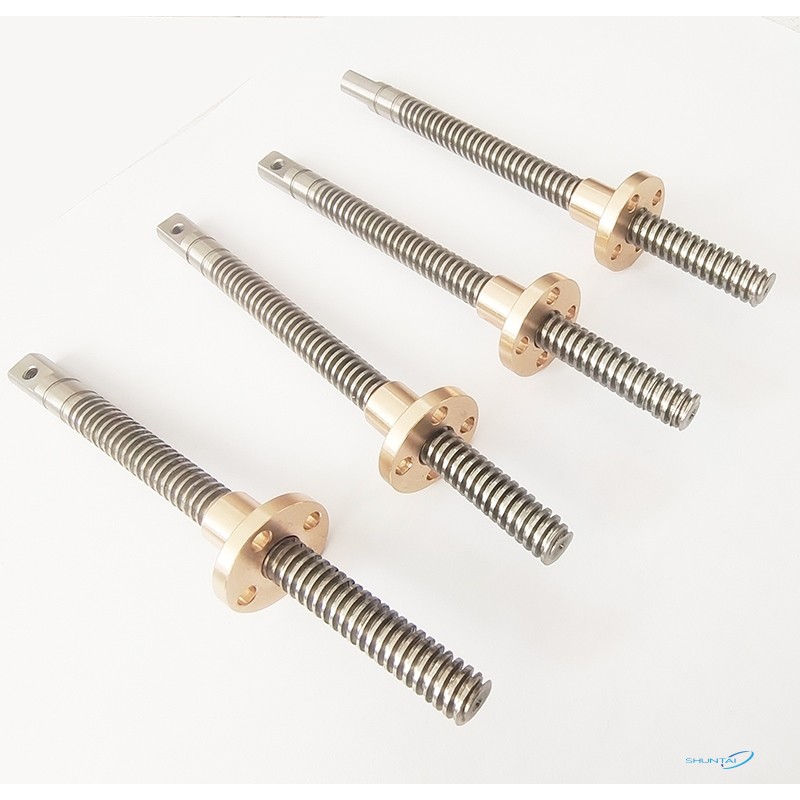
I. Introduction

In modern machining, lathes are fundamental and critical processing equipment. Their precision and efficiency directly impact product quality and production profitability. With the continuous advancement of industrial technology, traditional sliding screws are no longer able to meet the demands of high-precision, high-efficiency machining. As an advanced transmission element, ball screws, due to their superior performance, have been widely used in lathes, significantly improving their overall performance.


II. Basic Structure and Working Principle of Ball Screws

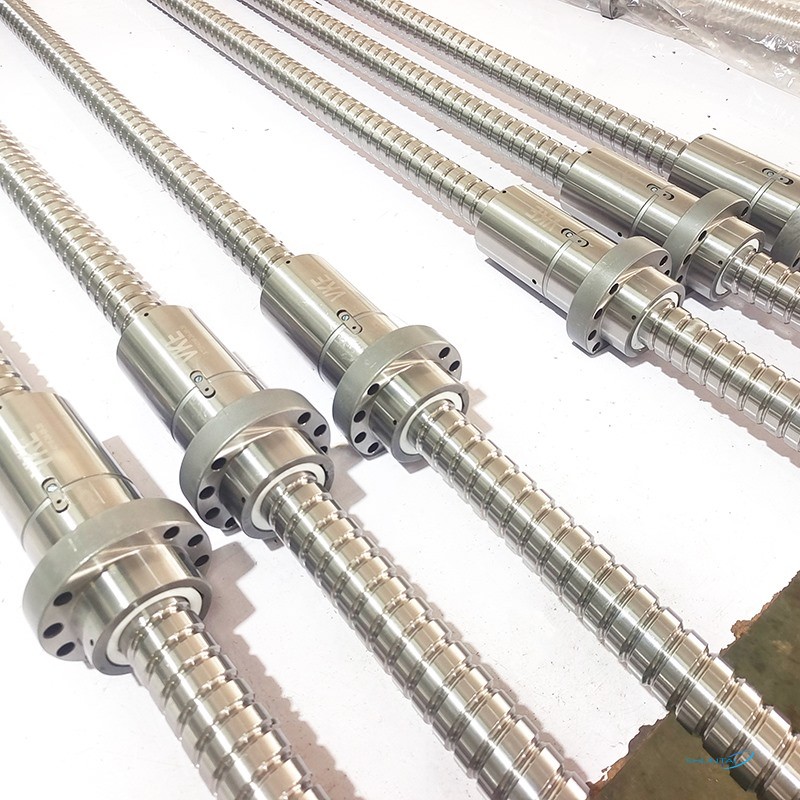
A ball screw consists of a screw shaft, nut, balls, a circulation system, and a sealing device. Its operating principle is to convert rotational motion into linear motion through the rolling motion of the balls between the screw shaft and nut. Compared to traditional sliding screws, ball screws use rolling friction instead of sliding friction, a fundamental change that results in significant performance improvements.


III. Specific Applications of Ball Screws in Lathes

Feed Systems: Modern CNC lathes commonly use ball screws as the core transmission component of the feed system to control the precise movement of the tool. X- and Z-axis movement is typically achieved by servo motors driving ball screws.

Spindle Stock Positioning: In high-precision lathes, ball screws are often used for axial positioning of the spindle stock to ensure accurate spindle position.

Tailstock Movement: Some advanced lathe designs use ball screws to control tailstock movement, improving adjustment accuracy and ease of operation.

Automatic Tool Changer: In the automatic tool changing system of a turning center, ball screws are responsible for precise toolholder position control.


IV. Technical Advantages of Ball Screws in Lathe Applications

High Transmission Efficiency: The transmission efficiency of ball screws can reach over 90%, far exceeding the 20-40% of sliding screws, significantly reducing energy loss.

Excellent Positioning Accuracy: Through precision manufacturing and preload adjustment, ball screws achieve micron-level repeatability, meeting high-precision machining requirements.

Long Service Life: Due to their rolling friction principle, wear is minimal, with a service life of up to 5-10 times that of sliding screws. Excellent High-Speed Performance: Suitable for high-speed feed motion. Modern high-speed lathes can achieve rapid traverse speeds of 30-60 m/min.


High Axial Rigidity: Preloading can improve axial rigidity, reducing deformation and vibration during machining.


V. Considerations for Ball Screw Applications in Lathes


Protective Measures: Dust protection and sealing must be ensured to prevent chips and coolant from entering the ball screw circulation system.


Lubrication Management: Although friction is low, regular lubrication is still required, generally using lithium-based grease or circulating oil.


Installation Precision: During installation, ensure parallelism between the screw and the guide rail to avoid additional bending moments that may affect service life.


Anti-Reverse Measures: Vertical installation requires a brake to prevent reverse rotation.


Thermal Deformation Control: Heat generated during high-speed operation may affect accuracy, so thermal compensation measures should be considered.


VI. Future Development Trends in Ball Screw Technology


Higher Precision Levels: Research and development of nanometer-level precision ball screws is ongoing.


Intelligent Functions: Integrated sensors enable condition monitoring and predictive maintenance. New Material Applications: Exploring new materials such as ceramic balls and composite nuts.

High-Speed Development: DN values (screw diameter x rotational speed) continue to increase, meeting the demand for higher machining efficiency.

Environmentally Friendly Design: Development of lubrication-free or self-lubricating technologies reduces environmental pollution.
 

VII. Conclusion
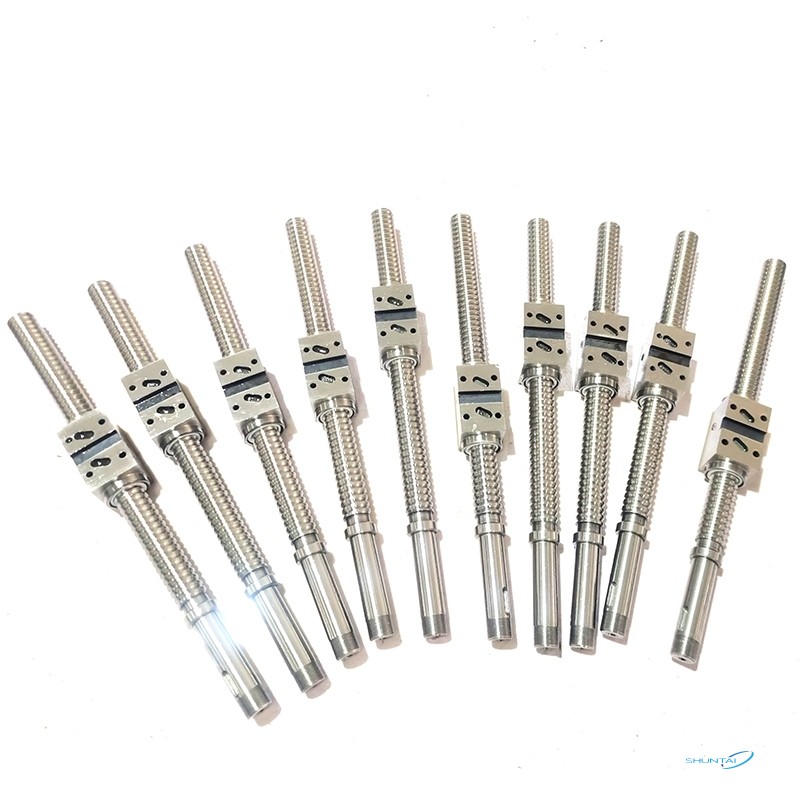
The application of ball screws in lathes has become an important support for modern high-precision and high-efficiency processing. Shuntai ball screws can be customized in different models. Welcome to consult us. We are online 24 hours a day to answer your questions.

The role of the ball screw is to achieve "precise, efficient, and fast electronically controlled linear motion," serving as a critical bridge between electrical signals and physical action. Its role is specifically reflected in the following aspects:

1. Core Role: Enabling Electronic Control and Replacing Traditional Systems

The core characteristics of new energy vehicles are electronic control and intelligence, requiring electrical signals to control all physical movements. The ball screw serves as a perfect replacement for traditional hydraulic and pneumatic systems, becoming an ideal electronically controlled actuator.

Traditional vehicles use hydraulic and vacuum assist systems.

New energy vehicles use a combination of motors and ball screws, directly generating precise linear force and motion through electrical energy.


2. Three Key Roles

[Intelligent Safety Actuator] - Primarily in electronic braking and steer-by-wire systems

Function: Instantly converts electrical signals from the brake pedal or autonomous driving computer into tangible braking or steering force.

Value: Response speeds far exceed those of hydraulic systems (in the millisecond range), providing the fast and precise execution necessary for advanced automated driving systems (ADAS), directly impacting driving safety.


[Energy Regeneration Amplifier] - Primarily used in electronically controlled braking systems

Function: Enables extremely precise control of brake pad clamping force, achieving seamless and perfect coordination between friction braking and electric motor-generated regenerative braking.

Value: Maximizes braking energy recovery, converting it into electricity and charging it back into the battery, directly increasing the vehicle's range. This is difficult to achieve with ordinary hydraulic braking systems.


[Ride Comfort Regulator] - Primarily used in active suspension systems

Function: Based on road conditions and driving mode, the motor-driven ball screw quickly and precisely adjusts shock absorber damping or air suspension height.

Value: Enhances vehicle comfort, stability, and handling, achieving a "magic carpet"-like ride, while also lowering the vehicle at high speeds to save energy.


Conclusion:

In new energy vehicles, the ball screw is far more than a simple mechanical component; it is a key enabling technology. By providing efficient and precise linear motion, it helps new energy vehicles achieve smarter driving, longer battery life, more comfortable experience and simpler design. It is one of the indispensable core components for new energy vehicles to move towards higher levels of electrification and intelligence.

Trapezoidal lead screw is a common mechanical transmission element, named because of its trapezoidal thread cross section. In 3D printers, trapezoidal lead screw plays a key role in converting rotational motion into linear motion. Compared with ordinary threads, trapezoidal threads have higher load-bearing capacity and better self-locking characteristics, which makes it particularly suitable for applications that require precise positioning and certain axial loads.

The working principle of the trapezoidal lead screw is based on the basic physical principle of spiral transmission: when the lead screw rotates, the nut moves along the axial direction of the lead screw, and the moving distance is proportional to the lead of the thread and the number of rotations. This precise linear motion conversion mechanism is one of the foundations for 3D printers to achieve high-precision printing.

Advantages of trapezoidal lead screw in 3D printers

In 3D printing technology, trapezoidal lead screw has many significant advantages over other transmission methods:

High-precision positioning capability: The trapezoidal lead screw can provide higher positioning accuracy, with a typical value of ±0.1mm or higher, which is crucial to printing quality.

Good self-locking performance: The design of the trapezoidal thread allows it to naturally maintain its position when not driven, reducing the risk of the Z axis falling when the power is off or the motor is not working.

Higher load capacity: Compared with belt drive or ordinary threaded rod, trapezoidal screw can withstand greater axial loads and is suitable for supporting the weight of the printing platform and print head.

Smooth motion characteristics: Trapezoidal screw drive reduces vibration and jump, which helps to improve the quality of the printed surface.

High cost performance: Compared with ball screw, trapezoidal screw is lower in cost and can meet the accuracy requirements of most consumer-grade 3D printers.


Typical applications of trapezoidal screw in 3D printers

In the structure of 3D printers, trapezoidal screw is mainly used in the following key parts:

Z-axis lifting system: Most FDM/FFF 3D printers use trapezoidal screws to control the precise movement of the printing platform or print head in the Z-axis direction. Since the Z-axis needs to be highly stable and bear a certain load, the trapezoidal screw becomes an ideal choice.

Some specially designed X/Y axes: Although most modern 3D printers use belt drives on the X/Y axes to achieve higher speeds, some models that focus on accuracy rather than speed also use trapezoidal screws on these axes.

Extrusion mechanism: In some direct-drive extruders, trapezoidal screws can be used to precisely control the advancement of filaments.


Technical parameter selection of trapezoidal screws

When choosing a trapezoidal screw for a 3D printer, you need to consider the following key parameters:

Pitch: refers to the distance the nut moves when the screw rotates one circle. Common ones are 2mm, 4mm, 8mm, etc. Smaller pitches provide higher resolution but slower speeds.

Diameter: Usually 6mm, 8mm, 10mm or 12mm. Larger diameters provide better stiffness and load capacity.

Thread type: standard trapezoidal thread (such as Tr8×2) or specially designed thread.

Material: Usually carbon steel or stainless steel, stainless steel is more corrosion-resistant but more expensive.

Accuracy level: 3D printers usually require C7 or higher precision screws.

Length: Select an appropriate length based on the printer's Z-axis travel requirements, generally slightly larger than the maximum printing height.


Installation and maintenance of trapezoidal lead screw

Proper installation and maintenance are essential to ensure the performance and life of trapezoidal lead screw:

Installation points:

Ensure that the lead screw is parallel to the guide system (such as linear guide)

Use appropriate support bearings to reduce radial loads

Fix both ends firmly but not too tight to avoid stress

Use couplings to connect the motor and the lead screw to compensate for minor misalignments


Maintenance recommendations:

Clean the lead screw regularly to remove dust and printing residues

Proper lubrication (use special grease or lubricating oil)

Check the wear of the nut and replace the worn parts in time

Avoid deformation caused by over-tightening

Comparison of trapezoidal lead screw and ball screw

For most consumer-grade 3D printers, trapezoidal lead screws provide a good price-performance balance. Industrial or high-end printers may prefer to use ball screws for higher accuracy and speed.


Future development trend of trapezoidal lead screw

As 3D printing technology continues to develop, trapezoidal lead screws are also continuously improving:

Material innovation: The application of new composite materials and high-performance alloys improves the wear resistance and life of the lead screw.

Manufacturing process advancement: Precision grinding and special coating technologies improve the accuracy and surface quality of the lead screw.

Integrated design: Some new designs integrate the lead screw with guide rails or other functions to simplify installation and improve system rigidity.

Intelligent monitoring: Built-in sensors monitor the status of the lead screw and predict maintenance needs.


Conclusion

As a key transmission component in 3D printers, the trapezoidal lead screw has a direct impact on printing accuracy and quality. Understanding its working principle, selection criteria and maintenance requirements can help 3D printer users and designers optimize machine performance. With the advancement of material science and manufacturing technology, the trapezoidal lead screw will continue to play an important role in the field of 3D printing, balancing performance and cost, and promoting the development of 3D printing technology to a wider range of applications.

Over my 16 years of experience, clients often ask: What's the best brand of LEDs? Are well-known brands the best choice? Or are generic brands unworthy of use?

I believe that the term "brand effect" exists in any industry, and our LED industry is no exception.

Here, I summarize a few points based on my personal work experience.

The core technology of LED was invented in 1962 and was used for lighting purposes in the 1990s. After decades of development, it is a very mature technology. Almost all large factories have sufficient technical support to make LED chips. Generally speaking, there is not much difference in the quality of the led chips produced by everyone.

We conducted a set of comparative experiments using RGBW LEDs as a reference.

On the left are internationally renowned brands, and on the right are domestically produced LEDs (to avoid legal liability, we cannot specify the specific brands). Using the same 20-degree lens, the results are shown below.


From the above picture we can see that the lighting effect is almost the same. Left LED lamp is brighter a little than right one. This is a very small difference that can be almost ignored by us. So if the budget is not high, we can suggest customers to replace the well-known brand lamp beads with domestic ones.

But we cannot deny that after our long-term statistics, We can see other difference after using the finished products for a few years by customers.

That is, the brand LED chips have stronger resistance to light decay and aging. In addition, well-known LED chips are more capable of resisting the impact of current and voltage instability.

Of course, these points can only be reflected during the long-term use of the finished lamps or when encountering various emergencies.

These gaps are also very small, sometimes like the difference between 99 and 100. Therefore, if the budget is limited, we often recommend customers to use domestic LED chips.

Everyone is welcome to share more experiences and opinions. We are Rise Optoelectronics Co., Ltd, which is a professional outdoor lighting designer and manufacturer with 16 years of production experience, especially underwater lighting.


Related Reading: RGBW LED Pool Light,RGBW DMX Led Underwater Light

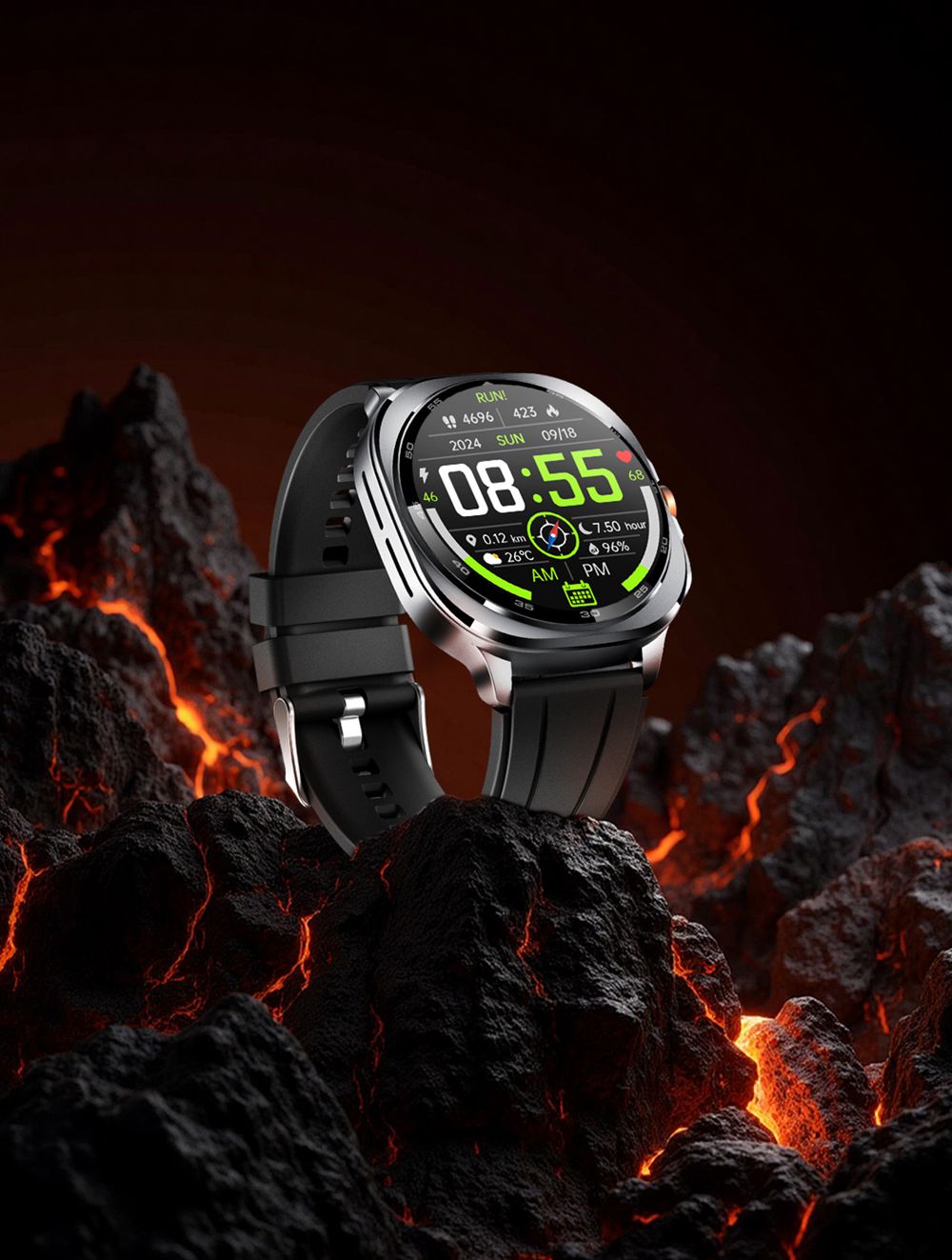
For anyone who lives for the trail, the summit, or the thrill of exploration, gear that keeps up with your adventures isn’t just a luxury—it’s a necessity. Enter the TS400, a smartwatch designed to be more than a gadget: it’s a reliable companion for the great outdoors, blending rugged durability with cutting-edge tech.


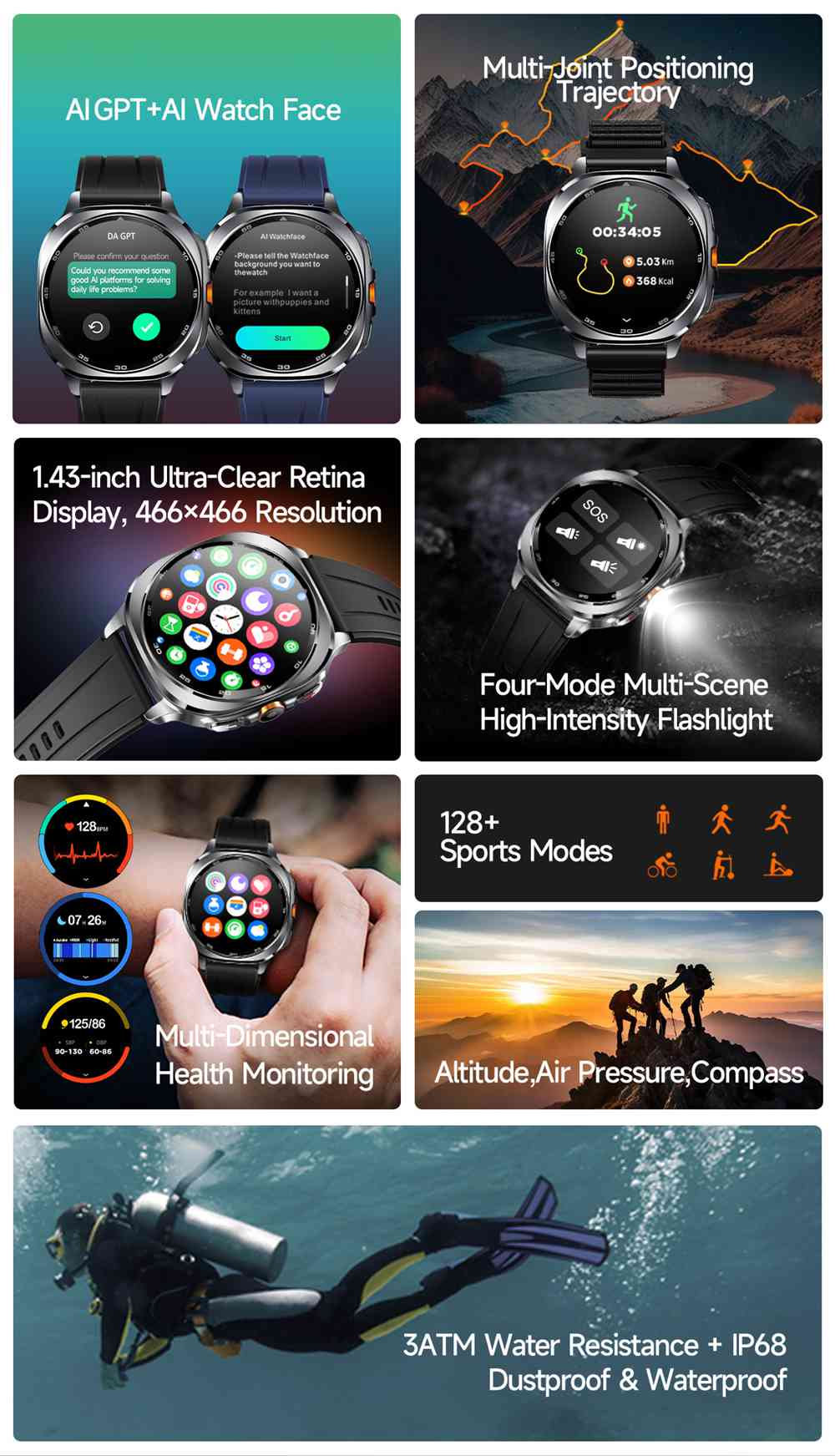
What sets the TS400 apart? Start with its build. Crafted with Celestial Crystal Shield sapphire glass and a high-strength alloy shell, it laughs off scratches, dust, and even extreme temperatures—from frost-bitten peaks to scorching deserts. Add 3ATM water resistance and IP68 dustproofing, and it’s ready for everything from sudden downpours to 30m swims.


Navigation is a standout feature, too. Equipped with multi-satellite GNSS positioning (BDS, GPS, GLONASS, and more), it delivers centimeter-precise tracking, even in urban canyons or remote wilderness. Pair that with real-time altitude, air pressure, and compass data, and you’re never blind to your surroundings. When night falls, a 400-lumen flashlight with four modes (high beam, SOS, and more) cuts through darkness, perfect for late hikes or campsite setups.


Beyond exploration, it’s a health and fitness powerhouse. With 128+ sports modes, it tracks runs, climbs, and swims with precision, while 24/7 health monitoring (heart rate, blood oxygen, sleep) keeps you in tune with your body. Throw in the Da GPT smart assistant for on-the-go queries, and the TS400 doesn’t just track your journey—it elevates it. For outdoor lovers, this isn’t just a watch. It’s a ticket to bolder, smarter adventures.

Custom logo outdoor watch manufacturerBulk order adventure smartwatch supplierOEM sports watch customization serviceWholesale GPS fitness tracker watches


Building a clean, reliable video overlay on GPON or XGS-PON starts with choosing the right CATV optical receiver. The goal is simple: preserve picture quality while keeping your fiber resources and power budget in check. A good approach is to map your performance targets (noise, linearity, output level, management features) to product families, then shortlist a Customizable cable TV module that matches your FTTH rollout and CPE design.


Start with noise performance. A Low Noise Optical Receiver preserves carrier-to-noise ratio (CNR) and minimizes distortions like CSO/CTB, which is critical as more services ride on the same fiber. For reference, Sanland’s SMO-P28 lists CNR ≥ 47 dB with CSO/CTB ≤ −57 dBc, while the SMO-P42 specifies CNR around 43 dB—use these figures as benchmarks when comparing options in similar form factors.


Next, lock in level stability. Optical input can swing with split ratios and plant variations, so pick a High-Performance CATV AGC Module that flattens RF output across a wide input window. For example, SMO-P42 offers an AGC dynamic range of −10 to +2 dBm with a typical RF output near 78 dBµV, while SMO-P28 targets AGC from −10 to 0 dBm and ~81 dBµV output—handy targets when you design tap losses and in-home distribution. Many FTTH modules also come in compact builds with SC/APC or FC/APC connectors and run off a simple 5 V rail, keeping CPE designs small and efficient.


Don’t overlook integration and monitoring. Receivers with integrated high-isolation WDM + PIN reduce BOM and space while simplifying 1550 nm video overlay alongside data wavelengths. Extras like I²C access, optical power/RF level/temperature telemetry, and RF enable/disable make field diagnostics faster and enable smarter ONUs. Sanland’s SMO-P42 illustrates this integration approach and is designed expressly for FTTH ONU use in triple-play deployments.

Why SANLAND for your next CATV optical receiver? Beyond competitive specs, SANLAND backs its CATV Optical Receiver Module line with a one-stop FTTx portfolio and experience dating back to 2002—meaning faster selection, cohesive interoperability, and mature manufacturing. The product range spans AGC receivers for GPON/XGS-PON and options positioned for customization (e.g., Custom AGC / Customizable cable TV module), so you can match noise, linearity, connectors, and control interfaces to your design without wrestling with multi-vendor compromises. Pair that with responsive engineering support and a focused fiber-access roadmap, and you get a SANLAND-branded Low Noise Optical Receiver or High-Performance CATV AGC Module that ships with both performance confidence and service reliability.

Challenge
Brazil’s largest beverage distributor faced crippling bottlenecks:

  • Manual pallet scanning delayed inbound processing by 4+ hours daily

  • Order errors caused 18% shipment returns from retailers

  • Port congestion fines exceeding $220k/month

Solution
Deployed SeeMore’s end-to-end RFID acceleration kit:

  1. T5030LA RFID Labels

    • Applied during receiving in <5 seconds/pallet

    • Withstood humid warehouse conditions (38°C/85%RH)

  2. Smart Dock Doors

    • 4-channel readers + high-speed tunnel antennas

    • Automated ASN reconciliation via EPC-GS1 mapping

  3. Mobile Workflow

    • Rugged tablets with multi-tag verification

Operational Workflow

Results
✓ 600 pallets/hour processed (vs. 100 manual)
✓ 99.2% order accuracy achieved
✓ Port fines reduced by 100%

“The RFID tunnels cut our receiving time from 4 hours to 40 minutes. Game changer!”

– Logistics Director, São Paulo Distribution Center


Impinj Gen2X: Revolutionizing RFID Performance, Security, and Scalability

Introduction
RAIN RFID technology is evolving beyond basic inventory tracking, and Impinj’s Gen2X stands at the forefront of this transformation. As an enhancement to the EPC Gen2v2 standard (ISO 18000-63), Gen2X tackles critical pain points in enterprise deployments: unreliable reads in noisy environments, data vulnerability, and rising solution costs.

Core Innovations

  1. Performance Boost

    • Extended Range & Sensitivity: Increases reader sensitivity by up to 6dB, enabling reliable reads of small/metallic tags (e.g., embedded in pharmaceuticals or retail items).

    • Faster Inventory Speeds: Reduces tag backscatter errors, accelerating inventory by 30%+ in high-density environments like warehouses.

    • Tag De-cluttering: Silences inventoried tags dynamically, minimizing cross-reads in multi-reader zones (e.g., dock doors).

  2. Enterprise-Grade Security

    • Anti-Counterfeiting: Uses challenge-response protocols (Impinj Authenticity) to verify product authenticity, critical for luxury goods and pharmaceuticals.

    • Privacy Protection: Impinj Protect Mode hides tags from unauthorized readers, addressing consumer privacy concerns in retail.

  3. Cost Efficiency

    • Enables cheaper, smaller tags by compensating for signal weaknesses.

    • Reduces labor costs via automated, error-free logistics (e.g., optimized truck loading).

Real-World Impact

  • Retail: Self-checkout accuracy improves by 90%, reducing false alarms and loss.

  • Logistics: Achieves 99.9% read rates at conveyor belts, cutting mis-shipments.

  • Smart Manufacturing: Tracks micro-components on high-speed assembly lines.

Why Gen2X Now?
With supply chains demanding end-to-end visibility, Gen2X’s blend of performance and security makes it the backbone of IoT-scale deployments. Industry leaders like Urovo already integrate Gen2X into their latest RFID terminals

Challenge
A Munich convenience store struggled with:

  • 30% shrinkage in high-value frozen foods

  • $65k/year staffing costs for 24/7 operation

  • Frequent checkout queues during rush hours

Solution
Implemented SeeMore’s frictionless frozen ecosystem:

  1. RL8647-i4116 Cryo-Tags

    • -25°C readable on frozen pizza/ice cream packaging

    • Anti-metal design for freezer compliance

  2. AI Checkout System

    • UHF reader arrays embedded in shelves & checkout counter

    • Multi-tag discrimination for stacked items

  3. Mobile Governance

    • Realestock alerts sent to owner’s phone

    • Technical Triumph
      ► Tags readable through frost buildup & aluminum packaging
      ► 99.9% detection rate for items buried in shopping bags
      ► Zero false positives from adjacent freezers

      Results
      ✓ Shrinkage reduced to 2%
      ✓ 24/7 operational cost cut by 80%
      ✓ Checkout speed: 12 seconds/customer

      *“Customers love grabbing ice cream at 2 AM without human interaction. Our RL8647 tags survive constant freeze-thaw cycles flawlessly.”*
      – Owner, Munich Some RetailStore

The regulatory environment for connected devices in Europe is evolving rapidly. Two key pieces of legislation—the Cyber Resilience Act (CRA) and cybersecurity requirements under the Radio Equipment Directive (RED)—are set to change how RAIN RFID readers and other IoT products are designed, manufactured, and supported. For system integrators and end-users, understanding these changes is crucial for future-proofing your deployments.

What Are the CRA and RED Cybersecurity Requirements?

  • RED Cybersecurity (EU 2022/30): This legislation specifically targets radio equipment. If your UHF RFID reader has networking capabilities (like Ethernet or Wi-Fi), it likely falls under this regulation. It focuses on protecting networks from harm and safeguarding user privacy and data. Enforcement begins August 1, 2025.

  • Cyber Resilience Act (CRA): This is a broader, horizontal law that applies to all products with digital elements. It mandates security throughout the entire lifecycle of a product, from design and development to post-market support. It requires manufacturers to have processes for handling vulnerabilities and providing security updates. Key obligations start in 2026, with full application in 2027.

Key Implications for the RAIN RFID Industry

For manufacturers of RAIN RFID readershandheld data collectors, and RFID modules, this means a renewed focus on:

  1. Secure Development: Implementing a Secure Development Lifecycle (SDL) to identify and mitigate vulnerabilities early in the design process.

  2. Transparency: Providing clear documentation on security features, update policies, and a Software Bill of Materials (SBOM).

  3. Long-Term Vigilance: Establishing a Product Security Incident Response Team (PSIRT) and committing to providing security updates for many years.

  4. Robust Technical Documentation: Preparing extensive documentation to prove compliance for the EU market.

What This Means for Integrators and Users

For businesses that integrate and use this technology, these regulations are ultimately positive. They promise:

  • More Secure Hardware: Devices will be designed with stronger security fundamentals, reducing the risk of being a weak link in your network.

  • Clearer Support Expectations: Manufacturers will be obligated to be transparent about how long they will support a device with security patches, aiding long-term planning.

  • Increased Trust: Compliance with these strict regulations can serve as a mark of quality and reliability for hardware providers.

The Path Forward

The new EU regulations mark a significant step towards a more secure and trustworthy IoT ecosystem. While the path to compliance requires effort, it pushes the entire industry towards higher standards of quality and security. Manufacturers are now diligently working to understand the requirements and adapt their processes to meet these new challenges and opportunities.

Staying informed about these regulations is the first step for any professional working with IoT and RAIN RFID technology.